

Residential building is a fast moving game.
You can spend half the week waiting for things to fall into place, then suddenly everything and everyone turns up at once. One job runs late, the next one starts early. Competing expectations and priorities to battle through.
That’s the reality for most builders. So when it comes to your Health & Safety, it can feel like you’re adding another job to your plate. But when safety is managed properly, it doesn’t slow the work down. It keeps things moving.
This article is a practical guide for residential builders (especially those already running a tight ship with tools like Buildxact). We’ll cover what matters, what doesn’t, and how to stay safe whilst keeping the build running.
First, let’s tackle the myths holding builders back
Health & safety myths usually sound reasonable… until you’ve seen what happens when something goes wrong. HazardCo has heard these misconceptions constantly and breaks them down clearly. Here are the big ones that still trip up residential builders.
Myth: “Safety admin takes too long”
It used to. Now, digital systems can cut admin significantly, and HazardCo reports members halved their H&S admin time after moving away from paper. The goal is not to create more forms. It’s to build a simple habit that doesn’t depend on memory or luck.
Myth: “I’m experienced, I won’t have an incident”
Experience helps you build better houses. It doesn’t eliminate risk.
HazardCo points out that frequent exposure to a hazard can make your brain perceive it as less significant, even though the risk hasn’t changed.
That’s a big deal on residential sites where:
- access changes
- work at heights ramps up fast
- multiple contractors overlap
- temporary setups are constantly shifting
Myth: “Small builders aren’t a target”
Residential sites still see a high number of incidents, and regulators continue focusing on common occurrences like falls from height. But even if a regulator never visits your job, your obligation to your workers still exists. The builders who lead from the front build loyalty, protect their brand, and reduce downtime.
Myth: “I can reuse the same plan every time”
Your WHS Management Plan or Health and Safety Coordination Plan needs to be site specific. Templates are fine as a starting point, but a “copy paste plan” is where builders get caught out. Even similar builds can have different risks due to slope, location, access, neighbours, materials, or sequencing.
Myth: “Safety is a subcontractor’s issue”
Construction involves multiple businesses sharing duties and responsibility. If you’re running the site, you need to ensure everyone’s working safely together, not independently in their own bubble.
Myth: “Near misses don’t matter”
Near misses are exactly what you want to know about. HazardCo recommends treating them like incidents and using them as learning tools before something serious happens. If a plasterer trips on a messy walkway and doesn’t get hurt, you’ve still had a warning shot. Fix it before it turns into a lost time injury.
Myth: “Health doesn’t apply to us”
Construction “health” isn’t just first aid. Physical and mental health risks impact time off, workers compensation, and business performance if ignored.
For builders, that often looks like:
- fatigue from long weeks
- stress from chasing suppliers and timelines
- repetitive strain from manual handling
- dehydration and heat stress
- poor decision making under pressure
It’s not soft, it’s real.
So where do you start? Keep it simple
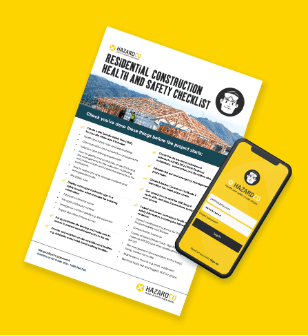
HazardCo’s Residential Construction Health and Safety Checklist has been created to help residential builders set themselves up for running a safe residential site.
Here’s how to apply it without getting bogged down.
Before the project kicks off: set the site up properly
This is where it’s easiest to stay on top of things because the site is still manageable.
HazardCo recommends starting with these key steps:
1. Build your Site Safety Plan (SSSP)
Think of it like your job setup notes, but for site risk.
It’s your “how we run this site safely” document, covering:
- safety rules
- key hazards
- responsibilities
- what happens if something goes wrong
And remember, it needs to be site specific.
2. Put up Principal Contractor signage
Clear signage sets expectations instantly and gives people the right emergency contact details. It’s a simple step that protects you legally and practically.
3. Fence the site
Residential sites are often accessible by accident, not intention. A fenced site prevents neighbours, kids, and the public from wandering in.
4. Provide amenities
Toilets, handwashing, and drinking water are essentials. It also lifts standards and respect on site. Workers take more care when the site is run professionally.
5. Check electrics and temporary power
HazardCo specifically calls out making sure the switchboard meets AS/NZS 3012 standards. If you’re not sure, get your sparky to confirm early.
6. Do a paperwork check
Get key documents sorted before the job gets busy:
If you wait until something happens, it’s already too late.
- white cards
- high risk licences
- insurance certificates
- maintenance records
7. Asbestos clearance if needed
If demolition has happened and asbestos could be involved, clearance is non negotiable.
During the build: the routine that keeps you safe
Safety only works when it’s ongoing. HazardCo puts it simply: it’s not “set and forget”, it’s about checking in regularly.
Here’s a routine that works for residential builders:
Induct every worker and contractor – Even if you’ve worked with them for years. A site induction ensures everyone knows the hazards and that there’s a record of it. Quick, consistent inductions are one of the best ways to keep control over your site.
Use SWMS properly (not just as paperwork)– SWMS are required for high risk construction work. The important part is updating them if work changes before continuing. On residential sites, things change constantly, which means SWMS need to be living documents, not forgotten PDFs.
Do regular site reviews-This doesn’t need to be formal. It’s a quick check for things that cause the most incidents like scaffold and edge protection, ladder, hot works, power leads and electrical setups. It’s two minutes that can prevent two days of downtime.
Toolbox talks that are short and relevant– Toolbox talks work when they’re simple. HazardCo describes them as short chats with big impact, used to share updates on incidents, risks, and fixes. Keep them practical, like what’s changing this week, what near misses happened and what you’re doing differently now.
Report incidents and near misses– HazardCo recommends recording near misses, injuries, or illnesses, investigating them, and notifying regulators where required. The goal isn’t blame. It’s improvement. Near missing reporting is one of the best indicators your site culture is strong.
The payoff: why builders who do this win
The evidence is clear: safety isn’t just compliance. It reduces downtime and headaches, especially when auditors or regulators come knocking.
For residential builders, it also helps with fewer disruptions, higher sub-contractor retention, higher quality work being completed and improved customer satisfaction leading to positive worth of mouth referrals.
When you’re running multiple builds at once, preventing one incident can save you a huge amount of time and stress.
If you want to see how your business measures up, check out HazardCo’s Residential Construction Health and Safety Checklist.