
You ran the takeoff, priced the materials and labor, and applied your markup. The bid was accepted on a number that worked, the work was built as scoped, but the closing numbers landed lighter than planned.
Where the profit margin went is harder to trace than it should be. The standard answer is that overhead drifted, but that understates what actually happened.
Construction overhead is a living number. The rate you work out today holds only as long as two things remain true: the cost data behind it is current, and the markup is sized to the job in front of you.
If you price your own jobs and run your own takeoffs, that gap is yours to close. The rest of this guide is about why it opens and how to keep the margin you bid from leaking out before the job closes.
What Are Construction Overhead Costs?
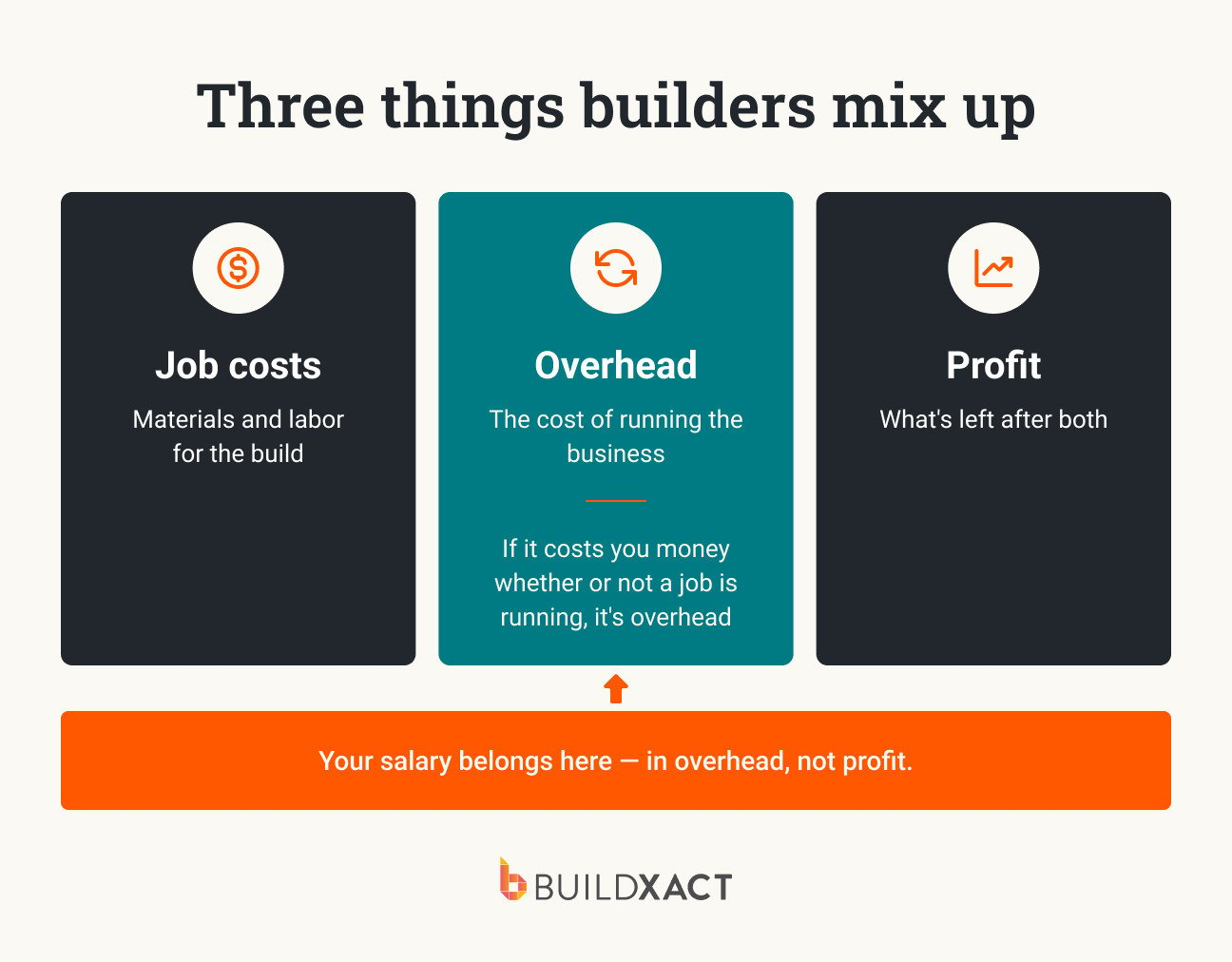
Construction overhead costs are the expenses of running a construction business that aren’t part of the physical work of a specific project. If a cost isn’t going directly into the build, it’s overhead.
That distinction matters because overhead behaves differently from labor, materials, and subcontractor costs. Those costs have a natural place in an estimate. Overhead does not.
Insurance still has to be paid when a project wraps up, and software subscriptions roll on between jobs. None of it disappears because the last invoice was sent.
That’s why overhead is recovered through pricing rather than through a single line item. If it isn’t built into the price of the work, it comes directly out of the margin.
Overhead is also not profit. Profit is what remains after direct costs and overhead have been covered. A builder’s salary for the time spent running the business belongs in overhead, not profit.
That’s one reason solo operators often think they’re earning more than they are: management time gets paid out of whatever’s left over rather than treated as a cost of operating the company, so the business looks more profitable than it is.
Direct vs. indirect overhead costs: what’s the difference?
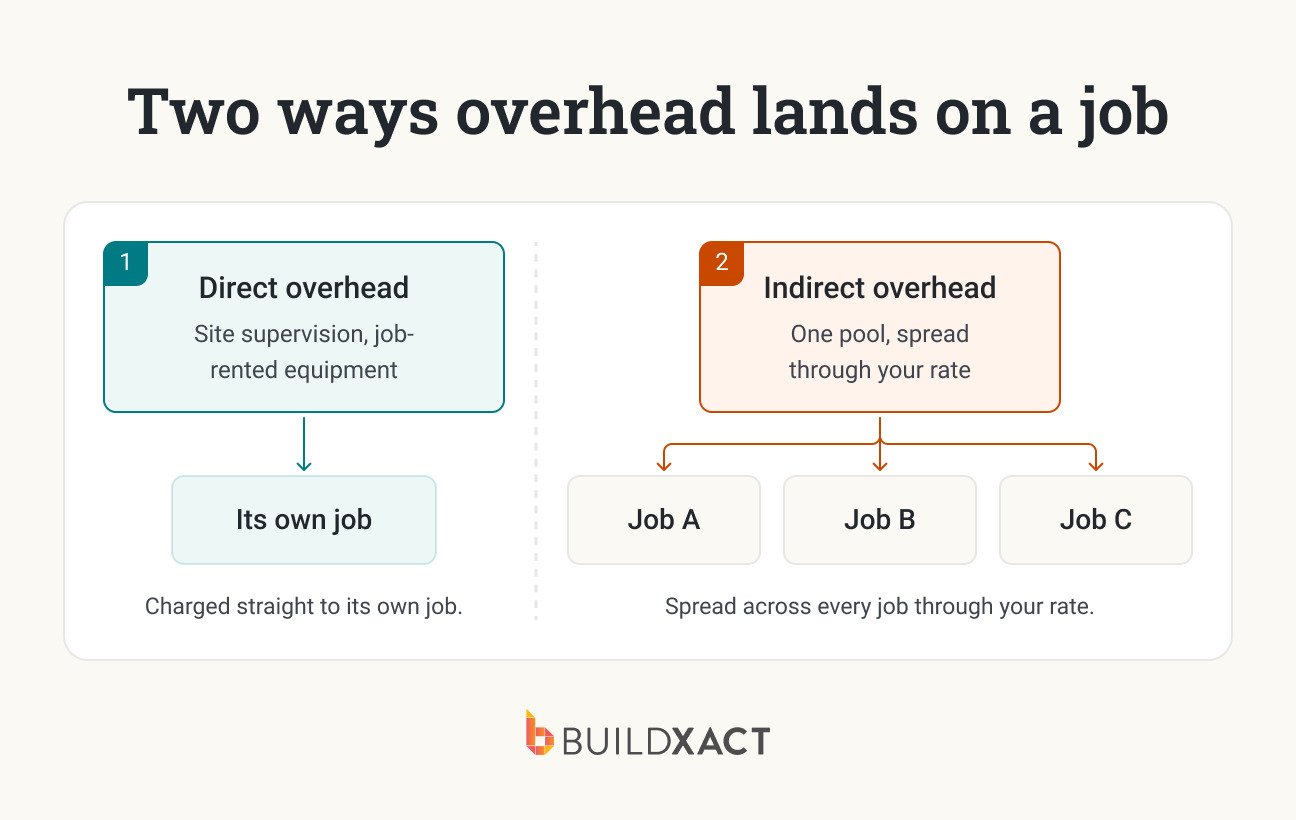
Construction overhead falls into two categories. Direct overhead is tied to a specific project and ends when that project ends. Indirect overhead supports the business as a whole and continues regardless of which jobs are active.
The distinction becomes important when overhead is later calculated and allocated. Site supervision, temporary facilities, permits, and project-specific equipment rentals are part of the job.
Office rent, administration, insurance, software, marketing, and business licenses support every project the company builds. If you’ve ever looked at what it actually costs to start and run a construction company, most of those line items: licensing, insurance, software, marketing, land, are squarely in indirect overhead.
Two costs regularly end up in the wrong category. Equipment rented for a specific job is direct overhead, not indirect, because the expense exists only for that project. And the owner’s salary stays in overhead even when you take it as a draw.
You’ll hear ‘hard costs’ and ‘soft costs’ used as everyday shorthand for the same idea. The terms are useful in conversation, but they aren’t a precise substitute for direct and indirect overhead when you need to calculate and recover costs accurately.
How Much Should Overhead Be for a Construction Company?
There’s no single overhead percentage that’s correct for every construction company. The figure varies with company size, project mix, geography, staffing, and business structure. The more useful question is whether your overhead sits within a reasonable range.
NAHB’s 2024 Cost of Construction Survey found that overhead and general expenses accounted for 5.7% of the average single-family home’s sale price.
That gives builders a peer reference. It shows where residential construction businesses sit relative to one another and can flag overhead that looks unusually high or low.
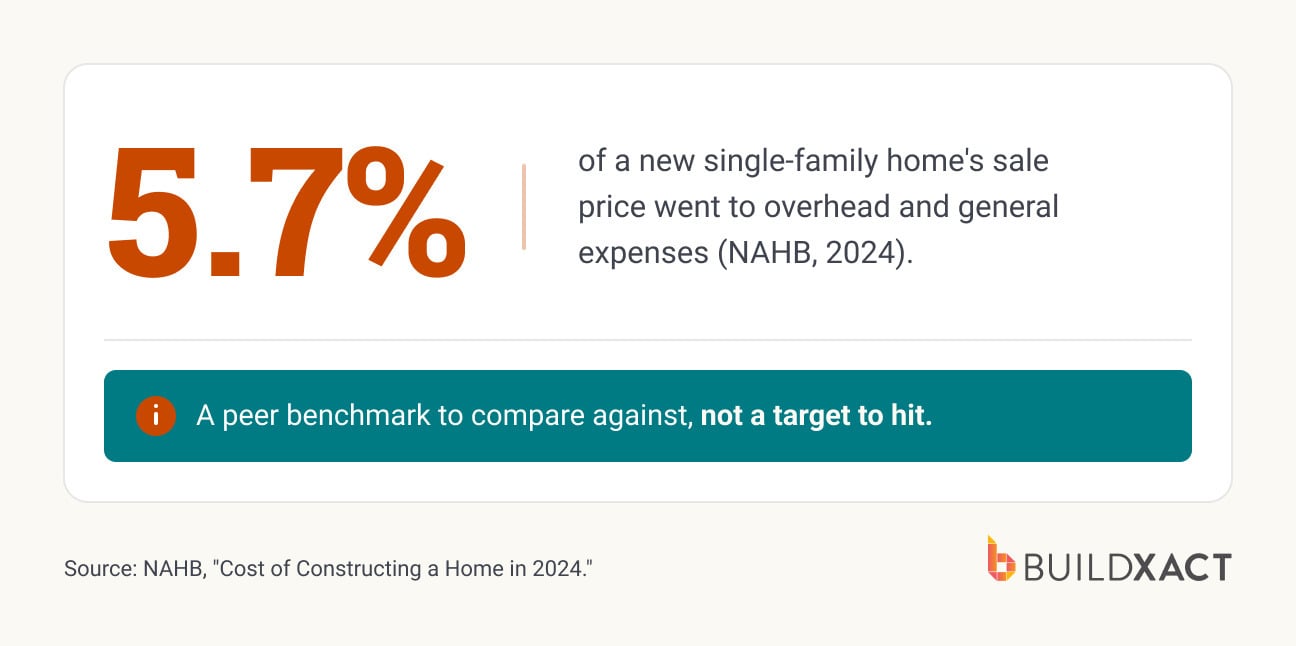
It cannot tell you what overhead rate to use, and the difference is easy to miss because both numbers are percentages.
The NAHB figure is a share of a home’s final sale price; it answers the question, “How do I compare to similar builders?” An overhead rate is a recovery mechanism used in estimating. It answers “How much overhead does this job need to recover?” Those are different questions.
So benchmarks work best as a sanity check, not a target. If your overhead falls well outside the range of similar companies, you have a useful question to investigate.
But the number that determines whether overhead is actually being recovered is the one you calculate from your own costs, not an industry average. That calculation comes next.
How to Calculate Your Overhead Rate
Your overhead rate is the percentage used to recover the indirect costs of running the business through the work you build. The standard calculation is total indirect overhead divided by a direct-cost base, multiplied by 100.
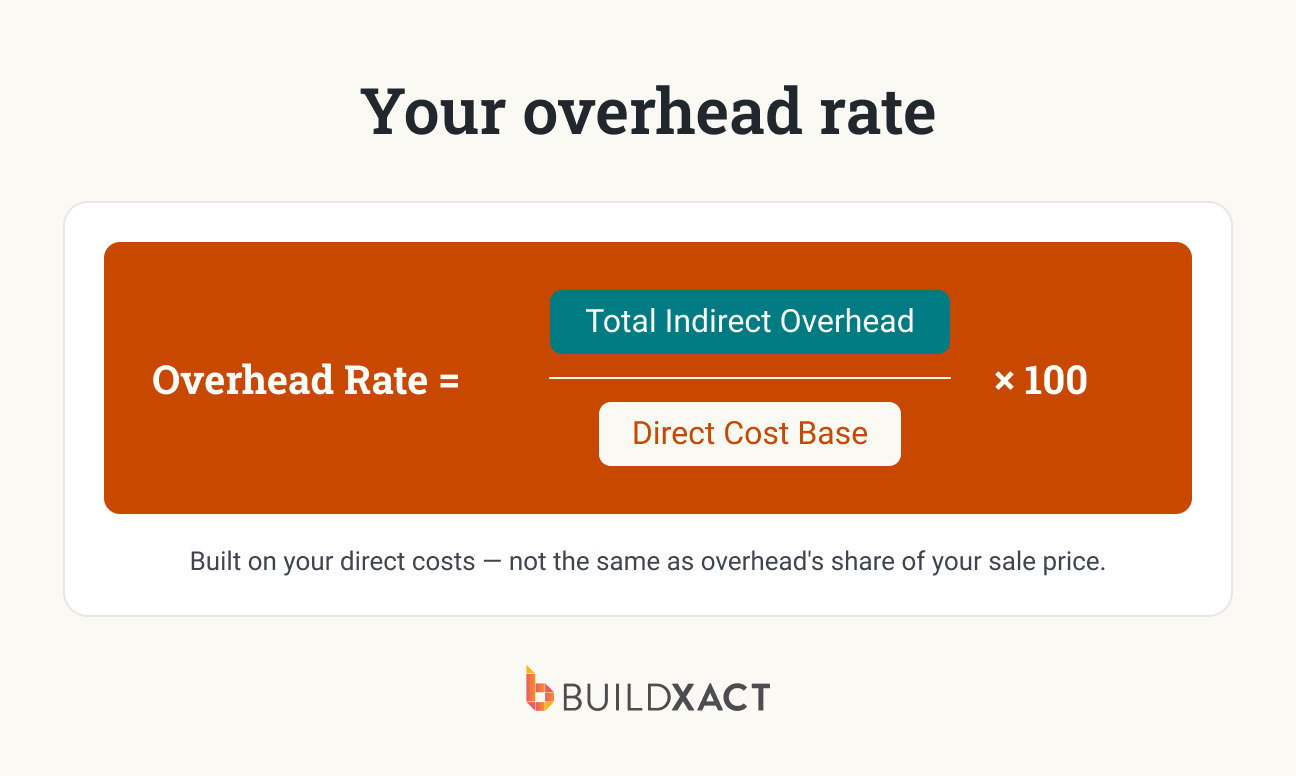
Use direct costs, not revenue, as the base. Revenue moves with your markup and your margin, so a revenue-based rate chases its own tail; direct costs are the thing overhead actually rides on. This is also why the rate isn’t the same metric as the 5.7% NAHB benchmark above, which is a share of sale price.
The calculation itself is straightforward:
- List all indirect overhead costs for a defined period, typically the previous twelve months.
- Total those costs.
- Select a direct-cost base for the same period; for most residential work, that’s direct labor and direct materials.
- Divide total indirect costs by the direct-cost base.
- Multiply by 100 to convert the result into a percentage.
- Apply that percentage to future bids to recover overhead.
Using round numbers, a builder with $120,000 in annual indirect overhead and $800,000 in direct costs would have an overhead rate of 15%.
$120,000 ÷ $800,000 × 100 = 15%
On a project with $150,000 in direct costs, that rate would recover $22,500 of overhead. Every $100 in direct project cost would include an additional $15 to support the business before profit enters the equation.
The mechanics are simple enough that you can calculate a rate in a few minutes. The harder question is how long that number stays accurate. A rate is a snapshot: it captures the costs that existed on the day you ran it, and those costs rarely stay the same.
Software gets added, insurance premiums renew, and labor and material costs move. The math stays correct relative to the numbers it was built from, but the longer the rate goes without a review, the more it reflects an earlier version of the company than the one operating today.
For a deeper look at how these cost inputs flow into a full estimate, the complete construction estimating guide covers the end-to-end process.
Allocating Overhead Costs to Projects
Once an overhead rate has been calculated, it must be applied to individual jobs. That’s the purpose of overhead allocation. Direct overhead charges are applied to the project, increasing the project cost, while indirect overhead is spread across projects through the overhead rate.
Using the example above, a builder with a 15% overhead rate would allocate $22,500 in overhead to a project with $150,000 in direct costs.
A larger project with $400,000 in direct costs would recover $60,000. A smaller project with $50,000 in direct costs would recover $7,500.
The principle is simple: every project should contribute its share to the cost of running the business, in proportion to the labor, materials, management attention, and business resources it actually consumes.
The overhead rate is a practical way to spread those costs across the work being built rather than leaving them stranded at the company level. For a worked breakdown of how project costs stack up category by category, see this construction project cost breakdown.
For most residential builders, a single company-wide rate is the standard approach: simple to calculate, easy to apply during estimating, and accurate enough when projects are broadly similar in size and scope.
It assumes that every job consumes the business equally. Whether that assumption holds is where the margin starts to slip, and it’s where the next section goes.
Why a Correct Overhead Rate Still Loses You Money
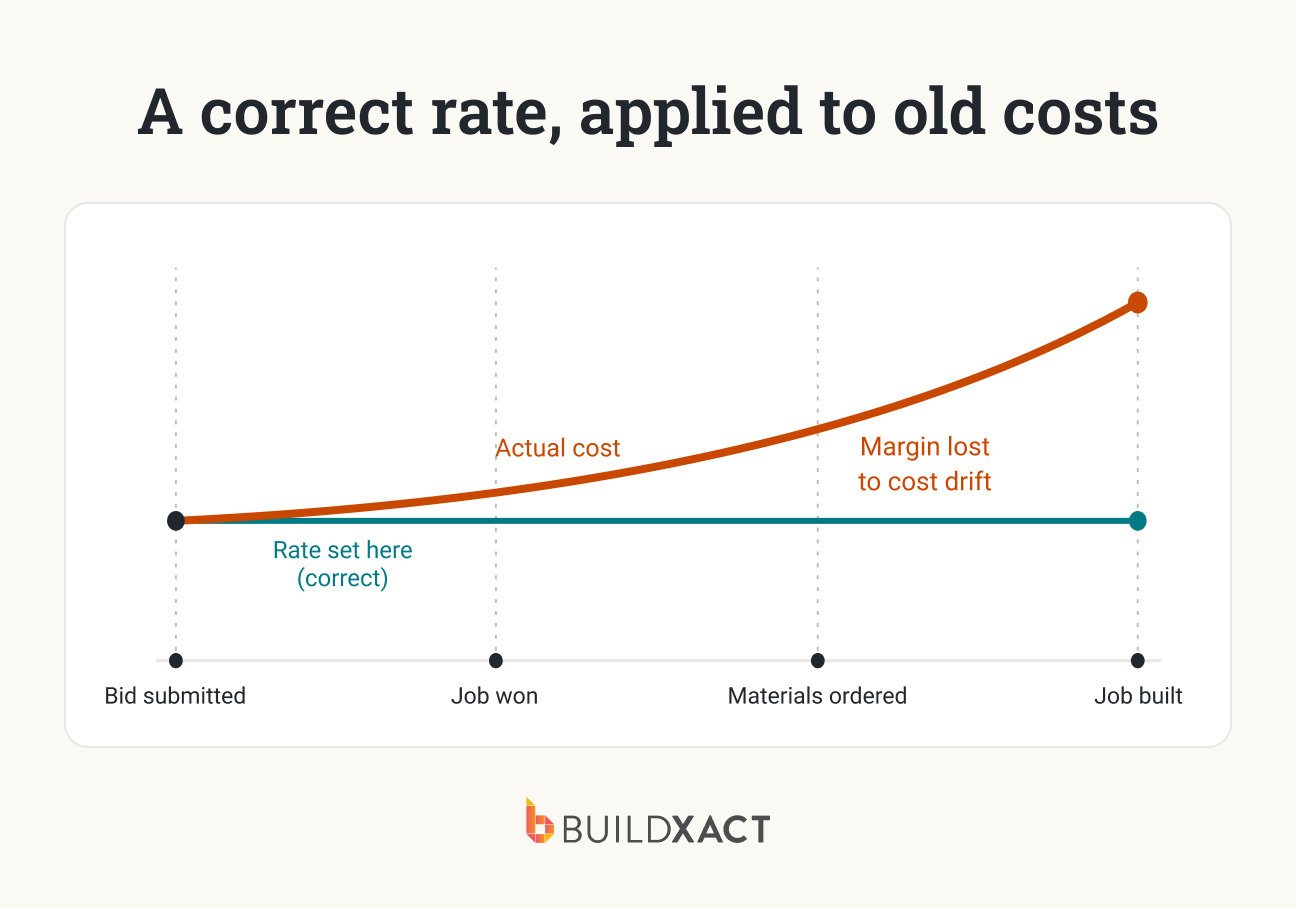
What makes this expensive is that it never looks like a pricing mistake. The job feels fine throughout, and the shortfall only shows up at closeout. Two forces are usually behind it: timing and mix.
Timing: the costs move between bid and build
Imagine a custom home priced in January, awarded in March, and built through the summer. The rate reflects the business as it existed when the estimate was prepared.
Material dealers revise pricing, so labor rates shift and fuel costs move, but none of those updates the number sitting inside the bid, so you’re still recovering overhead, just not from today’s costs.
Building material prices are up 3.5% year over year, the steepest annual rise since early 2023, but the average hides the spread: metal molding and trim have jumped nearly 50%, while softwood lumber has fallen below last year’s levels.
Mix: one flat markup for jobs that aren’t alike
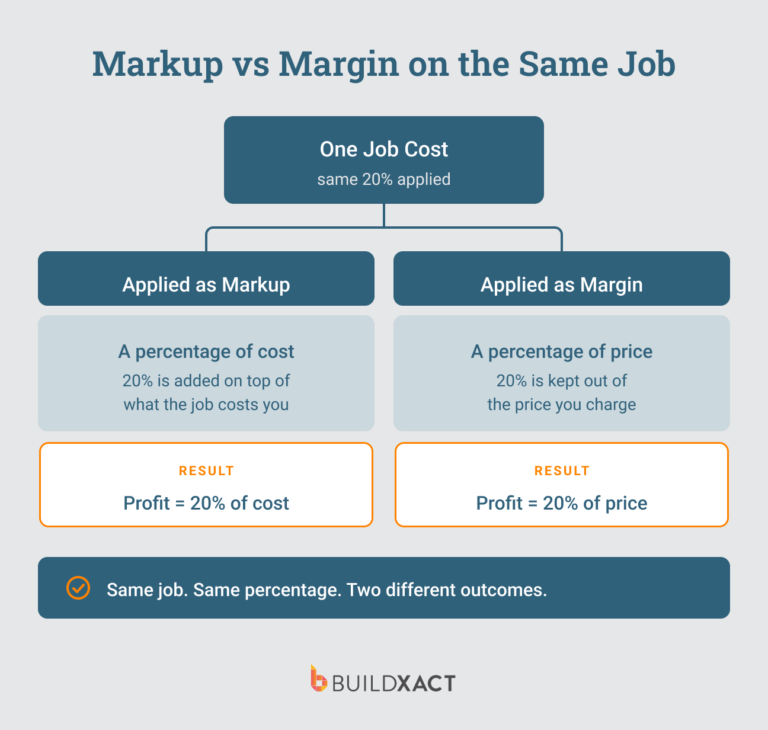
Different jobs consume overhead differently, and one flat markup ignores that. A kitchen remodel, an addition, and a custom home require the same company, but they don’t require the same level of estimating effort, project-management time, client communication, supervision, or administrative support.
A flat markup means they all recover overhead using the same logic anyway. The larger and more diverse the project mix, the harder it is to defend.
This is one of the core arguments for lean construction, so when you can see exactly what each job is consuming, the mismatch between a flat rate and actual overhead burden becomes hard to ignore.
Both problems live in the workflow, not the math
A rate stored in a spreadsheet has no way to signal that the costs behind it have changed, and a flat markup has no way to adjust when one project consumes overhead differently from another.
The stale, flat rate becomes the default because the process lacks a mechanism to keep the number aligned with the business it represents.
The symptoms are easy to recognize:
- The overhead rate hasn’t been reviewed in more than a year.
- Material and labor costs have changed, but the rate hasn’t.
- Every project gets the same markup regardless of size, complexity, or overhead demands.
A correct overhead rate and a protected margin are not the same outcome. The estimate was right; the business simply moved after the number was set. Cost control in construction bridges that gap by keeping the numbers you bid on aligned with the costs of actually building it.
How Your Overhead Rate Stays Accurate When Costs Move
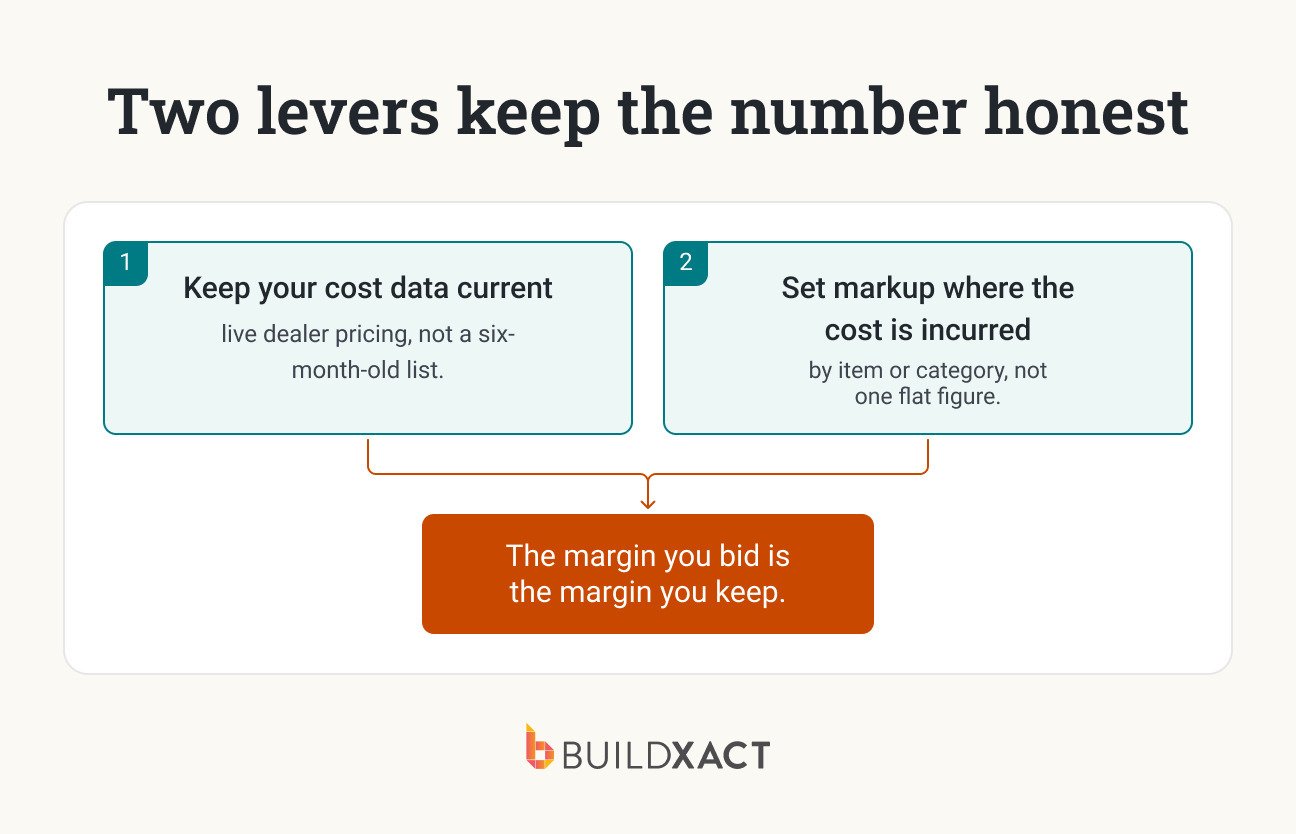
An overhead rate stays accurate when two conditions hold: the cost data behind it is current, and the markup that recovers it is applied where the cost is actually incurred.
The first protects against the gap between bid day and build day. The second protects against the gap between jobs that consume overhead differently. Take either one away, and the rate drifts.
If you’re pricing only a handful of projects a year, you can keep that connection by hand: pull fresh dealer pricing before bidding, review indirect costs regularly, and adjust the rate as the business changes. At low volume, the time required is manageable.
The challenge appears as volume increases. The price list that supported last month’s estimate no longer matches dealers’ quotes today.
The exact review schedule matters less than the principle: revisit the rate whenever the business changes materially, and on a regular cycle, even when those changes aren’t obvious.
Builders who set the rate once and leave it for years tend to find out only after margins start slipping. The goal isn’t to constantly recalculate overhead. It’s to keep the number connected to the business it was built to represent.
Current cost data
Current cost data means today’s number, not the number available when you built the last cost estimate. That matters most on the costs that move frequently: lumber, framing packages, finishes, fuel, and dealer pricing can all change between the day a bid goes out and the day materials are ordered.
The trouble is that pricing information becomes stale over time. A dealer quote from six months ago still looks reasonable until it’s checked against today’s number. A spreadsheet still looks accurate until someone compares it to a current price.
That’s why keeping cost data current becomes part of holding your margin rather than a separate estimating task.
Buildxact’s live-dealer pricing is what closes that gap for builders who’ve outgrown the hand refresh. The integration supports this by bringing current dealer pricing into the estimating workflow. It also reduces the gap between the costs used to build the estimate and the costs the business will actually pay when the work begins.
Markup at the line item
You’ve already seen why one flat figure misfits a mixed book of work. The fix is to apply markup where the cost lives.
You set a line-item rate the same way you set the company-wide one, but on the slice of overhead that part of the work actually drives. Framing pulls supervision and equipment; finishes pull client communication and rework; specialized trades pull coordination.
Weigh each category’s markup toward the overhead it consumes, so framing can carry one recovery rate, finishes another, and specialized work a third. Each portion of the estimate then recovers overhead in proportion to the burden it places on the business.
The goal isn’t complexity for its own sake. A flat percentage stays easy to apply, but a granular markup stays closer to reality. The right balance depends on the volume and mix of work you’re pricing, but the principle holds: the closer overhead recovery is to the cost that creates it, the better the margin holds.
Building Overhead Into Bids That Hold Their Margin
Margin slips even when the calculation is right because the rate and the business no longer match. The rate was built from real costs, and the estimate recovered overhead the way it should have. That wasn’t a mistake. The business it was built to represent just kept moving, and the number stayed put.
Overhead is a number you keep alive, not one you set once. The builders who hold their margin aren’t working from a better formula; they’ve built upkeep into their pricing, so the numbers stay honest without anyone having to remember to check them. If your construction bids are built on a rate that’s drifted from your actual costs, recovering that margin at closeout becomes guesswork.
That’s where Buildxact fits. With estimating, dealer pricing, budgeting, and cost tracking in one place, the numbers you win the job on stay tied to the costs of building it, so the margin you bid is closer to the margin you keep.
Start for free and see what that looks like on your next estimate.