

Margins that once looked solid can vanish fast – often without a clear warning. Costs creep up, variations multiply, and cash flow tightens.
In most cases, the issue isn’t the initial pricing or the subcontractors – it’s the lack of a clear, consistent forecasting process.
Many construction businesses have reliable systems for quoting and invoicing, but forecasting remains the weak link. Without an accurate view of future costs and profit, small shifts early on can compound into major surprises later.
Why forecasting matters
Every project starts with a finite pot of money. Whether you’re the head contractor or the client, there’s a fixed budget that must deliver the job from start to finish. Once you start spending, every decision affects what is left in that pot.
Without a solid forecasting process, there’s no clear line of sight on how current performance links to future outcomes – and that’s where risk creeps in.
Across the industry, margin erosion of 5-10 percent on mid-sized projects is common – and most of it traces back to poor forecasting and weak cost-to-complete visibility. At Xact, we see forecasting as one of the least mature disciplines in the construction industry – but also one with the biggest financial impact.
Forecasting helps answer three key questions:
- What have we spent so far, and how does it compare to our budget?
- What costs are still to come?
- How will those costs and timelines affect our overall cash position and margin?
What reliable forecasting looks like
A reliable forecasting process links:
- Scope clarity – what’s included, what’s changed, and what’s still to deliver.
- Progress measurement – what’s physically complete, verified against scope.
- Cost tracking – what’s been spent, what’s committed, and what remains.
- Time and risk – how schedule changes or methodology shifts affect cost.
Strong forecasting starts with accurate job costing. You need a clear view of what has been completed, what remains, and how that aligns with your original scope. This means tracking costs to date, incorporating variations, and constantly assessing how much of the project’s budget has already been consumed.
Good forecasters don’t just look at spreadsheets – they connect physical progress with financial data. They understand that delays, methodology changes, and scope drift all show up in the numbers eventually. A forecast that combines cost-to-complete analysis, job progress, and time-based risk gives business owners a clear, actionable view of what’s ahead.
Why so few businesses get it right
Forecasting often falls apart because systems aren’t connected. Data from estimating, project management, payroll, and accounting rarely align cleanly, making it hard to produce a single, reliable source of truth. Without that integration, even the best spreadsheet gives a false sense of accuracy.
The result? Business owners are left guessing how much profit is left in their projects – or when cash is likely to run short.
The other piece of the puzzle is communication. Getting accurate data relies on clear, consistent updates from Project Managers and Site Managers – they’re your eyes on the ground. Without a simple process for reporting progress, you lose visibility and end up managing by gut feel instead of facts.
Forecasting as a Team Sport
Good forecasting isn’t a solo effort – it’s a team discipline. Contract Managers, Project Managers, and Site Supervisors all play a role in feeding reliable, timely information into the system. When everyone understands their part and communication flows both ways, you move from reactive guessing to proactive decision-making.
The payoff of getting forecasting right
A construction business with strong forecasting processes can see trouble before it hits. They know which projects are likely to go off course and can make adjustments early. They can plan resourcing and cash flow with confidence. And most importantly, they can make decisions based on fact, not instinct.
When forecasting works, owners stop being surprised by cash shortfalls. Projects finish closer to plan. Teams stay aligned on priorities, and confidence replaces stress in monthly reviews.
Three signs your forecasting process isn’t working
- You only find out about cost overruns at month-end.
- Your WIP and cashflow rarely match.
- You can’t clearly explain cost-to-complete on each job.
When you forecast well, you’re not just reporting on what happened last month – you’re controlling what happens next.
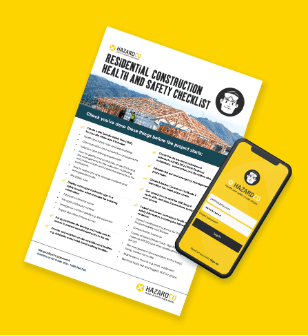
Download this checklist to help identify gaps in your current process and start making improvements now.