
When a homeowner or developer wants to build a project, they usually ask multiple builders to submit a price. This process is called tendering.
For builders, understanding how the tendering process works is essential. The quality of your estimate, the speed of your response, and the clarity of your proposal can determine whether you win the project or lose it to another contractor. To stay competitive, many residential builders use estimating software to calculate costs and prepare professional bids in a fraction of the time.
In this guide, we’ll explain how construction tendering works, the common types of tenders builders encounter, and how construction management software can help you submit more competitive bids.
How Builders Price Jobs And Compete For Work
Every project starts with a price, but that price is also your pitch.
For residential builders, pricing is often flexible and relationship-based. You might be working directly with a homeowner, adjusting scope, allowances, and timelines as the project takes shape.
Tendering is simply the process of putting that price forward. An owner asks for a number, a few builders submit bids, and one gets the job.
It might sound straightforward, but in reality, this is where you either win or lose the job.
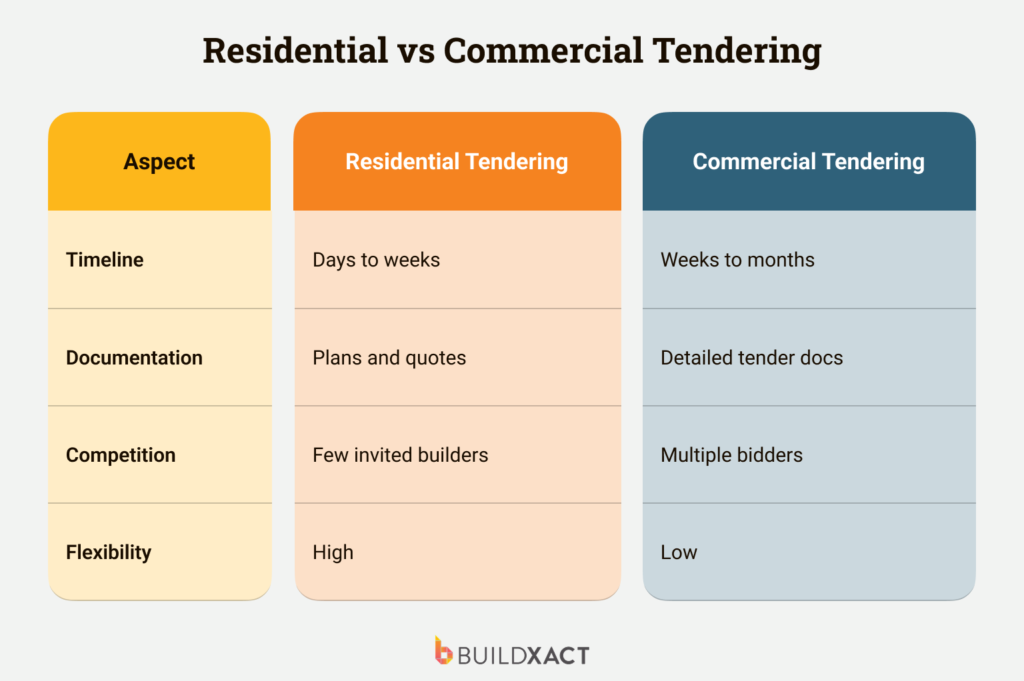
That process can vary widely depending on whether the project is residential or commercial. Residential tenders tend to be faster and more flexible, while commercial tenders are more structured and documentation-heavy.
Residential tenders
In these tenders, things tend to move faster and be more flexible.
For example, a homeowner might send plans to three builders and ask for pricing. From there, you’re expected to turn around a clear, competitive bid in a short space of time.
That usually means:
- Reviewing drawings and specs
- Pricing labor, materials, and subs
- Pulling it all into a bid that the client can understand clearly
The pressure is that you’re doing all of this while juggling other jobs, and often against builders who are quoting just as fast. If your takeoff, pricing, and scope are all sitting in different places, every change becomes manual. Miss something small, and it doesn’t show up until you’re already on site.
That’s why more builders are moving to estimating or construction management software at this stage. Not because it’s “nice to have,” but because it keeps everything connected (your quantities, costs, and scope) in one place, so you can submit a bid faster without cutting corners.
Once the bids are in, the homeowner compares more than just price. They’re looking at clarity, detail, and confidence. A well-structured bid often wins over a cheaper one that feels vague. In residential work, this whole process might take a few weeks from start to decision.
Commercial tenders are a different story.
Commercial tenders
Commercial tenders are more structured, more detailed, and much less forgiving. You’re working to strict deadlines, formal requirements, and detailed documentation.
They often involve:
- Large tender documents
- Strict submission deadlines
- Compliance requirements
- Multiple evaluation stages
- Formal procurement rules
These tenders can take months to prepare, and there’s far less flexibility once they’re submitted.
But whether it’s a quick residential bid or a full commercial tender, the fundamentals are the same.
You need to price accurately, move quickly, and present your numbers clearly. That’s what wins work and protects your margin once the job starts.
Types of Tendering in Construction
There are several types of tender processes that may be used to select a contractor.
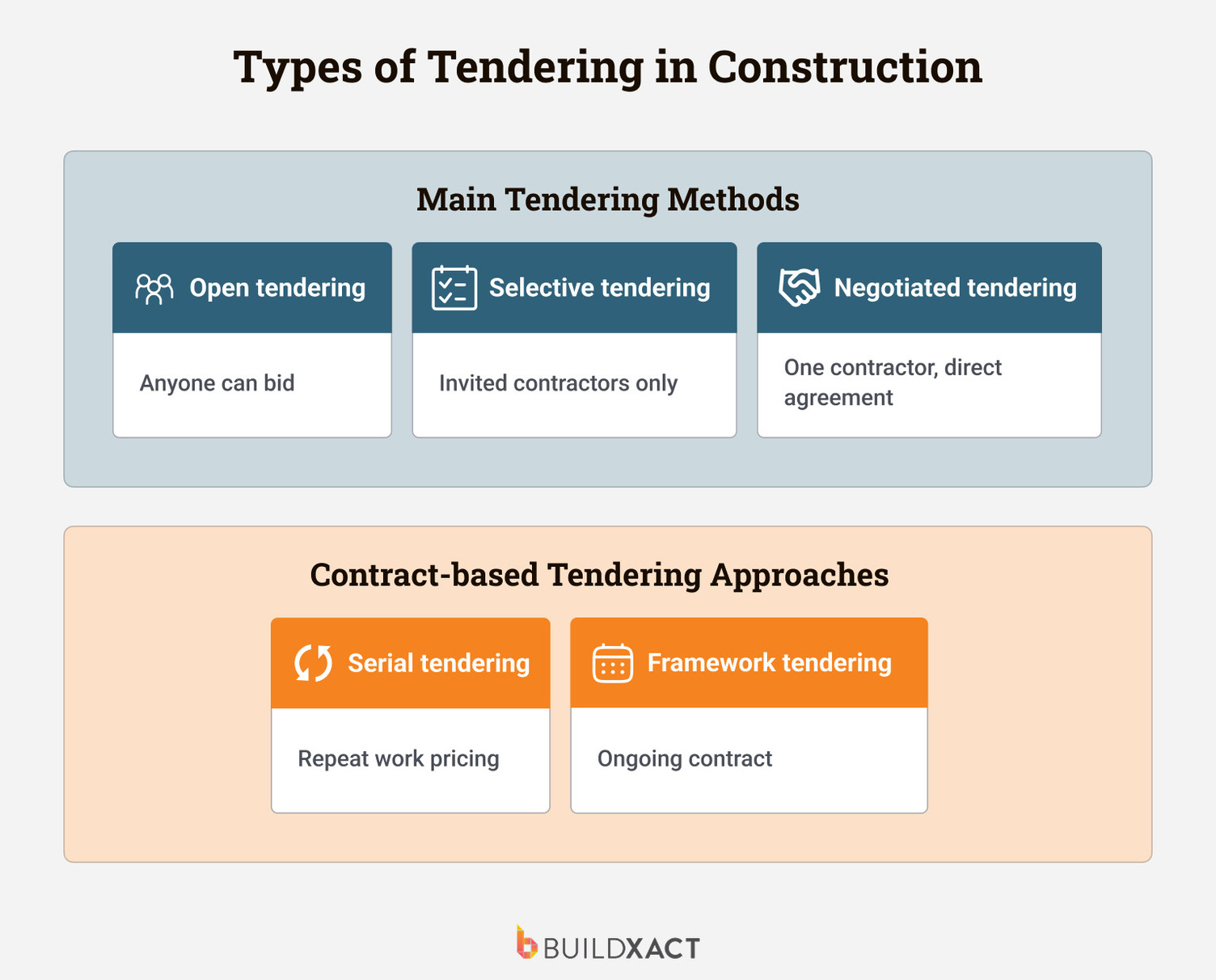
Main tendering methods
These are the most common ways projects are put out to tender.
Open tendering
During an open tendering process, anyone may submit a tender in response to the owner’s invitation. The opportunity is advertized where contractors can see it, and all interested contractors are invited to submit a bid. Some invitations, for example, those involving large projects, may require contractors to be prequalified before submitting an open tender.
Open tendering is the most competitive tender option, allowing anyone interested in the opportunity to bid. It allows new and emerging contractors the opportunity to win work and encourages competition.
You’ll mostly see open tendering on public projects or large developments. It’s not something most small residential builders deal with regularly.
Selective tendering
Selective tendering involves the owner choosing a shortlist of contractors to invite to tender. In this case, only those invited may submit a tender offer. This type of tender works best for specialty or complex projects, where the owner wants to limit responses to only those construction companies they deem suitable for the work. Unknown contractors are unlikely to participate in these tenders.
Selective tendering reduces wasted effort from reviewing proposals from too many contractors and helps ensure only competent contractors participate. However, it excludes new and small companies that may be competent contractors, and reduces the overall number of competitive bids.
A selective tendering example is an architect inviting three builders to submit bids for a residential project. With only a few builders in the mix, speed and clarity matter, and many use construction management software to get accurate bids out quickly.
Negotiated tendering
In negotiated tendering, only one dealer or contractor is selected to submit a tender, and the owner negotiates with that dealer or contractor to reach an agreement. This version is used for highly specialized contracts or for contract extensions. This tendering process significantly reduces the cost, as there is only one proposal to review.
However, it discourages competition among contractors, which can lead to higher prices and a more challenging negotiation process.
This is common with repeat clients or remodeling work, where the relationship is already established.
Contract-based tendering approaches
These tendering methods are built around ongoing work, rather than one-off projects. Pricing consistency and long-term relationships matter more than one-time competitiveness.
Serial tendering
In a serial tendering opportunity, a particular contractor provides a set of typical values for a set scope of work over a series of similar projects.
The owner can select from the list of work to determine exactly what will be performed under the contract. Contractor prices are often lower, as there’s an expectation of ongoing work, fewer future tenders, and a longer-term working relationship.
Framework tendering
Framework tendering involves selecting a contractor for on-call work over a period of time. The contractor provides a schedule of rates and a breakdown of resources and overhead charges.
This type of tender reduces costs and allows owners to get quick repairs, since the contract is already signed and completed.
Tendering stages
Tender types are one thing, but the process itself can vary, too. And that impacts how much information you have when pricing, and how much risk you’re carrying upfront.
Single-stage tendering
In a single-stage tender, the tender documents are fully prepared before an invitation is issued. One contract is awarded for the entire project.
Two-stage tendering
In a two-stage tendering, the initial design hasn’t been completed yet. A contractor is selected to take part in two distinct stages.
They may propose their initial design fee, or they may be chosen for their qualifications.
Once the design documents are complete, another tender is submitted for the construction of the project, and a contract is drawn up for that portion of the work.
The Tender Process
Most construction tendering in the engineering and construction industry goes through this process: invitation, clarification, submission, settlement, and contract execution.
The challenge isn’t completing each step, but rather managing the information across them. Drawings, scope, pricing, and timelines are often spread across different places, which is where things start to get messy. More builders are moving toward connected project management tools to keep everything aligned as they move through the tender process.
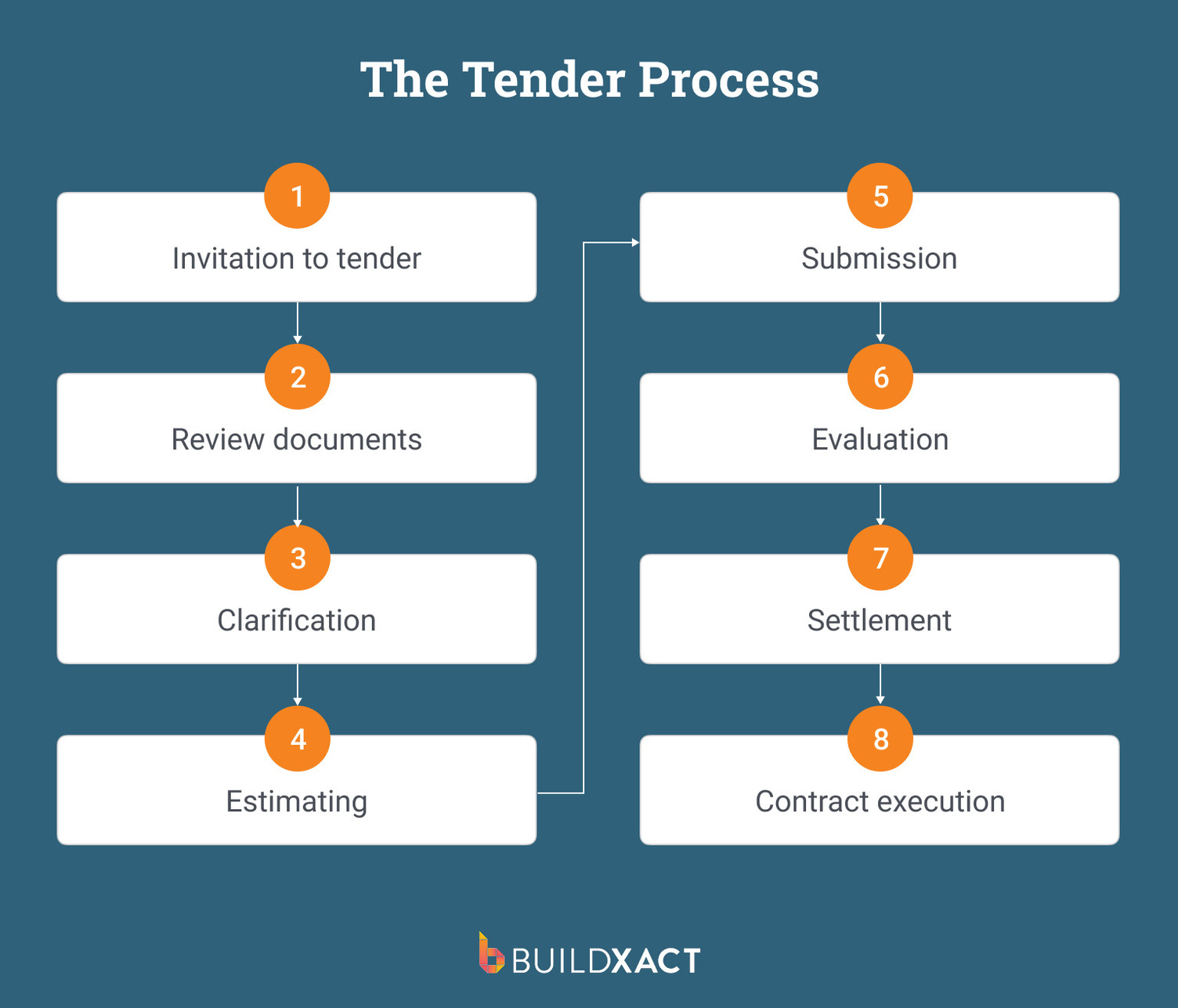
1. Invitation to tender
The owner provides tender documents and information to potential dealers and contractors regarding the work to be performed. These tender request documents may include:
- Letter of invitation to tender
- Preliminary information (including pre-construction information and site waste management plan)
- Form of contract, contract conditions and amendments
- Employer’s information requirements if BIM is being used
- Tender pricing document (or contract sum analysis on design and build projects)
- Drawing schedule
- Design drawings, and perhaps an existing building information model
- Specifications
2. Review documents
Builders review the drawings, specifications, and scope to understand exactly what’s being asked. This is where you move past the drawings and start understanding the real scope, including gaps, unclear details, and potential changes.
- Go through drawings in detail to understand layout and construction requirements
- Review specifications for materials, finishes, and compliance requirements
- Identify gaps, inconsistencies, or unclear scope
- Flag anything that needs clarification before pricing
This step is critical because any misunderstanding here flows straight into your estimate. If something is missed or assumed incorrectly, it doesn’t show up until later, often when it’s harder (and more expensive) to fix.
Using construction management tools to organize drawings, specs, and notes means you’re not jumping between files or missing key details.
3. Clarification
If something is missing, unclear, or open to interpretation, this is your chance to ask before you price it. Builders submit questions to the owner or consultant team, and the responses are shared with all bidders so everyone is working from the same information. In some cases, updated documents are issued or deadlines are extended to accommodate changes.
4. Estimating
Cost estimating is where builders turn the scope into a number. You’re taking everything you’ve reviewed and clarified, and breaking it down into real costs:
- Materials
- Labor
- Subcontractors
- Overheads and margins
If quantities are off, the scope is missed, or the costs aren’t up to date, it won’t show up until you’re already on site. And by then, it’s your margin taking the hit.
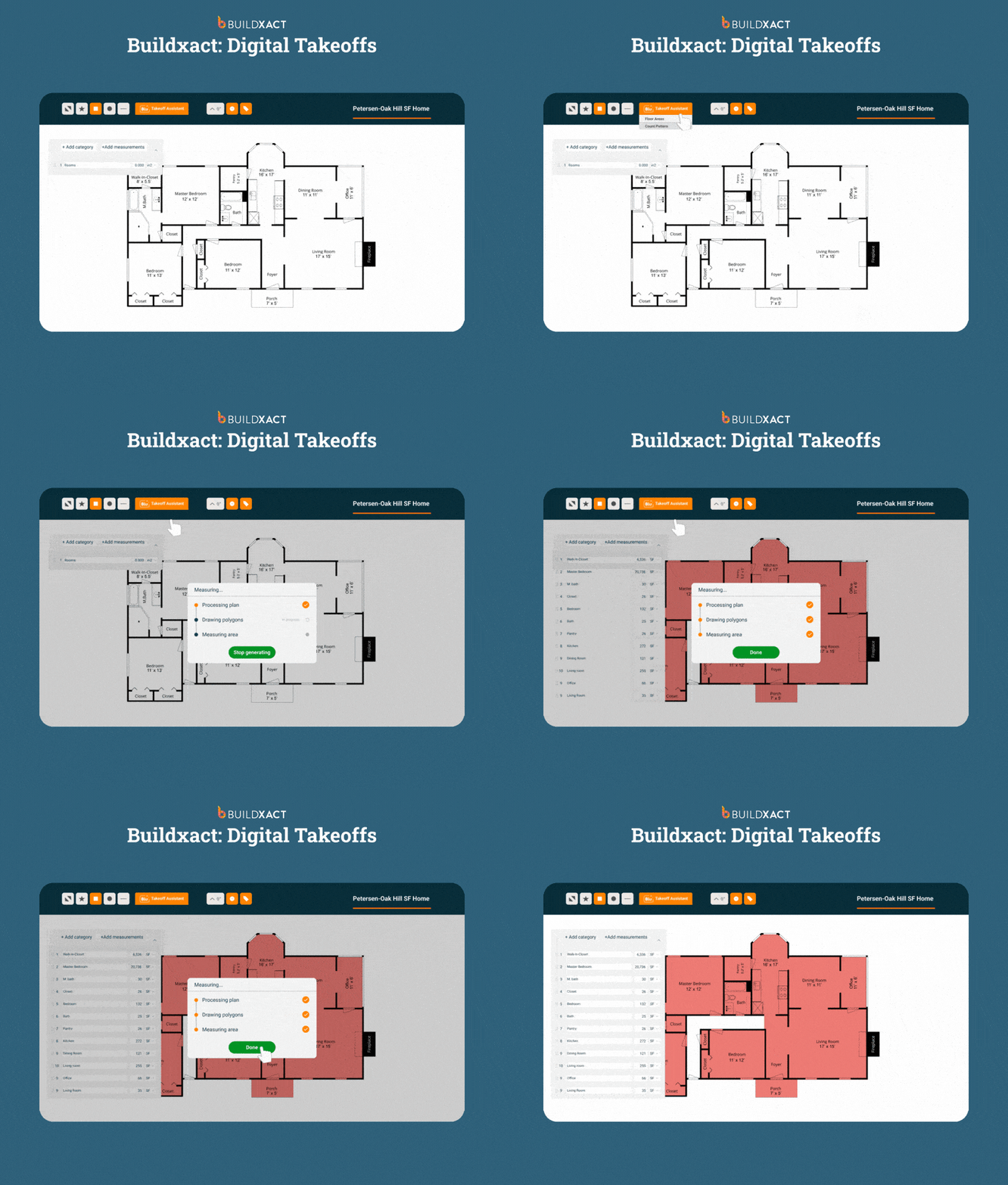
Construction takeoff software takes the guesswork out of it. You’re measuring directly from the plans, keeping pricing consistent, and updating estimates without having to start over every time something changes.
5. Submission
Contractors submit bids that outline both their pricing and their plans for delivering the project. This typically includes:
- Pricing documentation, such as estimates or cost breakdowns
- Project schedules and construction planning details
- Technical proposals, methods, or design approaches
- Company qualifications, including past projects and references
- Personnel and resource plans, covering team structure and availability
Contractors may submit variant bids, which are alternatives or noncompliant proposals, as an option for the owner. These options are usually less expensive than those proposed in the tender documents. Variant bids are usually provided only upon request and are accompanied by a compliant proposal.
For example, a contractor might suggest a different structural system or construction method that reduces costs.
Contractors may also submit qualified tenders, which include specific reservations or limited liabilities if they cannot or will not provide the services specified in the proposal documents.
6. Evaluation
Once bids are submitted, the owner reviews and compares them to decide who to move forward with. Price matters, but they’re also assessing:
- Overall price and cost breakdown
- Experience and track record on similar projects
- Proposed timeline and ability to deliver
- Clarity and detail in the submission
This is where how you present your bid starts to matter just as much as the number itself. The real advantage of using an all-in-one construction management platform is how it brings everything together — your costs, scope, and supporting details — into a clear, professional submission that’s easy for clients to understand and trust.
7. Settlement
Once the tenders are reviewed, the owner selects a preferred builder and enters negotiations. During this process, the tender documents and proposal may be revised to meet the agreement’s conditions.
8. Contract execution
The final contract is prepared, reviewed by both parties, and signed. At this point, everything you’ve agreed to is locked in — scope, pricing, and timelines. If anything is unclear here, it tends to show up later during the build.
Having everything in one place, such as contracts, approvals, and supporting documents, makes this step smoother. With construction management software, it’s easier to keep everything organized, signed off, and moving without delays.
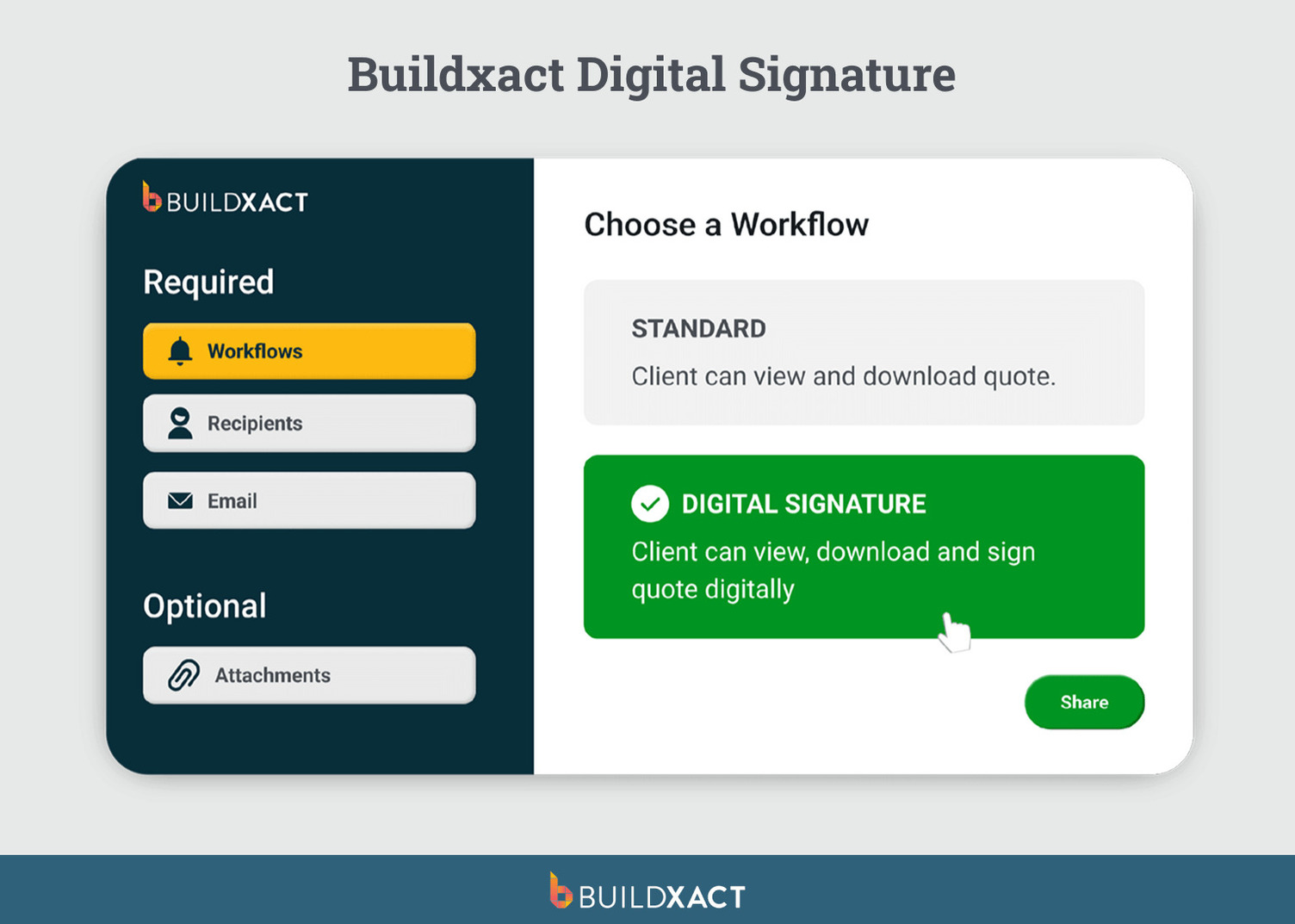
How Tendering Software Helps Solve Common Tendering Challenges
Preparing construction tenders can be complex and time-consuming. Builders must review drawings, calculate quantities, coordinate subcontractor pricing, and prepare detailed proposals, often under tight deadlines.
Digital estimating and tendering software can help streamline many of these tasks, improving both speed and accuracy during the bidding process.
Inaccurate estimates
Inaccurate estimates are one of the biggest risks in tendering. If materials, labor hours, or subcontractor costs are off, you might still win the job. But you’ll feel it later when margins start tightening during construction.
Using estimating software like Buildxact, you can:
- Perform digital material takeoffs directly from drawings
- Maintain updated cost databases for labor and materials
- Apply contingency allowances and markup consistently
- Reduce manual calculation errors
Missing scope items
If something isn’t clearly included in the estimate, it doesn’t just disappear. It turns into an unexpected cost later on.
Having a structured way to build your estimates prevents these avoidable extra costs. Templates, checklists, and clearly defined inclusions and exclusions make it easier to see what’s covered and what isn’t. Not jumping between tools also reduces the chance of something going unnoticed.
This is where an all-in-one estimating and project management platform like Buildxact really comes into its own. With everything connected, you can:
- Use structured estimating templates and scope checklists
- Track inclusions and exclusions clearly within the estimate
- Organize drawings and specifications in one place
- Document assumptions directly in the bid
Slow response times
Builders who take too long to prepare estimates may lose the opportunity before they even submit their tender. Preparing estimates manually can take days or weeks, especially for larger projects.
With the right system in place, you can:
- Speed up material takeoffs and quantity calculations
- Reuse templates from previous projects
- Store pricing libraries for commonly used materials and assemblies
- Generate professional estimates quickly
Poor documentation in the bid
A poorly organized tender submission can make a builder appear less reliable, even if the price is competitive.
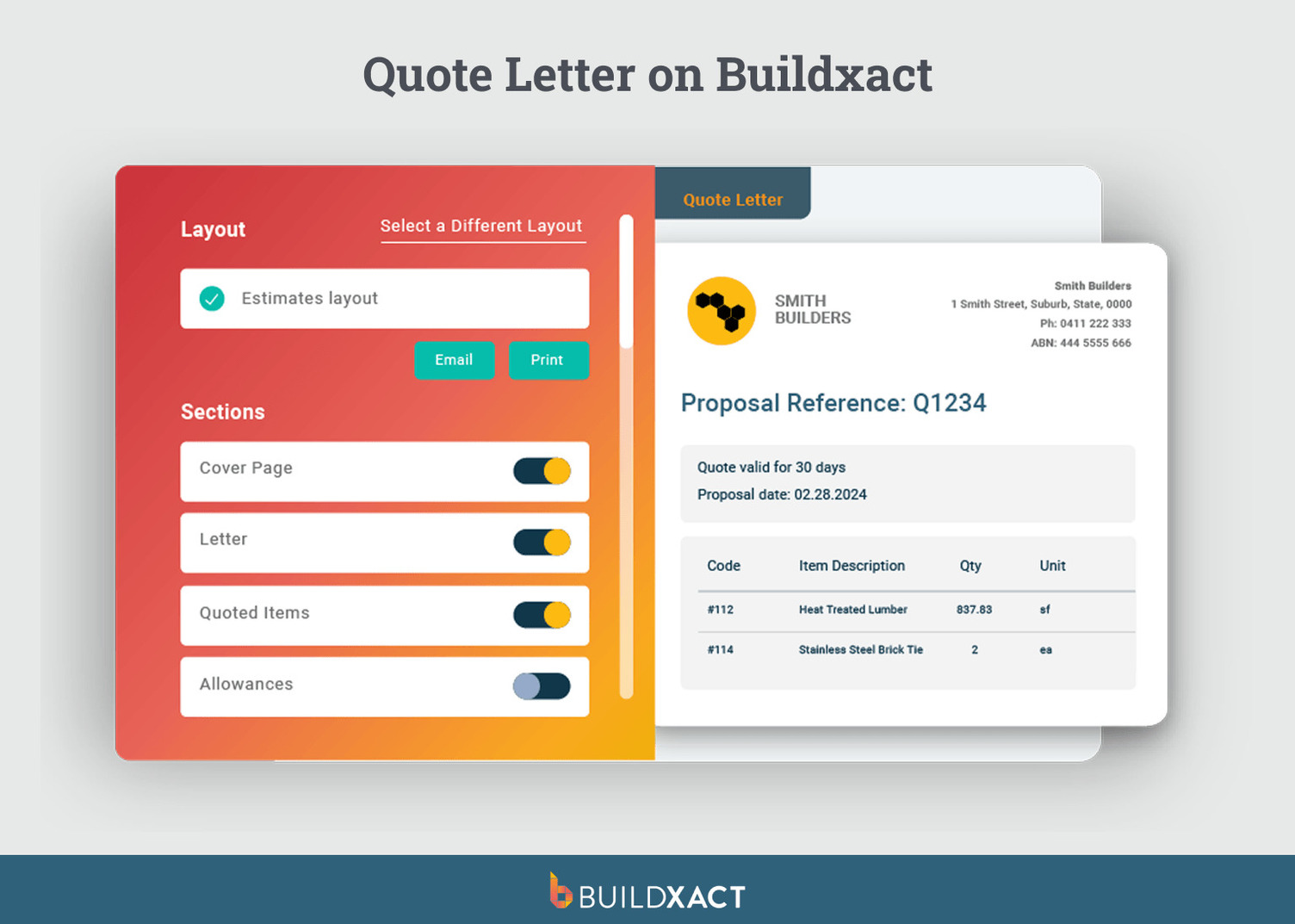
This is where presentation starts to matter just as much as pricing.
The top project management platforms help you turn your estimate into a clear, professional submission that’s easy for clients to review and trust. With everything structured and connected, you can:
- Generate clear and professional cost breakdowns
- Include timelines, assumptions, and scope details in the estimate
- Standardize proposal formatting across projects
- Share organized documentation with clients and project partners
By improving how your estimates are presented, not just how they’re calculated, tools like Buildxact help you submit stronger bids and put yourself in a better position to win the work.
How to Win More Construction Work With Buildxact
Winning more work comes down to how quickly and accurately you can price jobs, and how clearly you present that information to clients.
Construction management software improves each step of the tendering process by integrating takeoffs, estimating, and quoting into a single workflow.
With Buildxact, you can:
- Complete takeoffs directly from digital plans to measure materials faster and reduce manual errors
- Build accurate estimates using templates and live dealer pricing to keep costs consistent and up to date
- Turn estimates into professional, client-ready bids in minutes that clearly outline scope, costs, and assumptions
- Update pricing quickly when scope changes, without rebuilding the estimate from scratch
- Carry estimate data into scheduling and project management, so nothing gets lost after the job is won
By tightening up each of these steps, builders can respond faster, reduce errors, and submit more competitive bids without increasing admin time.
Instead of juggling spreadsheets and disconnected tools, many builders are moving to all-in-one platforms like Buildxact to streamline estimating, tendering, and project delivery from start to finish. These tools are designed to help builders bid faster, improve accuracy, and ultimately win more work.
If you want to price jobs faster and submit more competitive bids, start using Buildxact for free or book a one-on-one demo with one of our team members.