
When an average person needs construction services, they look on Google and Instagram. That’s why marketing your residential construction business online is a necessity.
Changing the way you market your business or starting for the first time can seem intimidating, but it is pretty easy to learn.
A solid marketing strategy includes social media marketing, search engine optimization, and other strategies to help you reach existing customers, but also to increase brand awareness so that future customers find and learn about you.
If you are not sure how to promote your business, generate more leads and win more work, this blog has you covered.
Why Construction Marketing Is Essential For Growing Builders
Construction marketing isn’t about doing everything. It’s about making sure the right people can find you, trust you, and contact you when they’re ready to build.
Here’s why good builders can’t ignore marketing anymore.
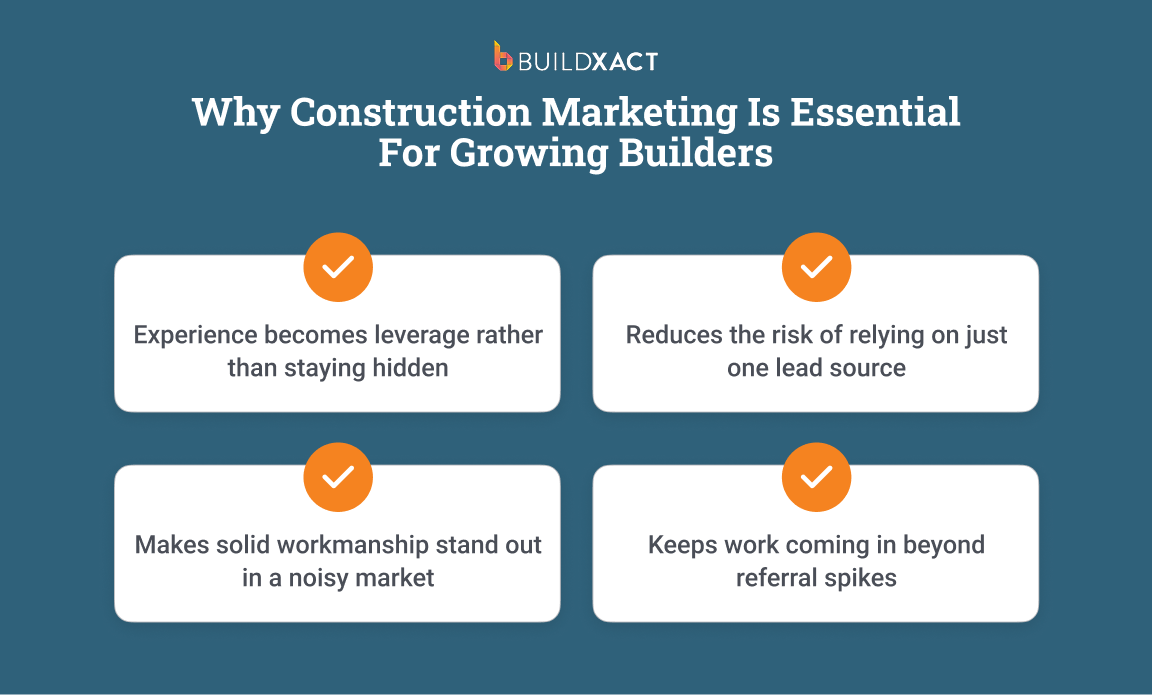
Experience becomes leverage rather than staying hidden
Most SMB builders already have the hard part: real site experience, completed jobs, and lessons learned the hard way. Marketing is what turns that experience into something homeowners can actually see and understand before they ever call you.
Without marketing, your experience stays locked in past projects and private conversations. With it, your work starts selling for you through photos, explanations, reviews, and clear messaging that show how you build and what makes you different.
Reduces the risk of relying on just one lead source
Relying on one source of work, whether it’s referrals, a developer, a single agent, or a platform, puts your pipeline at risk. When that channel slows down, everything slows down.
Construction marketing spreads that risk. A basic online presence, local visibility, referrals, and word-of-mouth working together means you’re not starting from zero every time one source dries up. Even light, consistent marketing creates multiple ways for work to come in.
Makes solid workmanship stand out in a noisy market
In residential construction, visibility often beats quality, at least at first glance. Solid builders regularly lose jobs to competitors who look more established online, even when their work doesn’t hold up.
Marketing gives your work a voice. It helps homeowners see proof, understand your process, and feel confident choosing quality over noise. When your projects are visible, trust builds faster, and price becomes less of the deciding factor.
Keeps work coming in beyond referral spikes
Referrals and word-of-mouth are valuable, but they rarely come in at a steady pace. They tend to come in waves, which makes planning workloads and growth unpredictable.
Consistent marketing adds stability by keeping your business visible even when referrals slow down. Instead of depending on timing or luck, enquiries continue coming in because homeowners can find and vet you on their own.
10 Construction Marketing Strategies to Build a Thriving Business
Here are 10 tips on how to market your residential construction business.
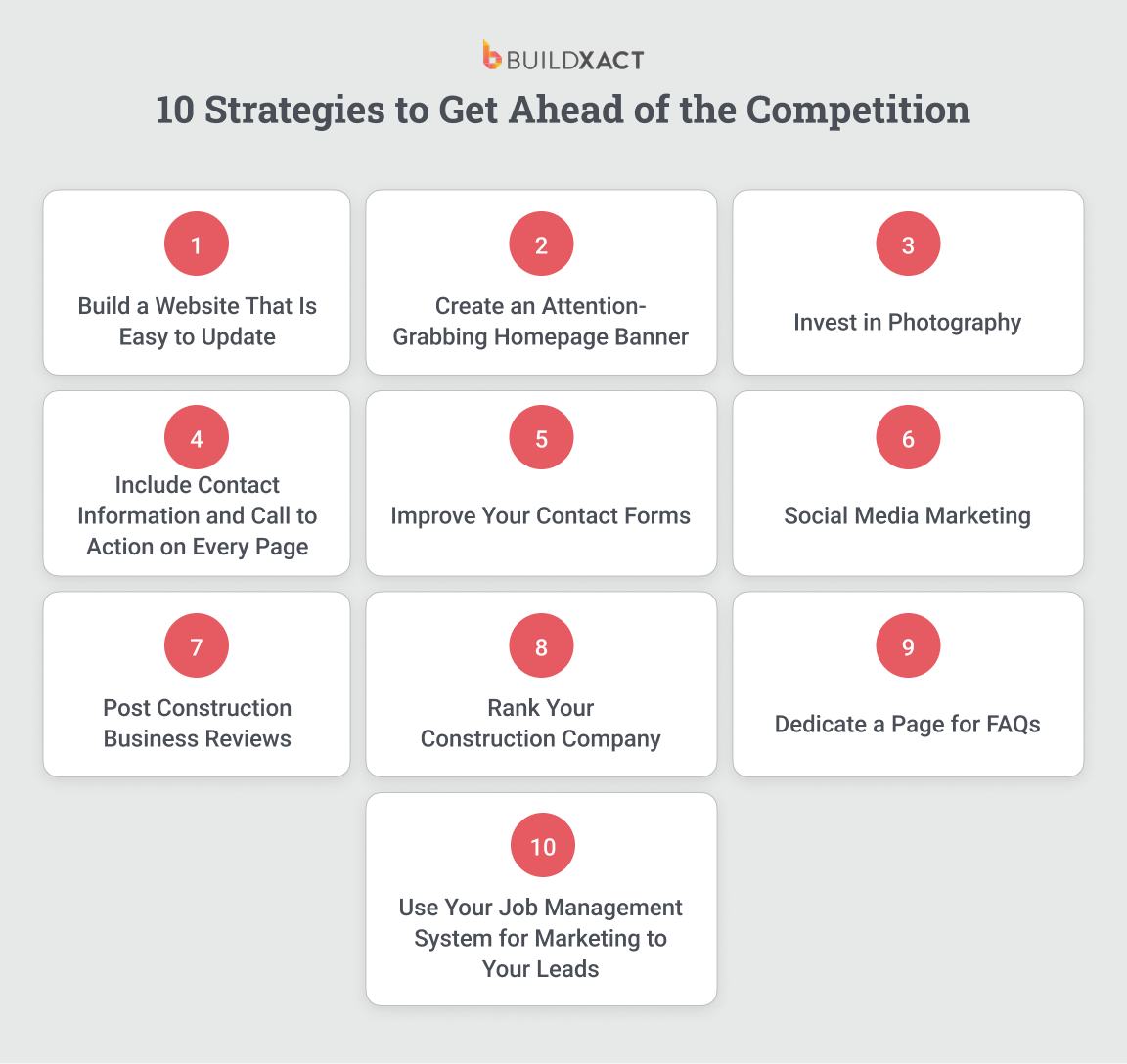
1. Build a website that is easy to update
Your website is the foundation of your marketing strategy, and it is a critical component of lead generation. The more professional your website looks, the more trustworthy it will be to your potential customers. This will go a long way in helping them choose your business over other construction companies.
Your customers should easily navigate through your website on a desktop, tablet, or mobile. By using a Content Management System (CMS) like WordPress, Squarespace, or Wix, you can access prebuilt templates and themes to get started quickly and easily update content and images.
Updates to any pages, content, or images will automatically be applied across all devices, saving your construction company time and effort while providing a great online experience for your customers.
Having an updated website with useful, engaging content will help generate website traffic.
Don’t have a domain name? Any CMS can help you register a name, and then you can get started right away.
2. Create an attention-grabbing homepage banner
Your homepage banner is your “hook.” It is the first thing visitors will see when they click on your website and should include:
- A hero image – the central piece of your banner, and it should be a high-quality image showcasing your business. Good imagery is essential to a great website.
- A catchy tagline – consists of one or two sentences demonstrating the value your business delivers to your customers. Make sure it ties to the company brand so potential customers have a sense of the business right away. It is always a good idea for the marketing team to do some research before landing on a final tagline.
- Your primary services – summarizing who you are and what you do in bullet point form ensure even speed-readers will get the gist. Remember, most of your first-time website visitors won’t have time to read everything in a single visit.
- A call-to-action button directs visitors to your contact page or the next step of your sales process. For example, ‘Find out more’ or ‘Contact us’ with a visual button are great ways to let people know exactly what to do next.
3. Invest in photography
Hire a professional photographer to take photos of completed projects to showcase the quality of your work for your website’s portfolio page and for placement on your social media platforms. Book a photographer every quarter to do a photoshoot to keep your portfolio fresh for multichannel marketing.
Having good images is essential to an online presence and helps catch the attention of potential clients who might be visiting your website for the first time.
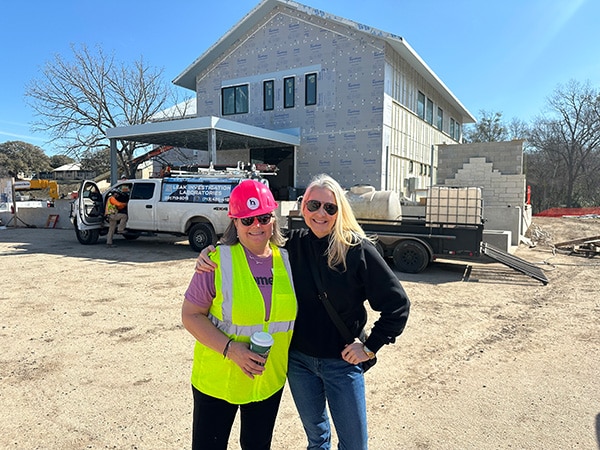
Humanize your brand and content by including images of yourself and your team, too. Potential customers will want to know that they’ll be doing business with real people.
This is a very important part of any construction marketing strategy. People like to do business with people they feel they know and can trust.
4. Include contact information and a call to action on every page
Contact number:
Include your contact number in the upper right-hand corner of every page of your website. It reminds customers that they can easily call you, no matter what part of your website they’re browsing.
On the mobile version of your website, your customers can tap on your number in the same location. It should automatically redirect them to their dial screen, where they can hit the call button or save your number immediately.
Call to action at the bottom of every page:
To make the most of any marketing channel, never publish a page without guiding your customers to another page or a call to action, e.g., ‘Contact us.’
Otherwise, you’re just leading them to a dead-end, and they’re left to figure out where to go on their own, or they’ll leave your website altogether. You want to keep control and push your visitors through the proper steps of your sales process.
5. Improve your contact forms
We know it seems like longer forms could drive potential customers away, but the truth is that a qualified lead with high purchasing intent will fill out whatever form you give them. A solid, qualified lead creates new clients that are gold to any construction company.
Business is a two-way street, and as much as you want to get new customers, you also want customers who are easy to work with and willing to provide the information you need.
At a minimum, your contact form should have these elements:
- Heading
- Subheading, which includes when they will hear back
- Full name
- Phone number
- Property address
- More project details
- Ability to add an attachment
- Submit button
- A confirmation that your form submission was successful
6. Social media marketing
Social media marketing is very powerful, especially for a small construction company. A study by the National Association of Realtors found that social media remained the top lead-generating technology (39%), ahead of Customer Relationship Management (CRM) systems (23%) and traditional property listing platforms (17%).
Links to your social media accounts, like Facebook, LinkedIn, and Instagram, should be at the bottom of your website, as they may detract from your call to action.
An effective construction marketing strategy will require someone to function as a marketing manager and launch digital marketing campaigns for your target audience.
While this is the most underused platform in the industry, it attracts professionals. Using LinkedIn is an effective way to connect with industry groups and associations that can help with lead generation and support your business growth.
This is one of the most powerful platforms for builders and remodelers today because it’s very visual and discovery-driven. Homeowners use Instagram to find inspiration, explore design ideas, and save the kinds of homes they aspire to build. If you consistently post high-quality photos, short Reels, and project walkthrough videos, you increase your chances of being discovered by the right audience.
These days, short videos (Reels) tend to get more reach than static photos. Simple content like before-and-after clips, quick walkthroughs, time-lapse build progress, or even short on-site updates can perform really well. You don’t need anything fancy. Just clear footage and good lighting.
Make sure your profile clearly explains what you do and includes your website link or something like “DM us to get started.” Tag your location so people in your area can find you, and write captions that describe the project in plain language, so it shows up in searches.
Facebook communities and groups are a good source of information, connections, and leads. Facebook is also the largest social media platform globally, so it’s great to have a Facebook page for your business for more reach.
7. Post-construction business reviews
Two in five customers read reviews every time they look for a business, and 92% care about star ratings when choosing a business, making Google reviews one of the most influential factors in a client’s decision-making process.
Positive customer feedback helps win new business by proving that your business is trustworthy and provides value. Once a project is complete, ask your customers to leave a review on Google. Then promote these reviews throughout your website and on social media.
8. Rank your construction company
Here are three ways to rank higher on Google and get potential customers to your website:
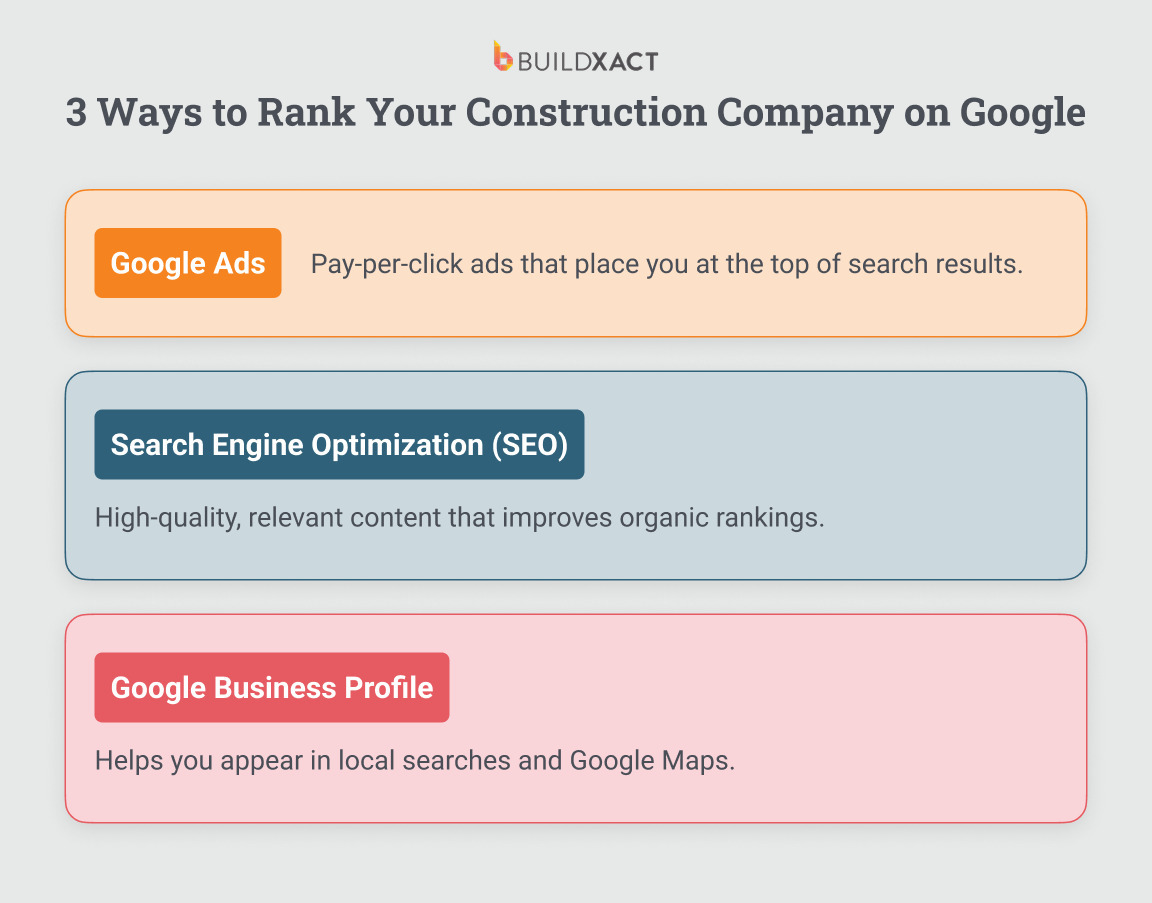
- Google Ads – This is a pay-per-click marketing strategy that can boost your website to the very top of a relevant Google search.
- Search Engine Optimization (SEO) – This relies on the quality of your content. The best and most relevant content will boost your Google ranking.
- Google My Business – This leads you to the top of Google Maps.
Marketing agencies can help you create a great marketing strategy that ensures your business is easily found online by potential customers.
9. Introduce a dedicated Frequently Asked Questions (FAQs) page
Think about all the questions your customers might have and create a page on your website that answers them. Having answers to FAQs helps to build further trust with your potential customers.
10. Use your job management system for marketing to your leads
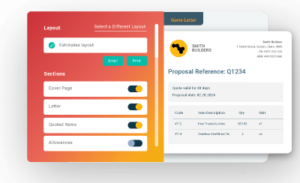
Whatever online construction platform you use, make sure that it includes a client portal. It should be a branded mini-site set up for each qualified lead, featuring your company logo and business details. Your prospective customers can log in, view project details and previous examples of similar building projects, and download brochures.
All communication, bids, and project updates are stored in one place within the portal. This shows prospective clients that you run a well-organized build process and makes it clear that working with you will be straightforward and stress-free. It’s an important point of differentiation that will set you apart from other builders.
Where to Start With Your Construction Marketing Process
Construction marketing works best when it’s built in layers. You don’t need to do everything at once, and trying usually wastes time and money. The goal early on is visibility, trust, and clarity, not scale.
Here’s a simple, staged approach that works for small and growing builders.
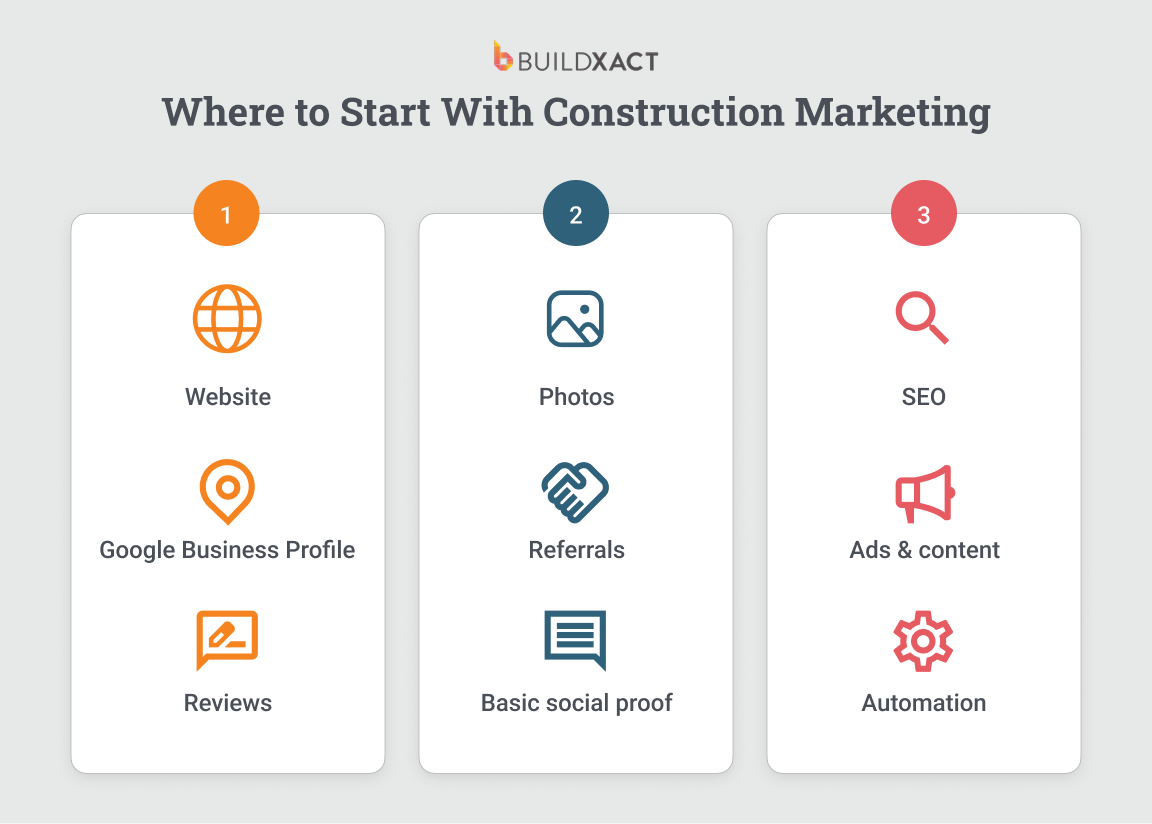
1. Lock down the basics that people check first
Before worrying about growth tactics, make sure the essentials are solid. This is where most homeowners will look before they ever contact you.
Start with:
- A simple, professional website (clear services, service area, contact details)
- A complete Google Business Profile
- Real reviews from past clients
This step alone handles a huge amount of trust-building. If a homeowner can’t quickly confirm who you are, where you work, and that others have hired you, nothing else matters.
You don’t need a fancy website, custom branding, or complex messaging. Clear and credible beats clever.
2. Turn completed jobs into visible proof
Once the basics are in place, the next priority is showing real work. This is what separates builders who say they’re good from builders who can show it.
Focus on:
- Job photos (progress shots, finishes, before-and-after)
- Short explanations of what you did and why
- Actively asking happy clients for referrals
3. Reinforce trust where people already look
At this stage, marketing becomes less about attracting attention and more about backing up decisions homeowners are already close to making.
Build on:
- Google reviews and responses
- Testimonials on your website
- Light social presence showing ongoing work
- Using referrals as proof (not just leads)
This is where marketing starts filtering enquiries. Better-fit clients come in because expectations are clearer before the first call.
4. Scale visibility once demand is steady
Only once the earlier steps are working should you think about reach and automation. Doing them too early usually amplifies weak foundations instead of fixing them.
Some tactics you can use at this stage include:
- SEO
- Paid ads
- Content marketing
- CRM tools and follow-ups
When starting with your marketing plan, it’s easy to get distracted by the next big marketing trend. But that’s more likely to hurt than help your business if it’s not properly established. Focus on looking credible, not big. Prioritize real enquiries over followers. Invest in tools only when you genuinely need them.
Marketing should reflect how you run your business today, not a future version you’re still building toward.
Tips for Marketing Your Residential Construction Business
Here are some practical, realistic tips to attract better enquiries and grow your business without turning marketing into a full-time job.
Tip #1: Marketing is about credibility before scale
The hardest part of marketing as a new builder isn’t visibility. It’s credibility. Homeowners want to feel confident hiring you. If there’s no proof, no reviews, and no visible work, even the best ad won’t help. Once you’ve completed a few solid jobs, focus on making that work visible and easy to verify.
Tip #2: Better leads matter more than more leads
Getting more inquiries for your business doesn’t necessarily mean more profit. If lots of people reach out to you but nothing turns into work, you could end up wasting hours on replying to messages and sending bids.
Good marketing helps filter clients before they contact you. Clear messaging about the type of projects you take on, your service area, and your standards attracts homeowners who are already aligned with how you work.
Tip #3: Start local
Being known locally usually matters more than trying to reach everyone online, especially in the early days. Before worrying about SEO or paid ads, focus on being visible in your community.
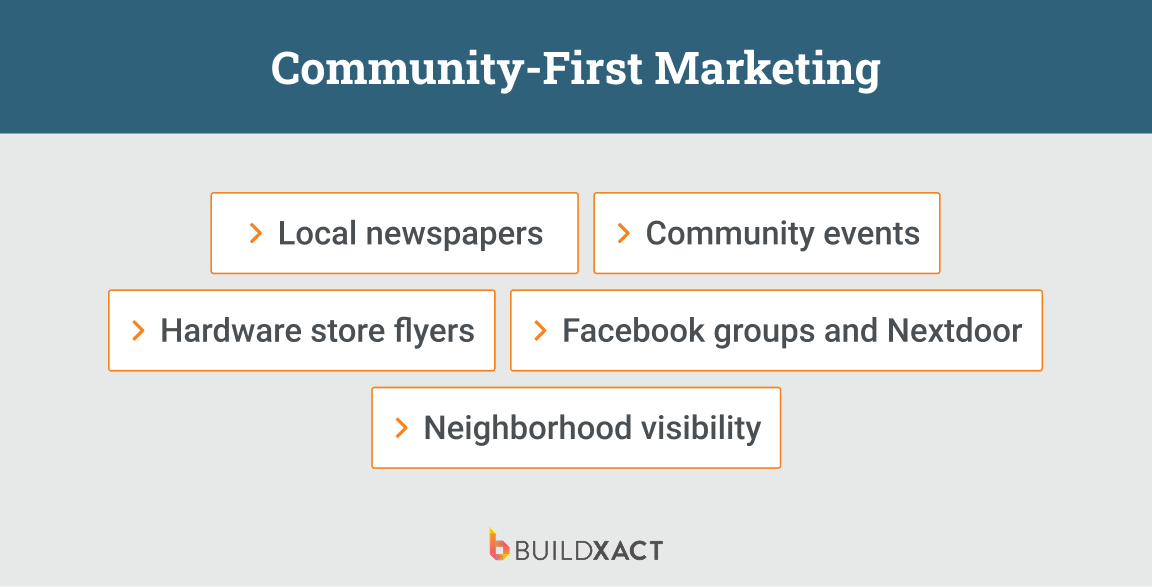
- Local newspapers
- Facebook groups and Nextdoor
- Community events
- Hardware store flyers
- Simply being visible in the neighborhood while you build
Tip #4: Proof beats promotion
88% of consumers consider authenticity important when deciding which brands to support, so you don’t need cinematic drone shots or scripted content to impress clients. What homeowners look for is reassurance that you’ve completed real projects and you know what you’re doing on site. Phone photos, simple captions, and honest descriptions work better than overproduced marketing.
Common Construction Marketing Mistakes and How to Fix Them
Many marketing issues come down to timing and priorities. Before you invest more time or money, make sure you’re not making one of these common mistakes.
Spending on ads before trust is in place
Paid ads amplify whatever’s already there. If your website is difficult to navigate and unattractive, ads won’t solve the problem. They’ll just drive traffic to a page that doesn’t convert and quickly drain your budget.
Before investing in ads, make sure your website is attractive and clearly explains your services. Add real project photos that show the quality of your work, and build up a base of genuine reviews.
Trying to be active on every platform
It’s tempting to be on every social media platform, just in case a client is looking there. But every platform takes time, consistency, and a slightly different approach. Spreading yourself too thin usually means nothing gets done properly.
Instead of five neglected profiles, manage one or two platforms properly so your business looks active and reliable.
Chasing followers instead of enquiries
A growing follower count can feel like progress, but it doesn’t always translate into real projects. After all, likes and follows don’t pay for materials or wages.
Instead of focusing on increasing followers for the sake of it, aim to attract the right audience — homeowners in your area who are genuinely interested in the type of work you do. Clear messaging, relatable job updates, and simple calls to action will do far more than chasing vanity metrics.
Ignoring reviews until you “have time”
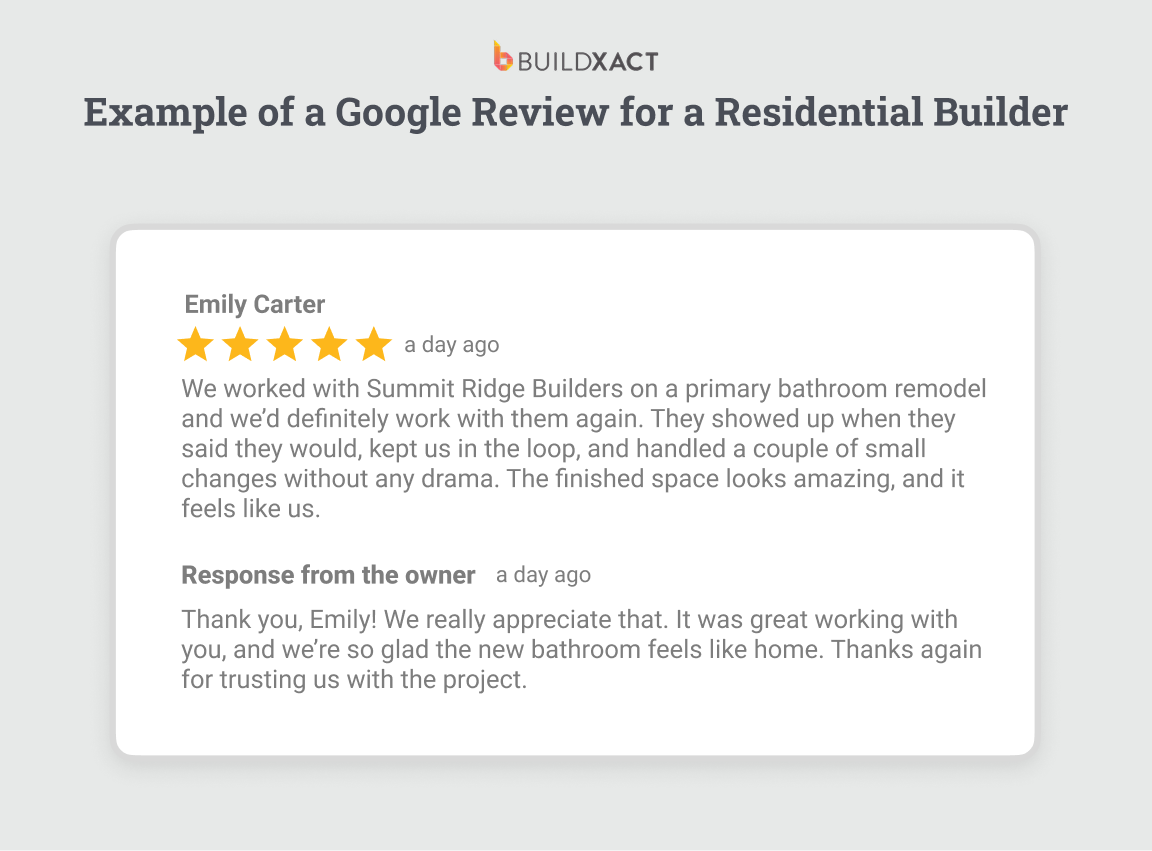
Getting reviews is great, but if you never respond to them, you’re missing an opportunity to build even more trust. Make it standard practice to respond to every review after a job.
A simple thank-you in a positive review shows you appreciate your clients. A calm, professional reply to a less-than-perfect review shows you take responsibility and care about doing things properly.
Your responses don’t need to be long or complicated, just consistent. When people see that you acknowledge feedback and engage respectfully, it shows future clients that you stand behind your work and take communication seriously.
Trying to look bigger than the business actually is
Marketing works best when it reflects how you really operate, not a future version of the business. Instead of selling yourself as a large-scale operator, focus on being responsive and clear about the work you do best. Homeowners value honesty and reliability more than scale.
FAQs
How is construction marketing different from normal small business marketing?
Construction marketing is more trust-based, local, and long-term. Homeowners take longer to decide, spend more money, and want proof you’ve done similar work before, not discounts or flashy ads.
What’s the most important construction marketing channel?
For most residential builders, it’s a combination of a clear, professional website, Google Business Profile, and reviews. There’s no single “best” channel. The key is consistency.
Should I hire a construction marketing agency?
It depends on your time, budget, and growth goals. Many builders start by handling the basics themselves and bring in help later for SEO, ads, or strategy once they know what works for their business.
Get Started With Buildxact
Marketing your business isn’t about being everywhere or doing everything at once. It’s about turning the work you already do into steady, profitable growth. Good marketing helps you attract the right clients. But what happens after they sign is what really determines whether your reputation strengthens or suffers.
Doing great work is still the foundation. Clear estimates, controlled budgets, organized schedules, and smooth communication are what turn one job into referrals, reviews, and repeat business.
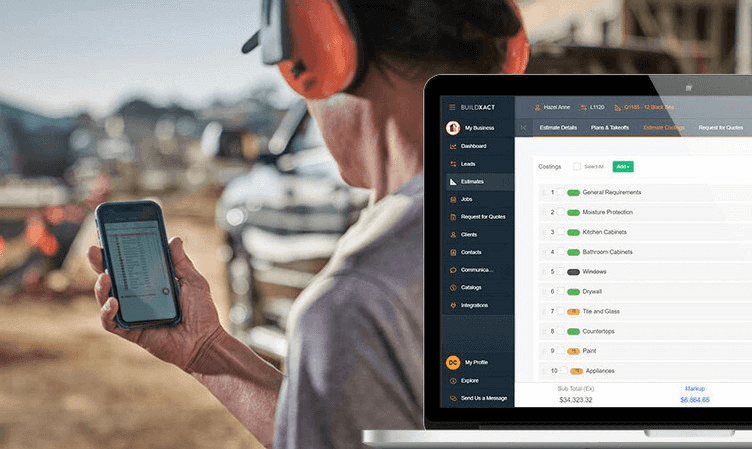
Buildxact helps you stay in control, so projects run smoothly, and margins stay protected. When jobs are well-managed, clients are happier. And happy clients are the engine behind strong word-of-mouth marketing.
Start for free and see how Buildxact supports both the way you build and the way you grow.