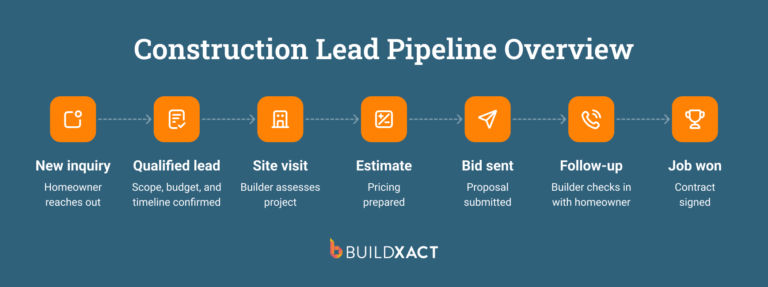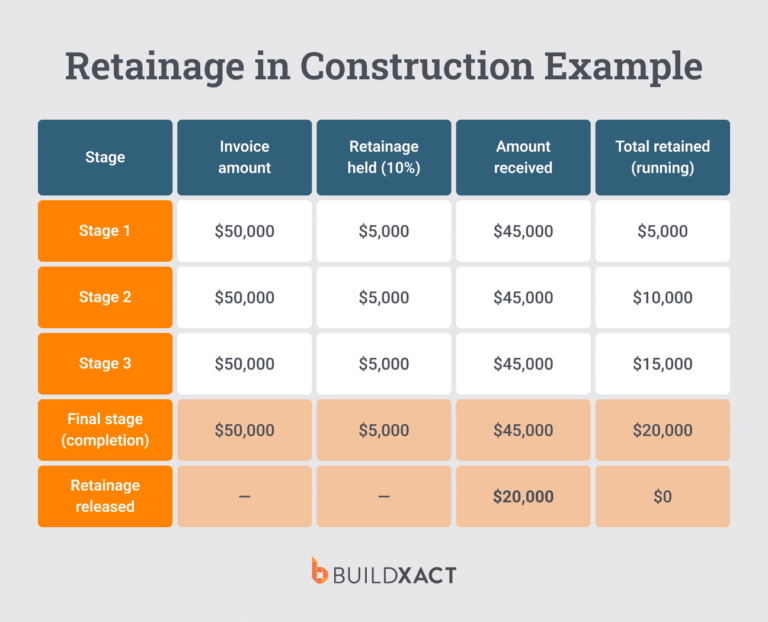


There’s an old saying: “If it’s not in the contract, it doesn’t exist.”
On a building site, that usually translates to: “If it’s not in the contract, you’re probably doing it for free.”
That’s the thing about contracts: nobody talks about them when the job’s running smoothly. They only become interesting when a client wants an upgrade, a payment is late, or someone says, “I thought that was included.”
For residential builders, contract management isn’t legal fluff or office admin. It’s the system that keeps the scope clear, the money moving, and the inevitable changes from chewing through your margin.
Here’s how contract management works on a real build, from the type of contract you choose to how you handle changes, payments, and risk along the way.
What Is Construction Contract Management?
Construction contract management is the process of creating, tracking, and enforcing agreements between you (the builder), your client, and any subcontractors or dealers.
It covers the full lifecycle of a project, from initial scope and pricing to project completion. It’s not only about paperwork, but also about how you stay in control of the job.
Every time a change isn’t documented or a payment is delayed, your margin takes a hit. But with proper contract management, you can:
- Capture and charge for every change
- Keep your scope and pricing aligned
- Maintain steady cash flow
- Prevent disputes before they happen
To manage all of that properly, it starts with choosing the right contract structure.
Types of Construction Contracts
The wrong contract type creates problems before the job even starts. It sets the tone for everything that follows — who carries the risk, how flexible the job is, and how much pressure ends up on your margin. These are some of the main types of construction contracts.
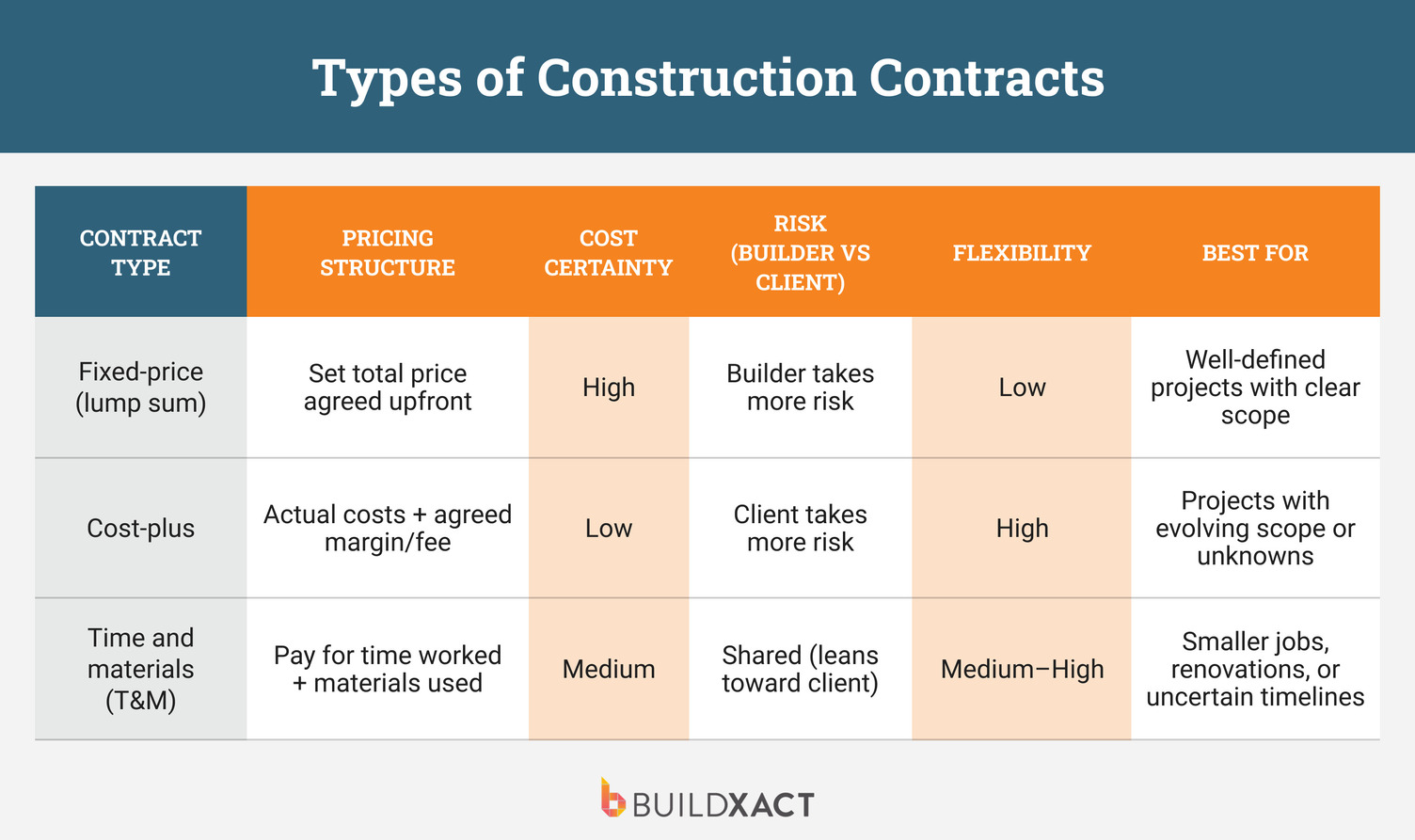
Fixed-price (lump sum)
A fixed-price contract sets a single, upfront total cost for the entire project. It’s a good option for clearly defined jobs, such as standard builds or repeat work, where the scope isn’t likely to change.
Pros:
- Predictable revenue
- Simple for clients to understand
Cons:
- You carry the risk of cost overruns
- Requires highly accurate estimating
Cost-plus building contracts
A cost-plus building contract means the client pays for the actual cost of the build, plus your margin. It works well for custom builds or jobs where the scope is likely to evolve as you go.
Pros:
- Lower financial risk for the builder
- More flexibility
Cons:
- Requires detailed cost tracking
- Some clients may be wary without transparency
Time and materials (T&M)
A time and materials contract is based on actual labor and materials used. It’s a good fit for renovations or smaller, more unpredictable jobs where the scope isn’t fully clear upfront.
Pros:
- Flexible
- Less risk from unknowns
Cons:
- Harder to forecast the total cost
- Requires precise and detailed documentation of labor and materials
Once you’ve chosen the right contract type, the real work begins – managing the contract throughout the job.
Managing Construction Contracts to Protect Your Margins
Contract management is continuous, not something you draw up and forget about. Every stage of the job either protects or shrinks your margin, depending on how well the contract is managed.
As a residential builder, it’s up to you to manage a contract throughout the entire job, from initial pricing to final payment.
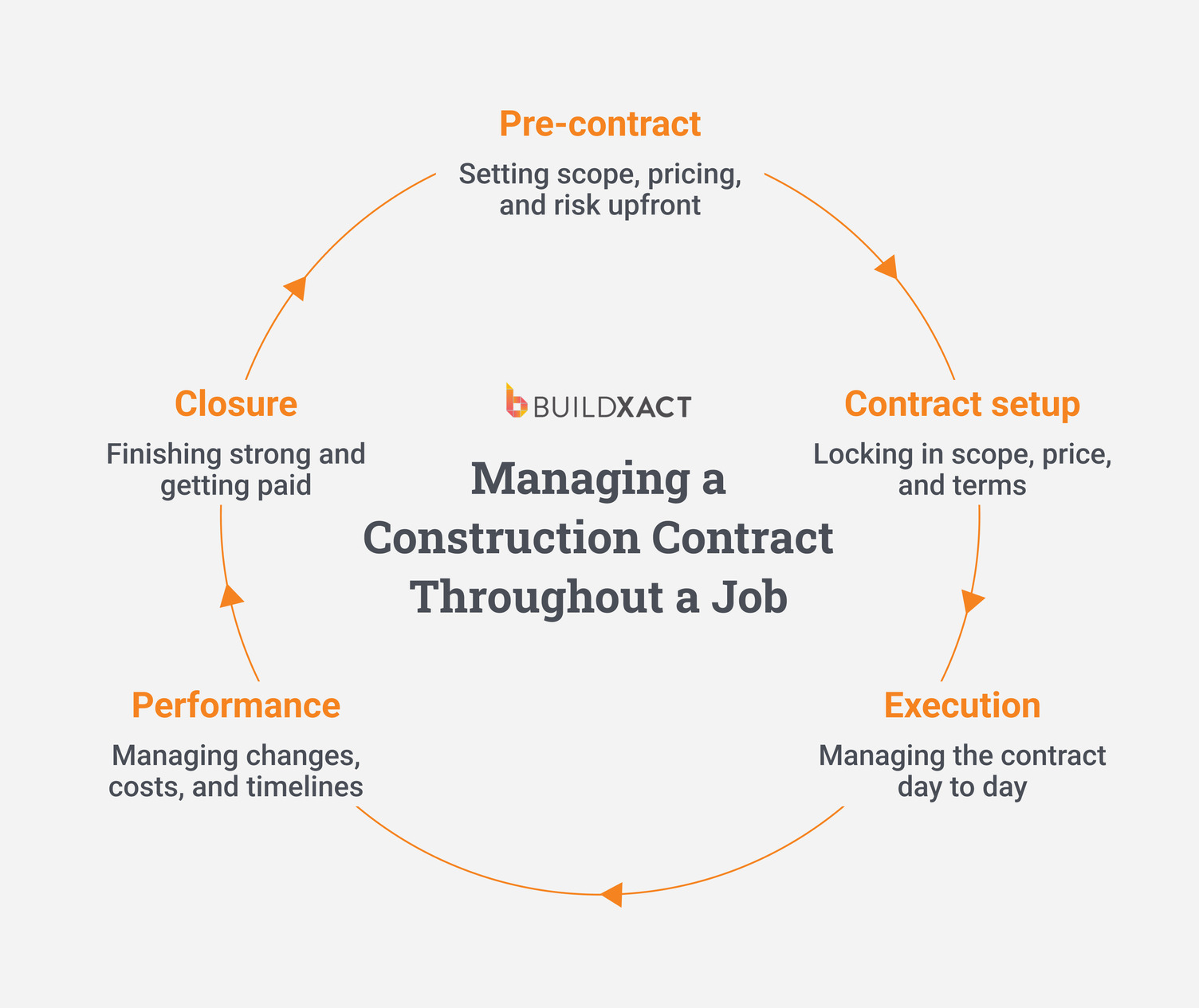
1. Pre-contract: setting scope, pricing, and risk upfront
Before anything is signed, your contract is already taking shape. The contract type you choose here determines who carries the risk and how your margins are protected.
- Clearly outline what’s included (and what’s not)
- Build your estimate off accurate takeoffs, not guesses
- Choose the right pricing model for the job
- Call out risks early, such as site issues, materials, and timelines
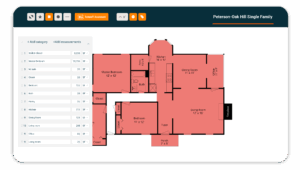
This is where using digital takeoffs and estimating tools helps protect your margin early. When your quantities and pricing are linked from the start, you don’t have to rebuild bids every time something changes. Get this pre-contract stage right, and you’re off to a solid start.
2. Contract setup: locking in scope, price, and terms
Once the client agrees to move forward, the contract formalizes everything. From here, it’s about making sure you and the client are on the same page about:
- Scope and specifications
- Contract price or structure
- Payment schedule and milestones
- Roles and responsibilities
- Terms for changes, delays, and disputes
With so many moving parts, it can be difficult to keep everything aligned. Managing all the finer contract details across emails, messages, and different documents is inefficient and time-consuming.
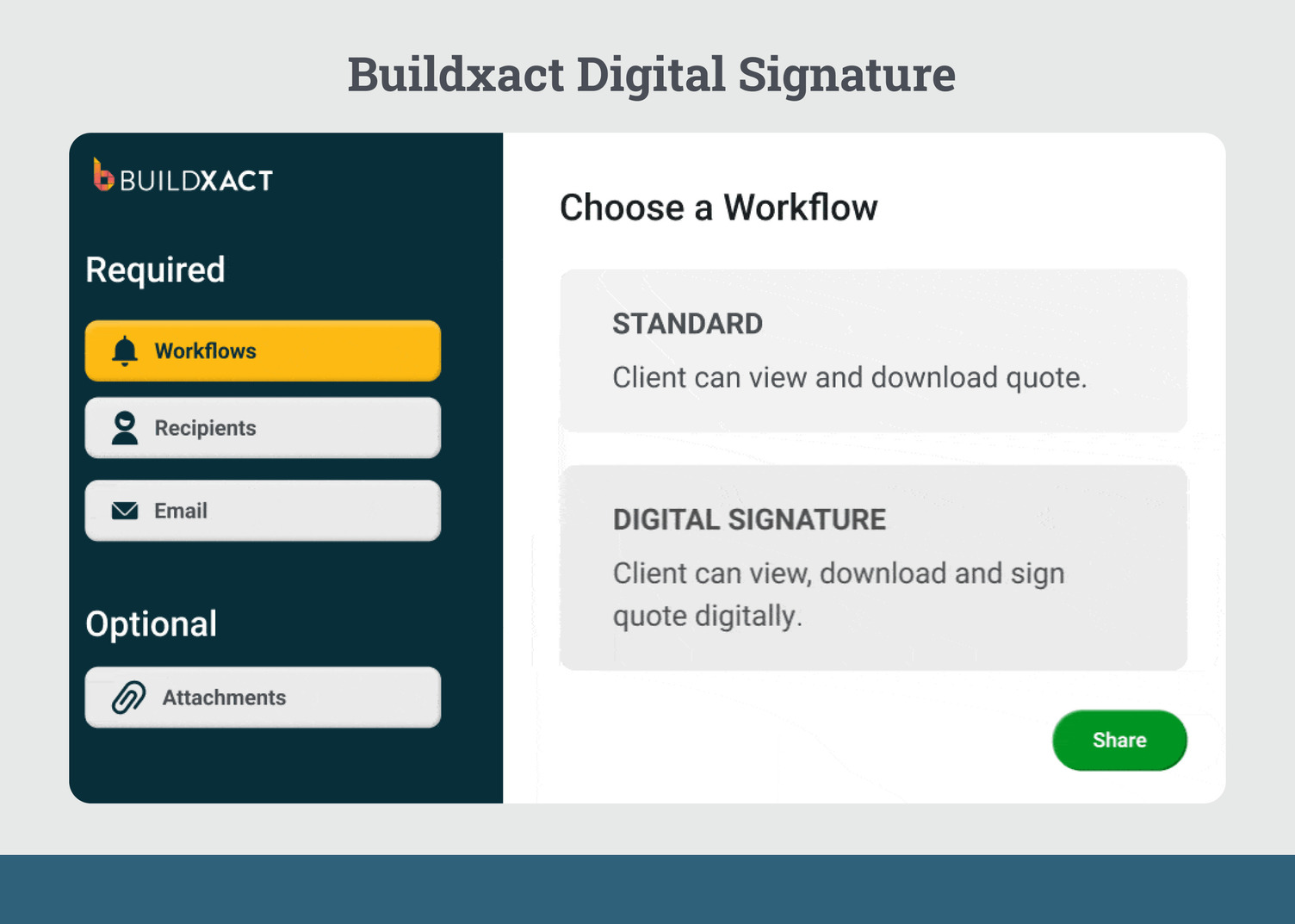
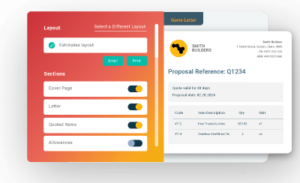
Today’s top construction management tools mean you don’t have to spend hours piecing together information across different tools. Approvals, selections, and sign-offs are all tracked in one place. Your clients can review and sign digitally, which keeps things moving and helps prevent those “that wasn’t included” disputes later.
3. Execution: managing the contract day to day
Once the build starts, the contract becomes your reference point. You should be using it to track progress against the agreed scope, answer client questions, and manage approvals as they come up.
But if your schedule isn’t connected to the actual job, you’re always playing catch-up. With Buildxact’s construction scheduling software, your schedule is built straight from your estimate, so your tasks, timelines, and costs are already linked.
When you’re on the job, the Buildxact Onsite app lets you and your crew update progress, share photos, and track what’s done in real time, without chasing paperwork or second-guessing what was agreed.
4. Performance: managing changes, costs, and timelines
This is the stage that really impacts your margin. You’re no longer working off a fixed plan; you’re managing a job that’s constantly moving. Costs shift, timelines adjust, and changes come in as the work progresses.
To keep the job from drifting, you need to stay on top of:
- Actual costs vs your estimate
- Change orders approved and reflected in the contract value
- The build schedule and knock-on delays
- Quality control to avoid rework
If you’re only reviewing costs at the end, it’s already done. The margin’s gone. What you need is live visibility, where digital tools come into play.
Modern project management software connects your estimate, costs, schedule, and job data in one consolidated place, so you’re not working off separate spreadsheets or memory. As costs come in and work progresses, you can see how you’re tracking against your original estimate, where you’re going over, and where your margin is starting to slip.
When things change, which they often do in a residential build, those changes need to be tracked, priced, and approved properly; otherwise, they never make it into your contract value.
You want a clear change order process that updates your costs, contract value, and timeline in one place. With a centralized project management system, change orders flow straight into your budget and billing, so you’re not chasing money for work that was never properly recorded.
5. Closure: finishing strong and getting paid
The job isn’t done when the tools are down. It’s done when the money is in. That final stretch still needs to be managed properly. Wrapping up the job includes:
- Final inspection and sign-off
- Practical completion
- Managing defects or snag lists
- Submitting final invoices
- Releasing retention payments
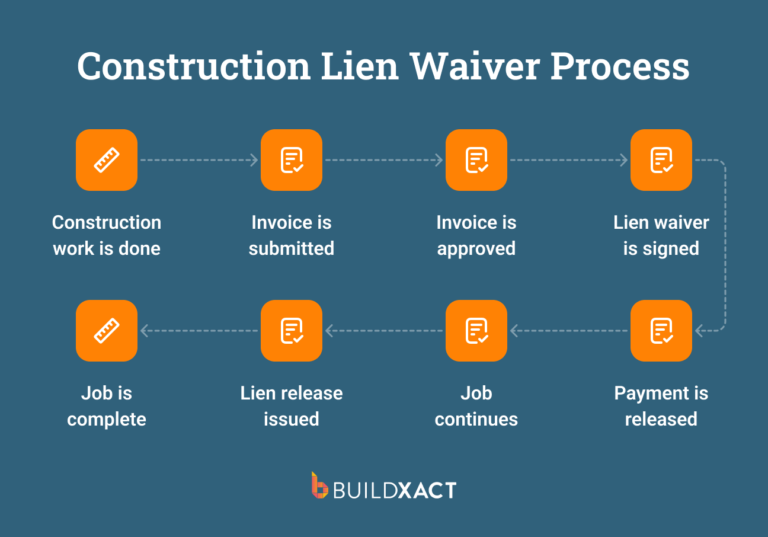
This is where things can drag if your paperwork isn’t tight. When your job reporting, billing, and payments are all connected, it’s much easier to finalize the job without chasing what you’re owed.
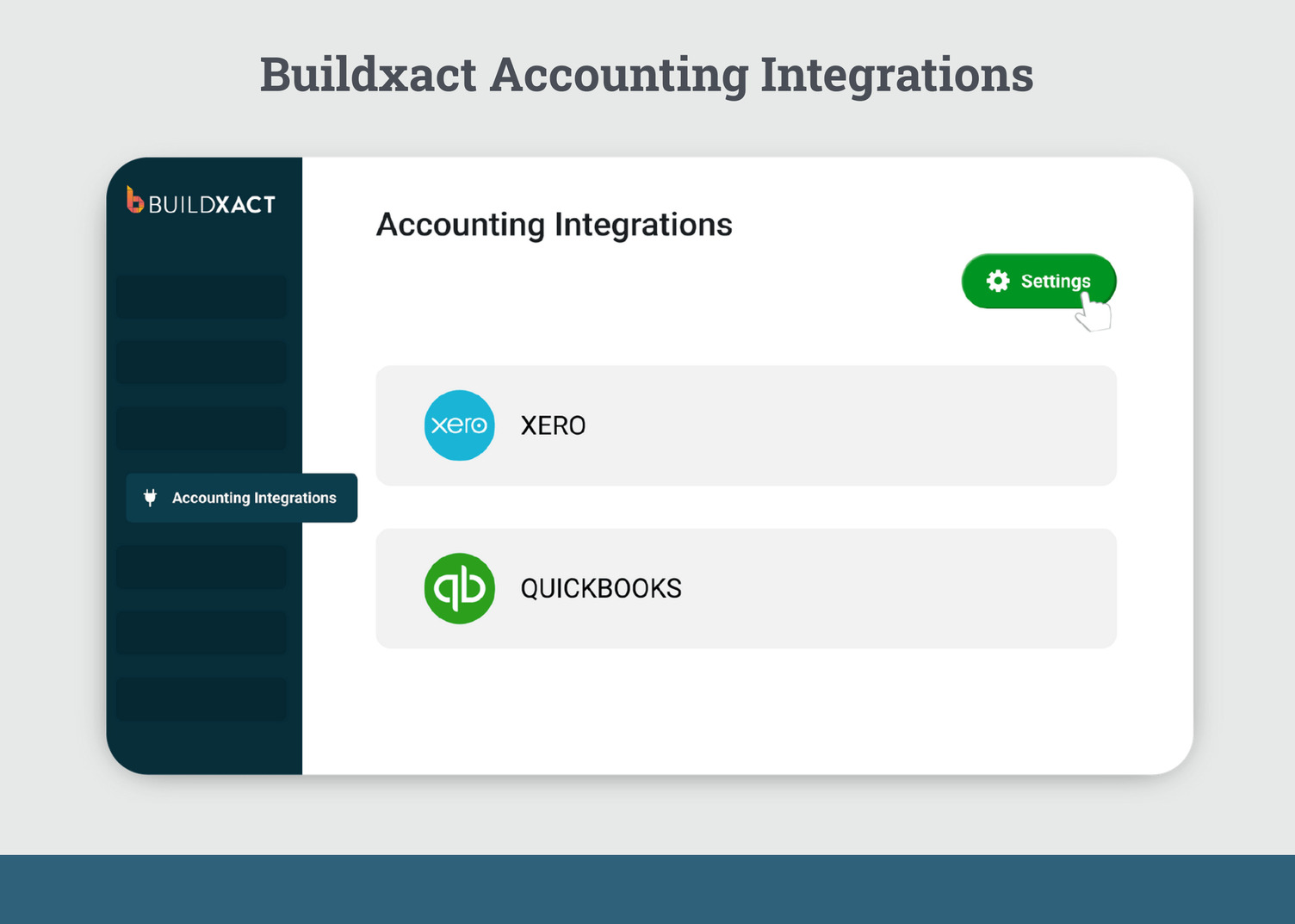
How to Set Up Contract Payments That Get Paid On Time
Unclear due dates or schedules that don’t reflect how the job actually runs are where payment issues begin. When the structure is off, you either end up covering the costs yourself or end up chasing overdue invoices later.
Residential construction billing tools keep payments flowing so your payment schedule aligns with the job’s progress. Tie payments to set milestones, set clear due dates upfront, and line them up with when you’re paying trades and dealers. That way, money comes in as the work gets done, not weeks later.
If your stages are too far apart, you end up funding the gap. If they’re too vague, clients question invoices, and delays creep in. Payments should feel like a natural part of the job flow, not something you have to chase.
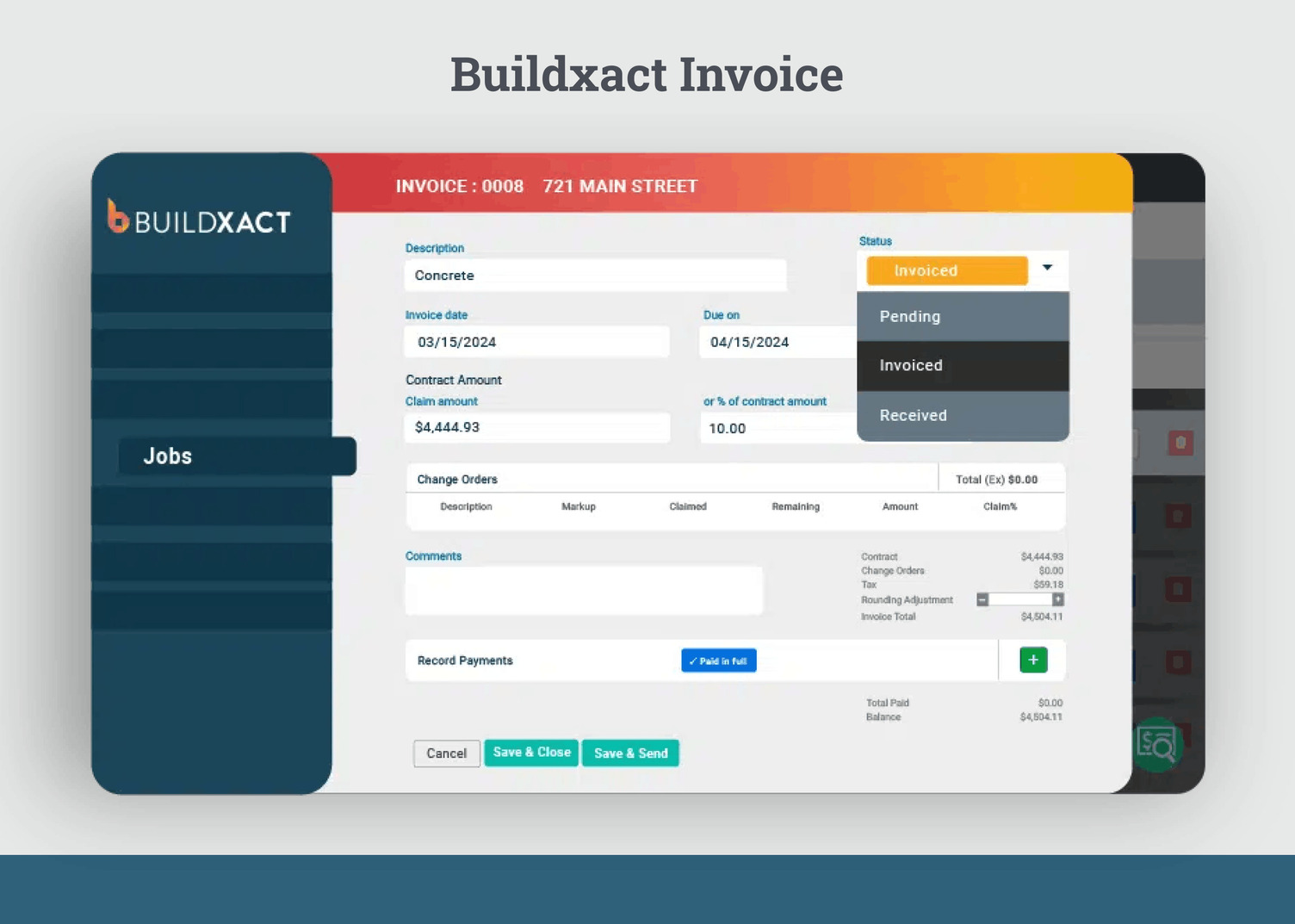
With Buildxact, you can set default payment terms for each client. Instead of resetting expectations every time, you’ve already defined how and when that client pays, keeping things consistent and less stressful.
The goal is simple: clear structure, no surprises, and cash flow that keeps up with the job.
Managing Change Orders As Part of Contract Management
You can price a job perfectly and have your contract locked in, but things change. That’s just the nature of residential builds.
Let’s say you’re on site and the client decides they want to change the bathroom tiles in their new home. It doesn’t seem like a big shift, so you give the go-ahead to keep things moving, figuring you’ll sort the cost later.
But it’s not just the tiles. The layout changes, and that affects labor. You may need more adhesive, different cuts, or extra time on site. The tiler’s schedule shifts, which pushes other subs back. Materials you’ve already ordered might no longer be needed.
By the time you look back, those small changes have turned into extra time, extra materials, and extra cost that never made it back into the contract. These changes need to be handled properly as they come in.
If something affects cost, scope, or timing, it needs to be documented, priced before the work starts, approved by the client, and reflected in your budget and contract value straight away. It also needs to be tied back to your original estimate, so you can clearly see the impact of each change.
The challenge is keeping track of all of that while the job is moving. But having one system changes that.
A Better Way to Manage Contracts
When everything sits in one place, from your estimate through to your costs, change orders, and invoices, you’re not chasing information or trying to piece things together later. You can see how the job is going, deal with changes as they come in, and keep everything lined up as the work moves forward.
With Buildxact, that’s just how the job runs. Your estimate flows straight into the build, updates happen in real time, and your costs, contract value, and billing all stay connected.
Instead of jumping between tools and messages, you’ve got one system that keeps everything in sync from start to finish.
If you’re looking for a simpler way to keep your contracts, costs, and cash flow aligned, Buildxact lets you manage all in one place. Start for free or book a demo with our team.
FAQs
What are the 5 C’s of a contract?
The 5 C’s of a contract are capacity, consent, consideration, certainty, and clarity. In simple terms, both parties must be legally able to enter into the contract, agree to the terms, exchange something of value (such as work for payment), and ensure the agreement is lawful and clearly defined. For builders, the most important part is clarity: ensuring the scope, price, timelines, and responsibilities are fully understood upfront to avoid disputes later.
What are the 4 types of construction contracts?
The four main types are fixed-price (lump-sum), cost-plus, time-and-materials (T&M), and unit-price contracts. Fixed-price suits well-defined jobs; cost-plus works for flexible or evolving builds; T&M is ideal for smaller or uncertain projects; and unit price is used when work is measured by quantity. The right choice depends on how well-defined the scope is and how much risk you’re willing to carry.
What is included in a construction contract?
A construction contract typically includes the scope of work, pricing, payment schedule, timelines, roles and responsibilities, and terms for changes and delays. It should also cover change orders, dispute resolution, and key project milestones. A clear contract keeps everyone aligned and makes it easier to manage changes, track costs, and ensure you get paid for the work you do.