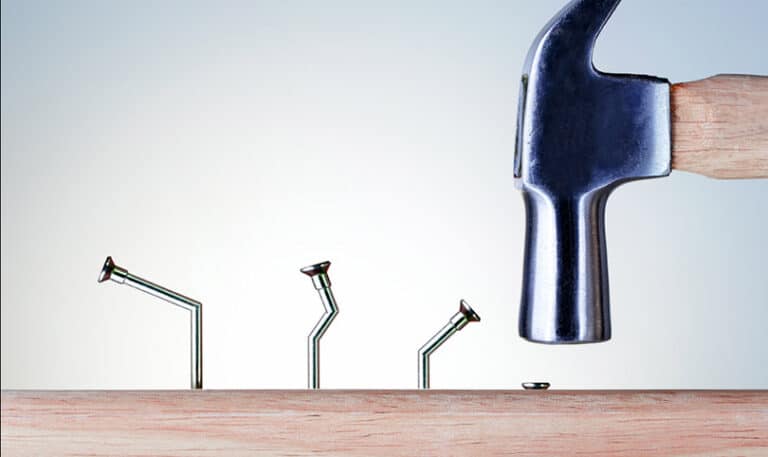


Construction risk enters the job through ordinary decisions you make to keep things moving: a change approved on site, a material swap agreed to over text, a schedule adjustment handled in conversation.
Each one made sense at the time, but you didn’t capture it, so those decisions never became part of a durable record tied to cost and scope.
By the time you ask questions and the final numbers show a lower margin, the context is gone. What changed, who approved it, and when it became expensive to undo are no longer clear. You’re left with a thinner margin and no clear way to trace where it went.
This guide shows you how to keep risks visible throughout a residential job so you can act before they become delays, disputed charges, or margin loss.
Key Takeaways
- Construction risk management helps you spot and control problems before they become expensive.
- Common risks include cost increases, delays, safety issues, poor-quality work, and contract disputes.
- Undocumented decisions and unbilled changes can quickly reduce planned margin.
- A simple risk register records the risk, impact, person responsible, response, and review date.
- Software can help keep estimates, change orders, schedules, and actual costs current.
What Is Risk Management in Construction?
Construction risk management is the process of identifying, assessing, responding to, and monitoring risks that could affect a project’s cost, schedule, safety, quality, or legal standing.
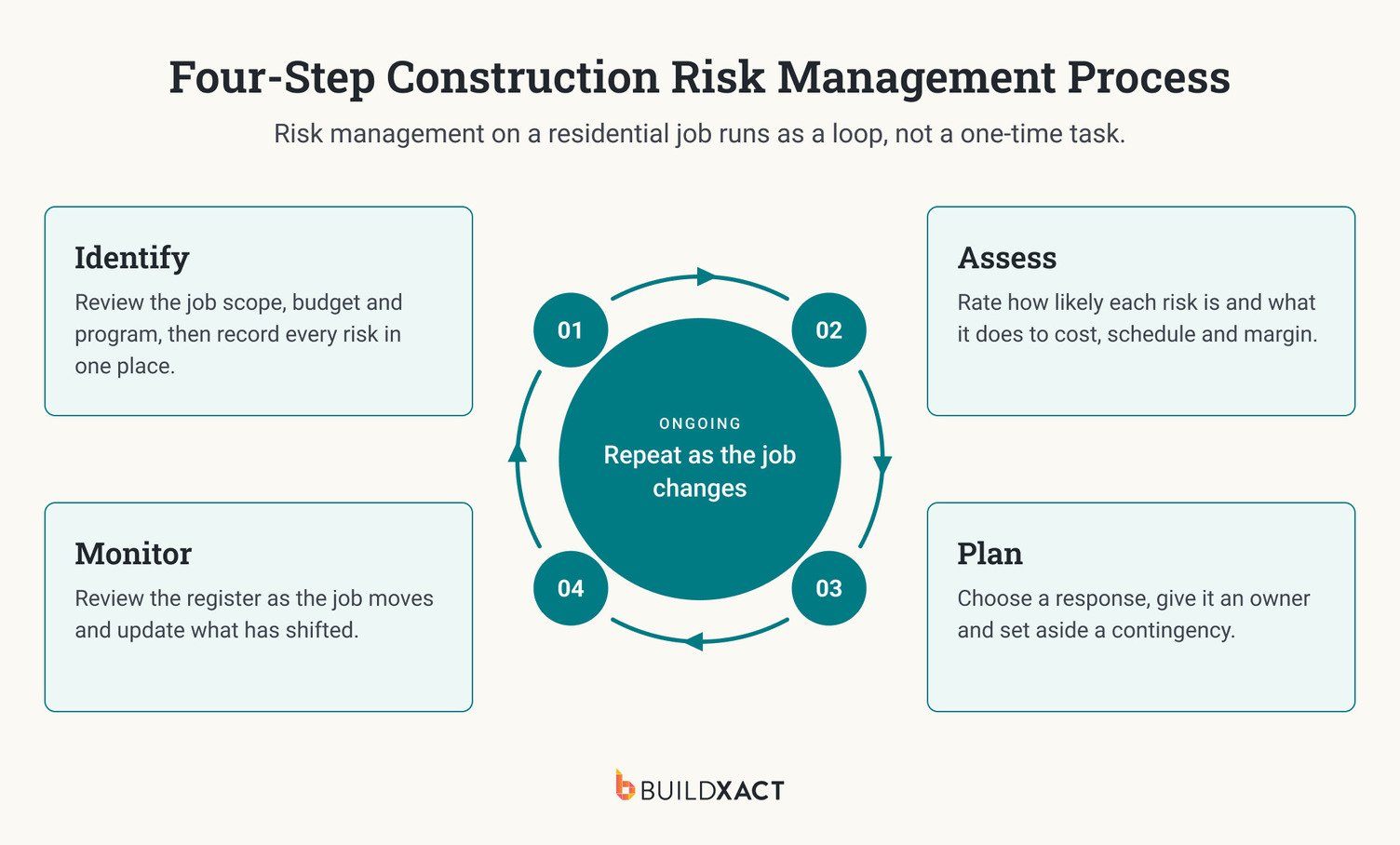
On paper, the process is straightforward. You list the risks, consider their impact, plan your responses, and put controls in place to monitor them over the life of the job.
For residential builders, the real test of that process is whether it answers a simple question:
Can you point to the decision that introduced the risk when costs or scope are questioned later?
On residential projects, risks don’t announce themselves — and they either remain hidden or don’t look like “risks” at all. But that doesn’t mean they aren’t common or familiar, often occurring during routine events like:
- Adjusting the scope to keep work moving.
- Failing to capture price changes between the estimate and order.
- Informal, verbal approvals rather than documented changes agreed on in writing.
At that point, the issue is whether you captured those decisions in a way that ties them back to cost, timing, and responsibility.
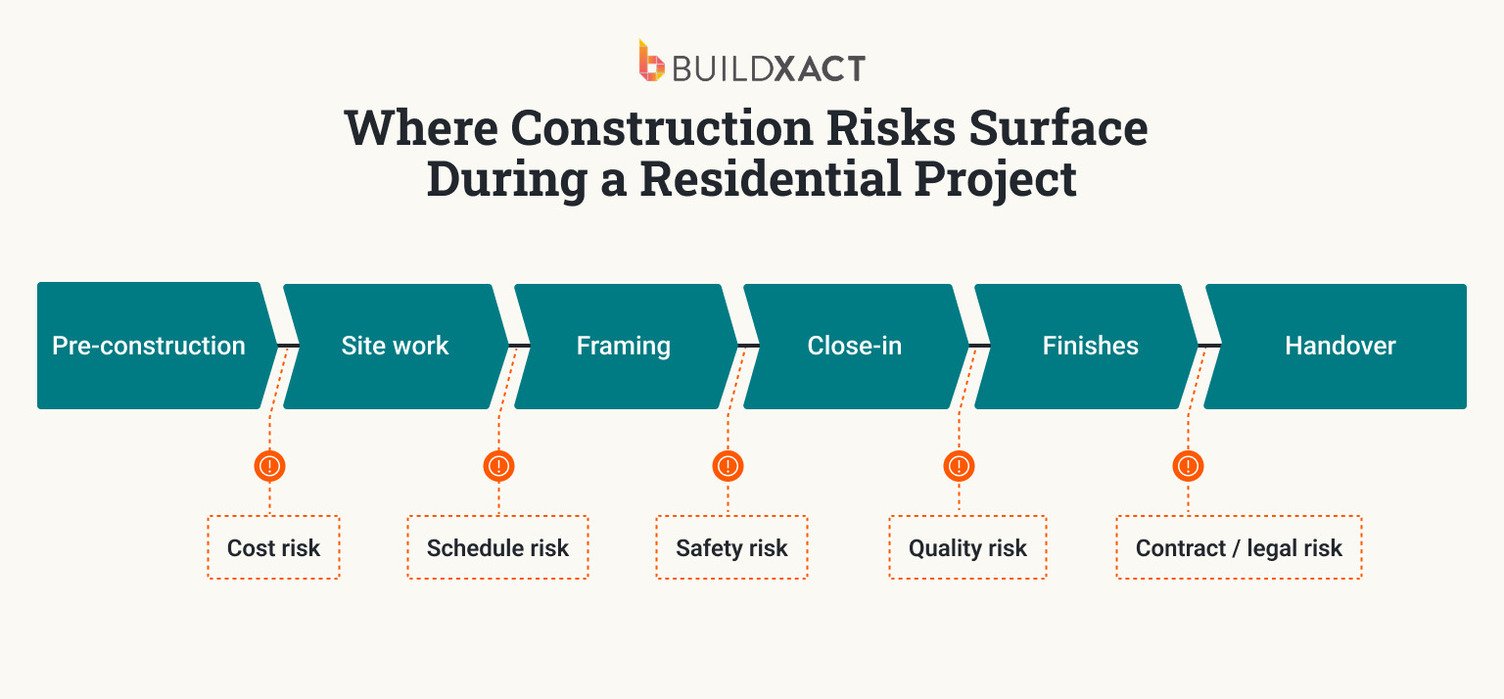
Types of Construction Risk (and Where They Show Up on Residential Jobs)
Construction risk shows up when you’re trying to keep things moving: finishing an estimate under pressure, approving a change on-site, or adjusting a schedule that looks fine on paper.
A National Association of Home Builders survey found that 61% of home builders faced serious problems with labor costs and availability in 2025. Under that pressure, decisions happen quickly, allowing risk to enter the job before anyone recognizes it.
Financial (or cost) risk
While the job is active, nothing looks broken. You pay invoices and update accounts. The issue is that most of that information only moves one way. You can see what was spent, but not when it changed or which decision introduced it.
That gap carries a real cost.
Research by Dodge Construction Network shows that coordination issues lead to roughly 10% of annual contractor profit through errors, omissions, and rework.
On residential jobs, that erosion comes from a series of reasonable decisions that never got fully tied back to the estimate and cost control process.
By the time the margin looks lighter than expected, you’re staring at totals instead of causes. The spend is there, but the logic behind it, the price assumption, quantity change, or informal approval has already disappeared.
Schedule risk
Schedule risk starts with assumptions that feel safe at the time. You schedule inspections based on past timelines, stack trades tightly to keep work moving, and plan around weather on paper even while parts of the site remain exposed.
While work is moving, the construction schedule still looks intact. The cost shows up when an inspection doesn’t clear, a delivery slips, or rain shuts work down. Crews arrive with nothing to do, resequencing begins, and carrying costs accumulate.
By the time you move the finish date, you’ve already built most downstream commitments around dates you never fully confirmed.
Safety risk
Safety risk rarely comes from not knowing what to do. It comes from work moving faster than the checks meant to support it.
For example, you repeat a task enough times that it feels routine, so a shortcut feels justified because nothing has gone wrong before. Time pressure makes stopping feel harder than continuing.
At the time, the site still feels controlled. The issue only comes up when work pauses after a near-miss, an incident, or an inspection.
That pause brings claims, insurance questions, and scrutiny around what was planned versus what actually happened. In most cases, the gap appears because the plan didn’t carry forward into the sequencing and execution of the work that day.
Quality risk
Quality risk often enters when details are clarified late. A finish gets substituted without a written sign-off. A spec is interpreted differently between the office and the site, so the crew rushes to finish work near the end to hold a date that’s already been promised.
At the time, the job still looked complete. The cost shows up later in callbacks, warranty work, and quiet damage to reputation. The hardest part is explaining how the finished work drifted from what was originally priced and agreed to, when no single change was ever clearly captured.
Contract/legal risk
Contract risk increases when agreements live in conversation rather than in the job record. A client asks for a change, and you agree to keep things moving. An allowance stays vague to avoid slowing down the bid. A change order gets postponed because everyone agrees to “sort the paperwork later.”
Regulatory requirements can create similar risks. In NAHB’s 2026 builder survey, 57% of builders reported serious problems with impact, hook-up, inspection, and other fees, while 54% cited local and state environmental regulations. If these requirements are overlooked during estimating and planning, the additional costs may come directly from the job’s margin.
Industry data shows how quickly these gaps can turn into disputes.
The 2025 Arcadis Construction Disputes Report found that errors and omissions in contract documents were the leading cause of disputes in North America in 2024. Owner-directed changes also ranked among the top three causes, while contract and specification reviews ranked as the most effective dispute-avoidance technique.
On a residential job, the cost shows up when you’re invoicing or closing out, and you can’t prove what was included, what changed, or what was approved. Work goes unbilled, and charges get challenged. Write-offs follow because there’s nothing solid to point to once memories diverge.
By the time the issue surfaces, the label is familiar: contract risk. The cause usually isn’t. It’s a decision that felt reasonable in the moment and never got anchored to scope, cost, or approval, even though it still could have.
Where Construction Risk Management Breaks Down in Practice
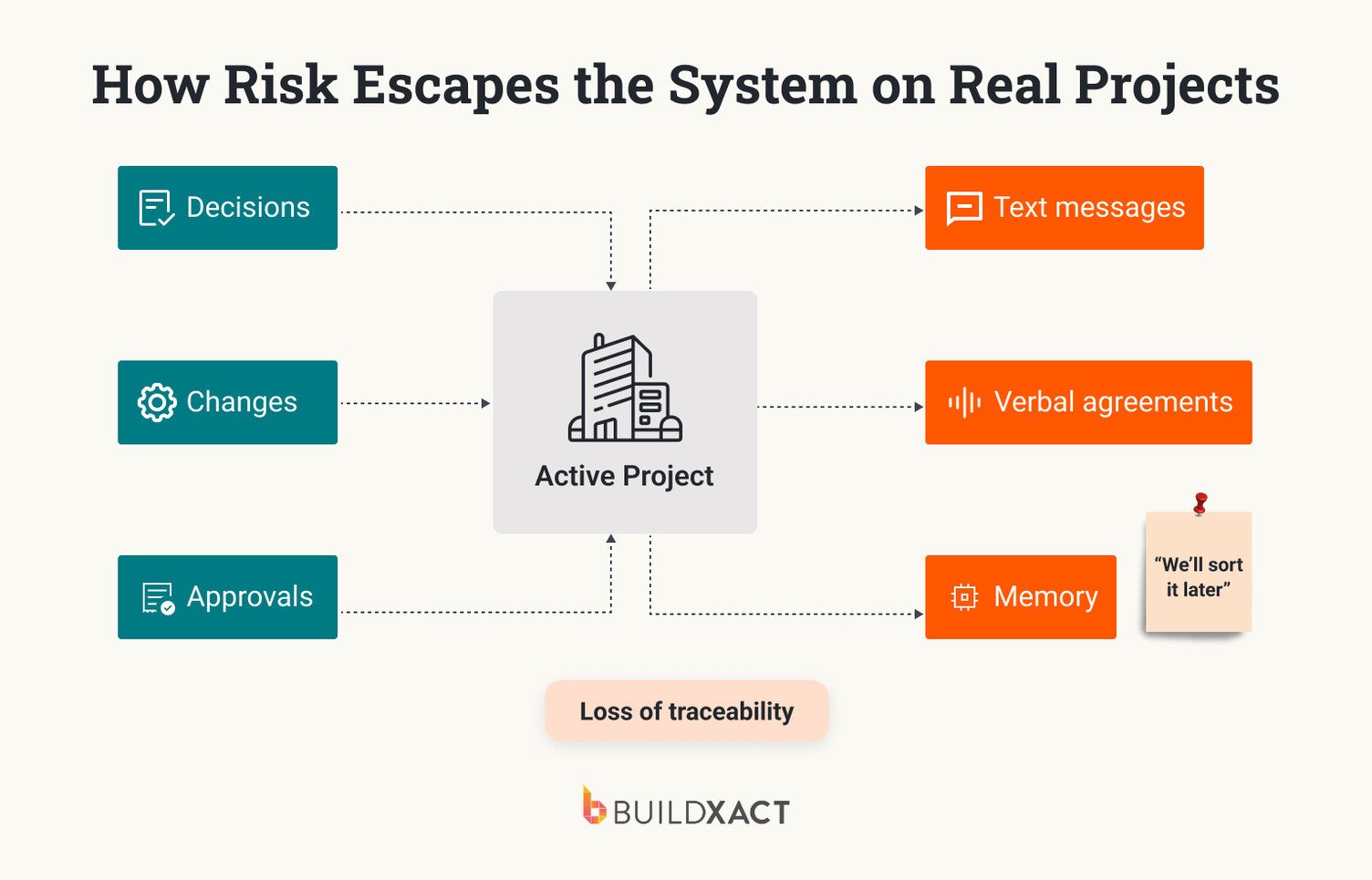
Most residential builders don’t skip risk management entirely. They do enough of it to feel covered at the start of a job. The breakdown happens later, once the work begins moving faster than the system meant to track it can keep up.
A missed change order, an outdated risk list, or a follow-up with no clear owner may seem minor at the time. But each one can introduce costs not included in the estimate, slowly reducing the job’s margin.
Creating a list of risks and never revisiting it
You review risks early, when the job is still relatively straightforward. You create a list of risks, discuss them with your team, and save it somewhere out of the way. As the job evolves, the work changes, but the list stays the same.
For example, the original plan may assume that materials will arrive on time. When a delivery is delayed, the schedule changes, and you may need to rebook a subcontractor or pay for idle labor. If the risk list isn’t updated, those costs may not be picked up until they have already reduced the job’s profitability.
By the time you go back to the list, the risks on paper no longer match the reality on site, and the original margin is still based on outdated assumptions.
Making scope and cost decisions without documenting them
A change comes up during a walkthrough. It feels minor, so you verbally agree to keep things moving; the crew adjusts, and the job continues.
Nothing breaks in the moment. Months later, when the invoice goes out or the job is questioned, the only record of that change lives in memory.
Steve Griffin, estimator for Just Building Group, describes how easily this happens:
“In the old days, paper and pen, emails, plans, if there is a change in office, it’s left on someone’s desk, gets put under a pile of other paper, and the change order doesn’t get to the supervisor; doesn’t get to the dealer.”
At that point, “we agreed on this” turns into “we never agreed to that,” and there’s no clear way to settle it. Without a clear record, your customer may dispute the charge, and you may have to absorb the cost.
No one is assigned to monitor each risk
Some risks are so obvious that everyone assumes someone else is watching them, such as pricing volatility, inspection timing, and weather exposure. Without a name attached, nothing actually gets tracked.
For example, a dealer’s price may expire before the order is placed. If no one is responsible for checking it, the higher material cost may only become clear when the invoice arrives. That difference comes straight out of the job’s margin unless your construction project budget or customer price is adjusted.
The same applies to missed inspections or weather delays. Missed follow-ups can lead to rush orders, idle labor, rebooking costs and schedule delays that gradually reduce the margin.
Manually tracking risks
Risk tracking often collapses under its own weight. A long register gets built to be thorough, then never updated once the job is underway. In practice, a short list that you update regularly does more than a spreadsheet no one opens.
The failure is trying to manage “live” or in-progress work with tools that don’t align with how you work. You might note a delay in a spreadsheet, but it never makes it into the schedule. The crew then arrives before the site is ready, leaving you to pay for time that produces no progress.
Avoiding these breakdowns means keeping risks visible while the work is still moving, so you can address them before they become expensive.
That’s where connected construction management software enables you to do this better and faster. Buildxact data shows builders who track margin achieve an average net profit of 7%, compared with 3% for those who don’t. It’s not about adding unnecessary admin or oversight, but keeping decisions, costs, and timing from drifting out of view as the job moves through phases.
A Four-Step Construction Risk Management Process
As your residential building business grows and you take on more jobs, you can’t personally keep track of every decision on every project. A repeatable risk process gives your team a consistent way to spot problems and follow through before they affect margin.
Construction risk management works best as a simple cycle. You identify what could go wrong, decide which risks need attention, plan your response and keep checking as the job changes. This keeps the focus on the risks most likely to affect cost, schedule and margin while there is still time to act.
1. Identify risks
Start by reviewing the estimate, plans, contract and schedule. Look at similar jobs and think about what caused delays or extra costs last time.
On a residential build, risks might include incomplete plans, unclear allowances, delayed customer selections, price changes or subcontractor availability. Record these risks before work starts, then add new ones as they appear. A risk register should reflect what is happening on the job today, not what you expected months ago.
2. Assess each risk
Rate each risk based on how likely it is to happen and how seriously it could affect cost, schedule, quality or margin. A simple low, medium or high rating is often enough.
For example, rain may delay exterior work by a day, while late windows could hold up several trades. The window delay deserves more attention because it could lead to rebooking fees, idle labor and a longer schedule. Focus first on risks that are both likely and expensive.
3. Plan your response
Choose how you’ll handle each priority risk:
- Avoid it: Remove the cause, such as clearing up an uncertain scope before work begins.
- Transfer it: Place responsibility with the party best able to manage it through the contract, insurance, or subcontractor agreement.
- Reduce it: Lower the likelihood or impact by ordering materials early or confirming inspection dates.
- Accept it: Allow for a manageable risk in the budget or schedule.
Assign someone to monitor the risk, agree on the next action, and set aside a contingency where needed. If the response involves additional customer work, document it with a change order so the cost doesn’t come out of your margin.
4. Monitor and update
Review your risks regularly and after major events, such as a scope change, price increase, failed inspection, or schedule delay.
Compare the latest costs and schedule with the original plan. If a risk becomes more likely or expensive, reassess it and update your response. Catching the change early gives you time to adjust the budget, reschedule work, or issue a change order before the additional cost reduces your margin.
Examples of How Residential Builders Can Mitigate Construction Risks
Risk mitigation turns a known risk into a clear action. While a risk register points out the problem, mitigation keeps it from taking a bigger bite out of your margin. It can’t guarantee that the problem will disappear, but it can reduce the chance of it happening or limit the cost if it does.
Material prices change after the bid
A builder prices a home addition, allocating $12,000 for lumber. Three weeks later, the customer accepts the bid, but the dealer’s updated price is $13,500. If the original price is carried into the job, the extra $1,500 comes directly out of the planned margin.
Builders can reduce this risk by confirming how long dealer pricing is valid, setting an expiration date on estimates and refreshing material costs before work begins.
Josh Bradley of BradWay Construction said using live dealer pricing helps avoid relying on outdated costs:
“If you’re trying to solicit multiple vendors, you always get different pricing weeks apart, days apart, and all of that adds timeline to your build out. Whereas if you’ve got The Home Depot tied to Buildxact, it’s an instant thing. You click it and in a couple seconds, it’ll load and it’ll populate whatever’s in that estimate with the latest Home Depot price, and it’ll lock it into that price.”
A customer requests extra work on-site
During a kitchen walkthrough, the customer asks for six additional recessed lights. The electrician is already there, so the builder agrees verbally and tells them to continue.
The builder can pause the additional work long enough to create a change order showing the labor, materials, markup, and any schedule impact. The customer approves it before installation begins.
This creates a clear record and makes sure the extra work is added to the budget and invoice. Without the change order, the customer could dispute the charge, leaving the builder to absorb the cost.
An inspection delays the next subcontractor
A framing inspection is booked for Friday, with the electrician scheduled to begin on Monday. The inspection is pushed to Tuesday, but the electrician still arrives and cannot start.
The builder can confirm the inspection before locking in the electrician and leave a realistic buffer between the two activities. The risk register should also include the inspection date and the point at which the electrician’s booking must be confirmed.
This reduces idle time and rebooking costs. It also prevents a short inspection delay from pushing several later subcontractors back and increasing labor and carrying costs.
Residential Construction Risk Register Template
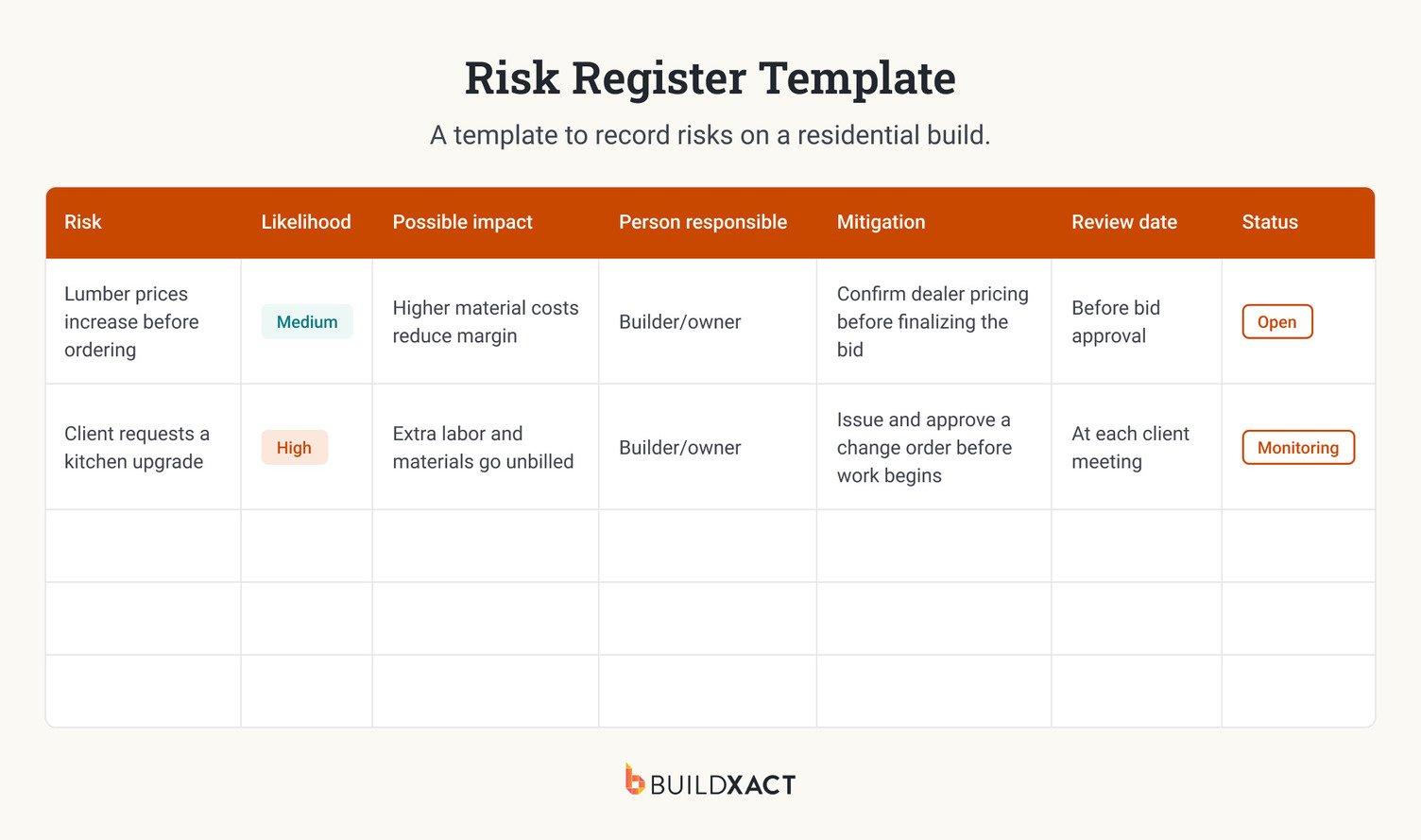
A risk register turns potential problems into assigned actions. For every risk, record the likelihood, possible effect on cost and schedule, owner, response, review date and status.
Keep it short and current. Focus on the risks most likely to delay the job, increase costs or reduce margin, then update the register as the work changes. Here’s a simple residential construction risk register template you can use:
How to use the template
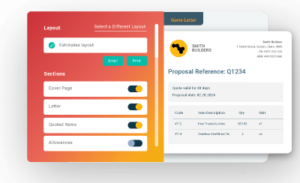
Keep the register somewhere the people running the job can access it. With construction software like Buildxact, you can store it with the rest of the job documents and share it with the people working on site.
- Review it weekly and after every major scope, cost or schedule change.
- Give each risk one person responsible for following up.
- Handle high-likelihood, high-impact risks first.
- Update the mitigation action when the job changes.
- Close risks that have passed and add new ones as they appear.
- Review completed jobs and carry useful lessons into future bids.
The register should change with the job. Keeping it current helps you act before a risk becomes an overrun, an unbilled cost or margin loss.
Using Software to Develop a Risk Management Process for Residential Builders
Risk stays manageable when decisions stay explainable as the job moves. On residential projects, that usually breaks where information relies on memory, habit, or follow-up. Once that handoff fails, risk just stays quiet until closeout.
This is where construction risk management software matters. Not as a separate risk system, but as the place where estimates, approvals, changes, and costs already live, so risk shows up while there’s still room to respond.
Record assumptions in the estimate
Some of the most expensive risks enter during the construction estimating process, when the scope lives in your head rather than on the page. You build from memory, reuse old line items, and rely on tired eyes to catch gaps. The number looks right, but the logic behind it never gets written down.
Those gaps can be costly. After analyzing 2.6 million estimate line items, Buildxact found an average of $18,416 in missed items per job.
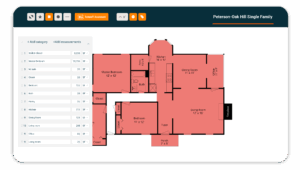
AI assistance, using features like Blu from Buildxact, gives you a head start instead of a blank page. As your co-pilot, Blu builds the first draft of your estimate, highlights potential issues and leaves the final decisions in your hands.
Blu flags missing or zero-priced items before the bid goes out and keeps quantities tied to your plans. The more you work with it, the more effective it becomes at helping you produce consistent, accurate estimates.
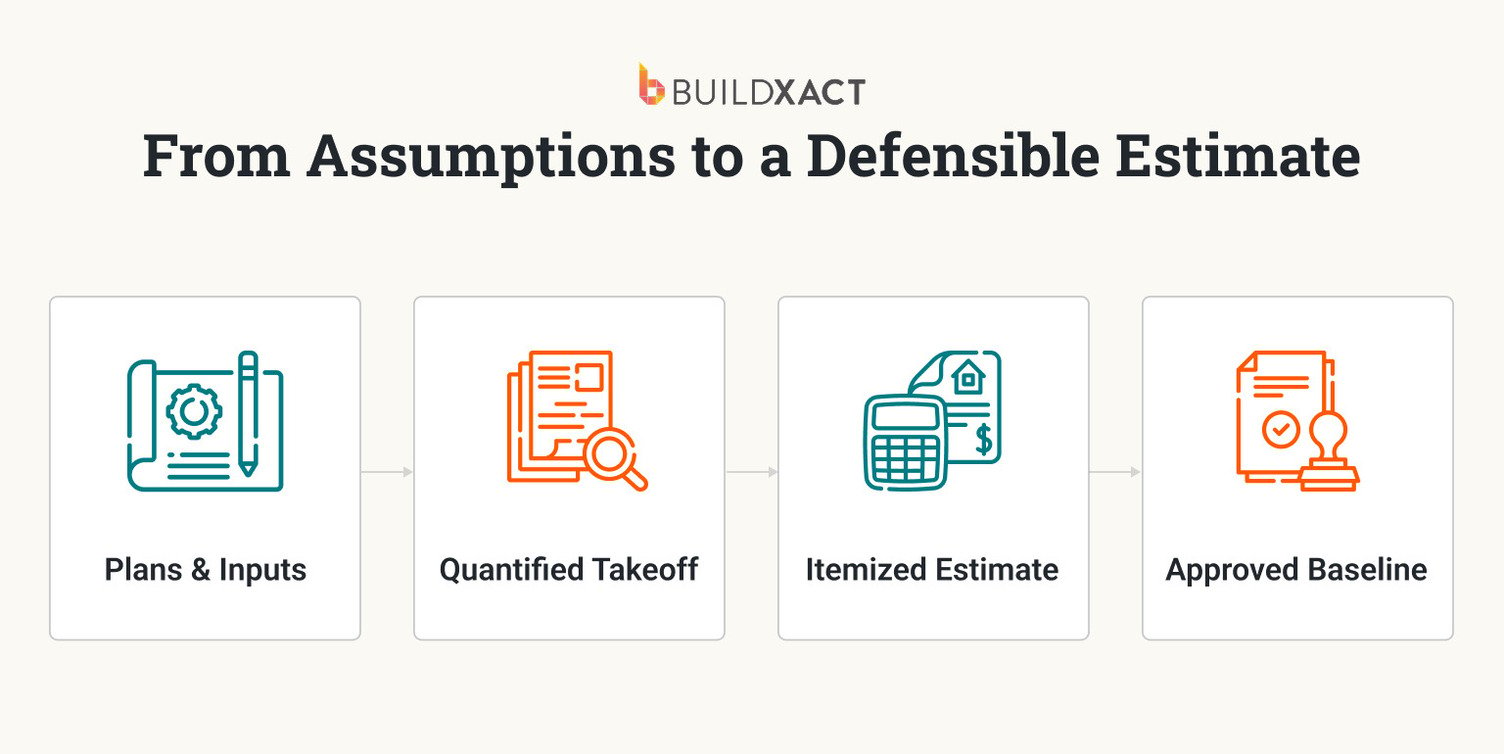
The estimate gives you a clear baseline. When something changes during the job, you can compare it with what was originally priced instead of trying to remember what you allowed for.
Document changes before work begins
Most disputes start with an agreement that never landed on solid ground: A change gets approved during a walkthrough, the crew moves forward, and the record never catches up. Everyone remembers the conversation until it becomes clear that their memories are just a bit different.
But when approvals live alongside scope and cost, decisions stop drifting. In Buildxact, approvals sit directly against estimates and change orders, with before-and-after costs recorded automatically.
That type of connection between important information matters: it removes the “risk” of interpretation from the equation. Instead of debating intent later, you can point to what changed, when it was approved, and how it affected the numbers.
Use change orders to protect margin
Margin erosion usually comes from small changes layered over time. An upgrade here, a quantity shift there, a price move between estimate and order. The job keeps moving, but the estimate stays frozen. Each individual change feels absorbable, but the total rarely does.
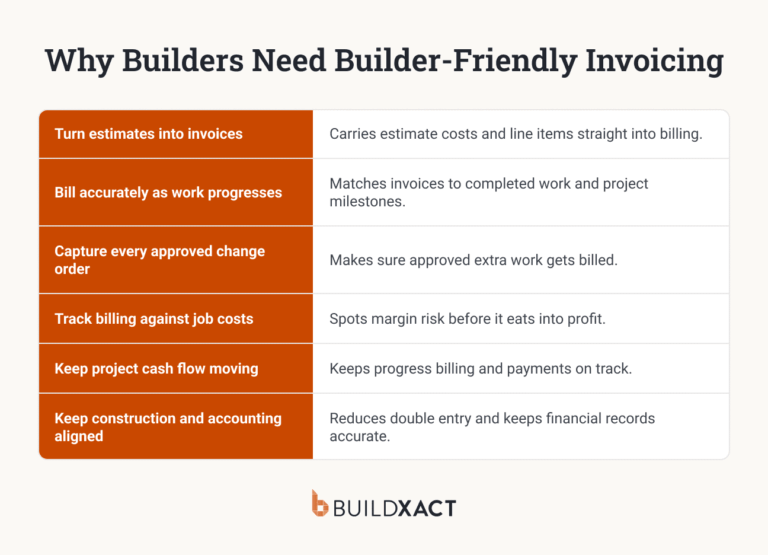
Buildxact data shows an average of $24,092 in change orders tracked per job. That’s far too much additional work to leave in conversations, texts or memory.
Change orders act as control points that trace back to the original estimate logic, so scope and cost move together. With real-time pricing and estimate-driven schedules, price movements stop being a silent trigger.
Compare actual costs with the estimate
Overruns don’t arrive all at once. They accumulate while everything still looks fine. A phase runs long to protect the schedule. Material usage creeps. A price increase gets normalized because nothing else appears broken.
When job costs stay tied to the original estimate structure, deviations show up early. You can see where usage drifts from what was priced while decisions are still adjustable. Visibility doesn’t force action; it gives you the option to act. Cost tracking stops being a closeout explanation and becomes a signal while the job is still underway.
Use completed jobs to improve future bids
Experience only reduces risk when it carries forward. Otherwise, each job resets the same way the last one did. Builders remember where things went wrong, but memory doesn’t change the next estimate.
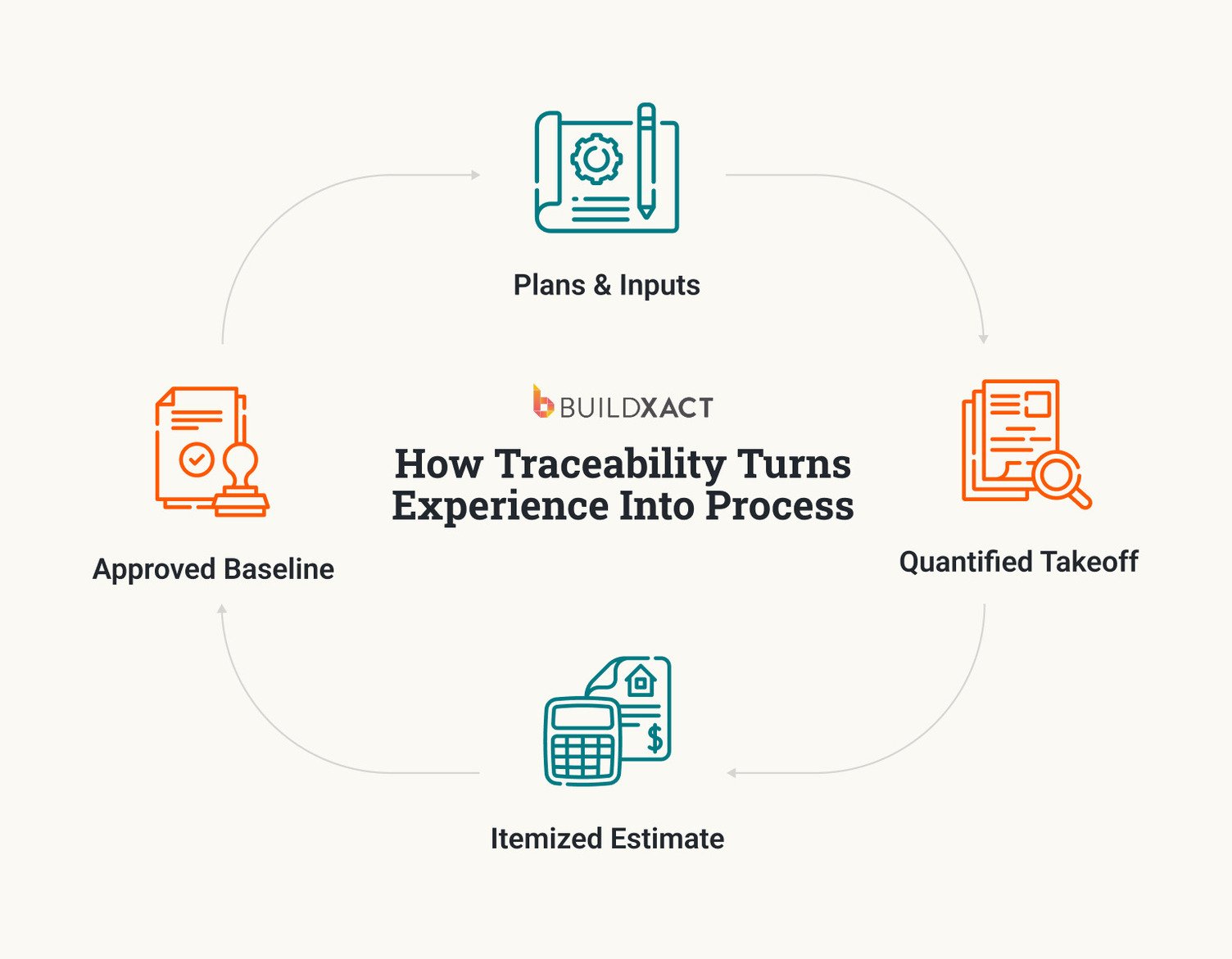
When outcomes tie back to estimates, change orders, and actual costs, past jobs stop living in someone’s head. They shape the next bid automatically. Templates, assemblies, and pricing logic evolve based on real results.
That’s how improvement compounds without adding oversight. By using Buildxact, builders get back around 16 hours a month that would otherwise go toward admin. As your business grows, that gives you more time to review the numbers without rebuilding every estimate from scratch.
Keeping Jobs Moving Without Losing Control of Risk
Construction risk management doesn’t fail because builders can’t predict what will go wrong. It fails because decisions get made faster than they get carried forward. By the time costs settle, schedules slip, or disputes surface, the moment to act has already passed.
The four-step process is straightforward. What matters is whether it fits the way small residential teams actually work. When estimates, changes, schedules, and costs stay connected, risk becomes visible while decisions are still reversible and you can prevent another cost that comes out of your margin.
If you want to see how risk decisions can live inside your estimates, schedules, and budgets — while the job is still moving — start with Buildxact for free or book a demo today.