
You’ve got three bids on the table. Different prices. Different formats. Different assumptions. And no clear way to tell which one actually reflects the job’s real cost.
For small builders, this is where risk can creep in. While the lowest price might look attractive, it can hide missing scope, underestimated materials, or gaps that only become clear once the build is underway. By then, your margins are already taking the hit.
Bid leveling gives you a structured way to organize and compare bids, so you can choose the best person or team for the job.
Below, we’ll explore the importance of bid leveling in residential construction and outline the exact steps you need to follow to level bids. Plus, we’ll share tips to streamline your bidding processes, saving time and improving your win rate.
What is Bid Leveling?
Bid leveling is a process that helps ensure all bidders are pricing the same scope of work for a construction project.
For residential builders, bid leveling is a way to compare subcontractor bids side by side, so you can see exactly what’s included, what’s missing, and where costs differ before you commit to a contract.
Project managers or estimators often use a leveling form or bid tabulation template to assess multiple bids for the same scope. This bid leveling sheet lists the major components of the construction project; if something’s missing, the estimator contacts the bidder to provide the required pricing.
By clearly laying out the scope of work in each contractor’s bid, bid leveling makes it easier to select the subcontractor with the most complete and accurate pricing.
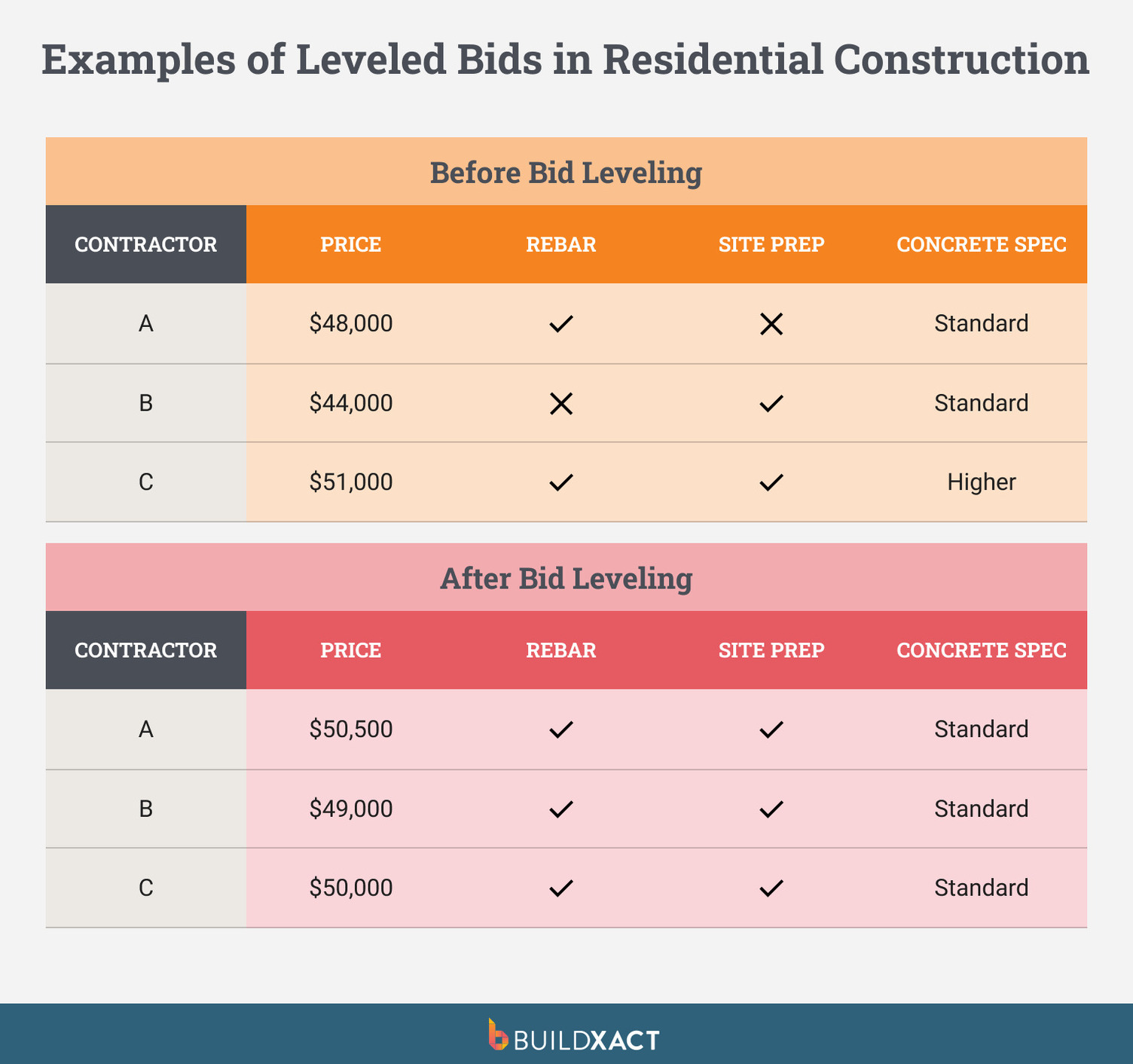
After leveling, you can identify the true lowest bidder. In some cases, a higher initial price turns out to be more competitive once the missing scope is accounted for in lower bids.
Example of a leveled bid
Wondering what a leveled bid might look like in a real job setting? Here’s how the bid leveling process can turn inconsistent, hard-to-compare bids into a clear view of scope, pricing, and actual project costs.
How to Level a Construction Bid: Step-By-Step Guide
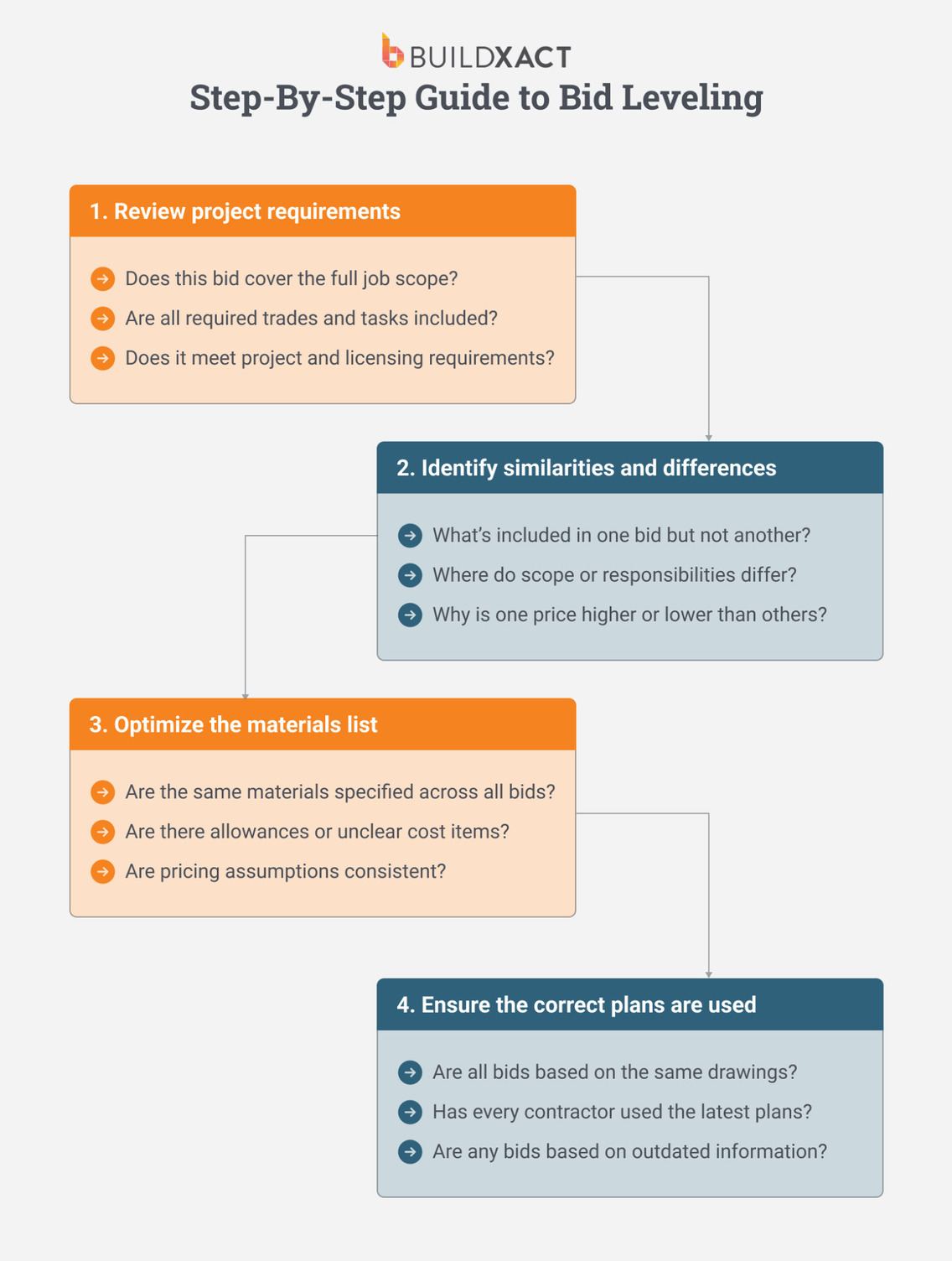
To compare and level bids accurately, you need to follow a structured process that gives you a clear view of each bid’s scope. This includes confirming the project requirements, breaking down the inclusions, and ensuring every contractor is working from the right plans.
By following the steps below, you’ll have a solid foundation from which to compare bids, assess costs, and choose the best contractor for the project at hand.
1. Review project requirements
The first step in the bid leveling process is to review the general project requirements and ensure that all bids meet them. This means confirming each subcontractor is pricing the full scope of work, using the correct project specifications, and meeting any job requirements such as licensing or insurance.
For example, if a construction project requires precast concrete and a contractor only bids on reinforced concrete, the bid does not meet the requirements. The bid should be disregarded, or the contractor should be given a chance to include that work in their bid.
Without this step, you risk comparing incomplete bids that don’t reflect the actual cost of the job.
How to do it
- Set out a clear scope of work for each subcontractor before reviewing bids.
- Create a checklist or bid tabulation form with all required components.
- Check each bid against that list to confirm everything is included.
- Flag any missing items, unclear scope, or deviations from the requirements.
Tip: Drop any bid that doesn’t clearly cover the full job or requires too many assumptions to fill the gaps.
2. Identify similarities and differences
Next, you’ll compare bids for a similar scope of work. At this stage, the goal is to break each bid down so you can see exactly how different contractors have priced the same work. Small differences in inclusions or exclusions can significantly impact your total cost if they’re not identified early.
After noting the differences between bids, contact the bidders and ask them to clarify or revise their proposal to meet the project requirements. The goal is to have the same work covered by each bid, so you can ensure everything you need for your project is included.
How to do it
- Break each bid into trades, tasks, or scope areas for easier comparison.
- Review detailed descriptions to confirm what each contractor has included or excluded.
- Highlight differences in scope, quantities, or responsibilities across bids.
- Contact contractors to clarify or revise their bids so all pricing aligns to the same scope.
Tip: Make sure every bid covers the exact same scope before comparing prices; otherwise, the lowest number won’t reflect the true cost.
3. Optimize the materials list
Now it’s time to review all bids to ensure the required materials, permits, and other charges are included in the price.
Builders often run into issues when subcontractors make assumptions about materials or leave allowances (a price set for budgeting purposes) instead of fixed costs. If these aren’t aligned, your final costs can change after the job starts.
For example, a flooring or roofing contractor may include an allowance for carpet. If the actual product selected goes over the amount of the allowance, the customer is responsible for paying the difference.
How to do it
- Review each bid for allowances, missing materials, or vague specifications.
- Compare material inclusions across all contractors to spot inconsistencies.
- Confirm that permits, delivery costs, and other charges are accounted for.
- Align materials and pricing assumptions so all bids are based on the same inputs.
Tip: Replace allowances with fixed specifications wherever possible to avoid cost overruns and protect your margins.
4. Ensure the correct plans are used
Finally, you’ll want to compare bids to ensure they’re all using the latest plans and addenda. If contractors are working from different revisions, their pricing won’t reflect the same scope, making comparisons unreliable.
In the case of a contractor basing their price on a previous revision or not recognizing a bid addendum, you can ask them to revise the price to include the latest information.
How to do it
- Check which plans, drawings, and revisions each contractor used to prepare their bid.
- Compare these against the latest issued set of plans and addenda.
- Identify any bids based on outdated or incomplete information.
- Request updated pricing from contractors where discrepancies exist.
Tip: Issue one final set of plans and require all contractors to price from that version to keep bids consistent and comparable.
Bid leveling can clearly be a great tool for comparing bids using the same criteria. But the benefits of this process go beyond simple pricing comparisons. When done correctly, bid leveling can help you speed up your decision process and safeguard your margins.
Benefits of Bid Leveling
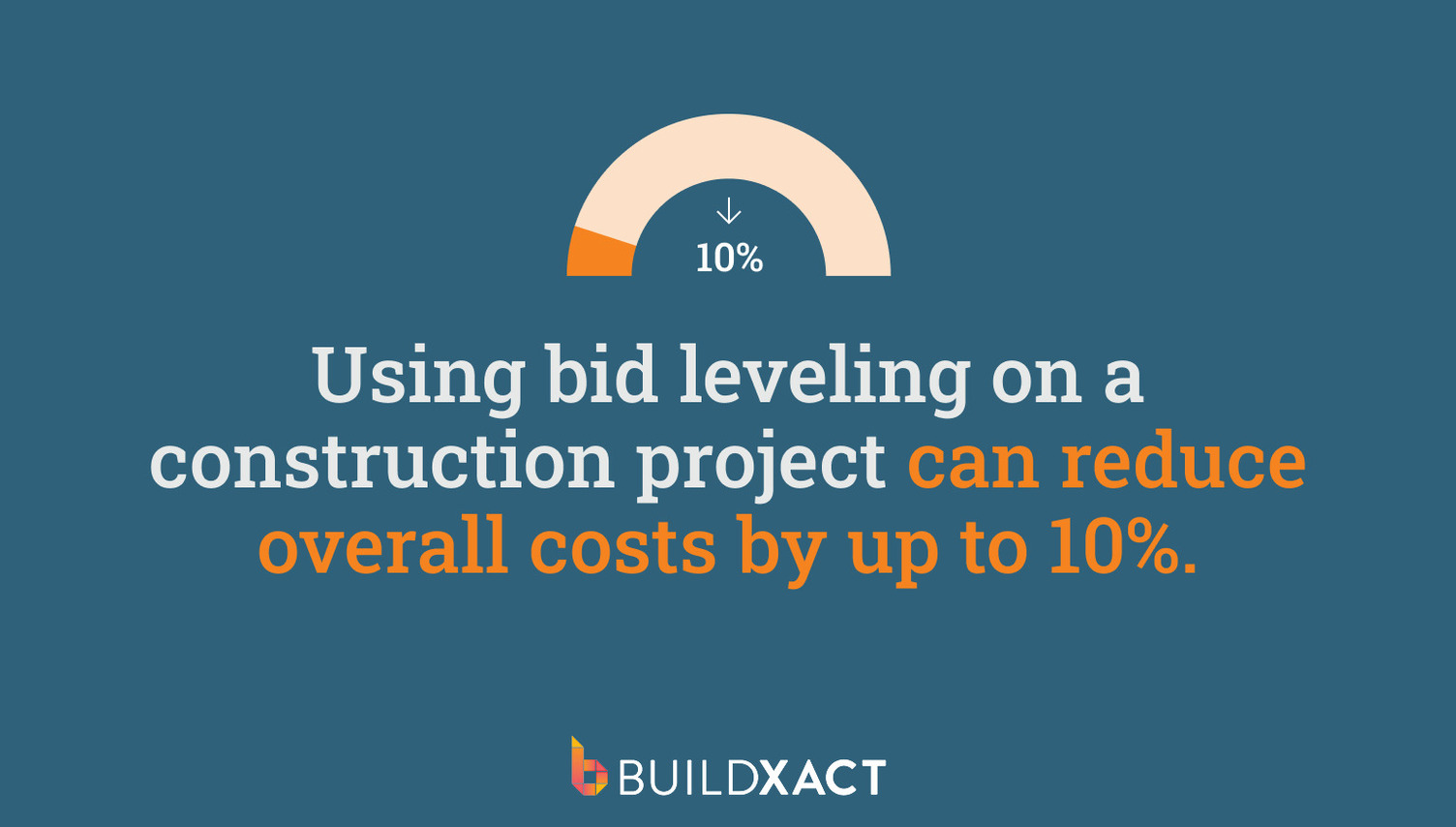
Bid leveling gives you control over your numbers before work begins. By tightening up how bids are reviewed and compared, you can avoid margin-eroding surprises during the build, and make faster, more confident decisions when selecting your subcontractors.
Here’s how bid leveling gives you an advantage:
Compare bids properly
Bid leveling ensures you’re comparing like-for-like bids by aligning the scope across every contractor. No two subcontractors price a job the same way, so without leveling, lower prices often reflect missing work rather than real savings.
When every bid covers the same scope, you can see the true cost of the job and avoid false comparisons that lead to budget issues later.
Example: Two framing bids come in for a new home build. One includes bracing and fixings, the other doesn’t. Once aligned, the price difference reflects actual value, not missing scope.
Catch mistakes early
Bid leveling helps you identify missing items, errors, and scope gaps before construction starts. This reduces the risk of unexpected costs, project delays, and change orders that cut into your margins once the job is underway.
Instead of fixing issues on site, you resolve them during preconstruction when it’s faster and cheaper.
Example: A subcontractor submits a flooring bid with an allowance instead of a fixed material spec. During leveling, it’s flagged and updated, avoiding a budget blowout when selections are finalized.
Choose the right price faster
Once bids are aligned, it becomes clear which price is genuinely competitive. Rather than wasting valuable time chasing clarifications, you can make a confident decision based on accurate, complete pricing.
This speeds up your bidding process and helps you lock in subcontractors without delays.
Example: An electrical bid initially looks higher than others, but it includes all fixtures and labor. After leveling, it proves to be the most complete and cost-effective option, allowing you to move forward without rework.
Done well, bid leveling sharpens your decisions and protects your margins – but managing it manually can slow you down and introduce risk. The right bid leveling software can help you avoid the pitfalls of this important process.
Challenges of Bid Leveling (and How Software Can Help)
When bids don’t line up or when information is scattered across different platforms, bid leveling can become much more complex and time-consuming than it should be. On top of that, an ineffective bid leveling process may mean you end up choosing the wrong subcontractor – risking both your success rate and your margins.
With smart construction management software, you can turn inconsistent bid leveling into a smooth, structured process that makes it easier to select the best bid for the job.
Here are the three most common challenges of bid leveling and how the right bid leveling software can help you overcome them.
Inconsistent scope across bids
One of the biggest challenges in bid leveling is inconsistent scope. Contractors often interpret plans differently or include different items in their pricing, making it difficult to compare bids side by side.
When bids have missing details or unclear inclusions, you’re left with gaps that can distort pricing and lead to incorrect decisions.
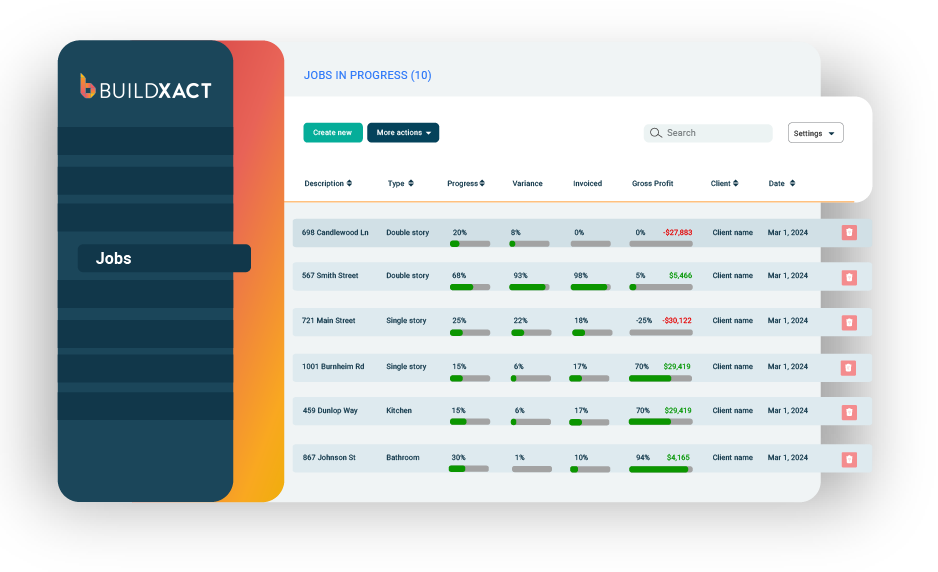
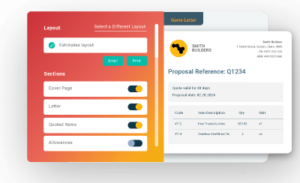
With construction management software like Buildxact, you can use templates and cost libraries to gain a consistent reference point for every job. This allows you to easily see where bids align or fall short against a defined scope.
Time lost comparing and chasing
Bid leveling can quickly become time-consuming, especially when you’re chasing contractors to clarify what’s included in their bids.
Reviewing multiple versions across emails, PDFs, and spreadsheets slows the process and increases the risk of missing key details.
Centralized document management keeps all bids, plans, and communications in one place, so you can review and compare information faster without switching between tools or losing track of changes.
No baseline to check bids against
Without a clear baseline, it’s difficult to know whether a bid fully covers the required scope. As a result, builders often rely on memory or rough estimates to fill in the gaps, increasing the risk of missing costs.
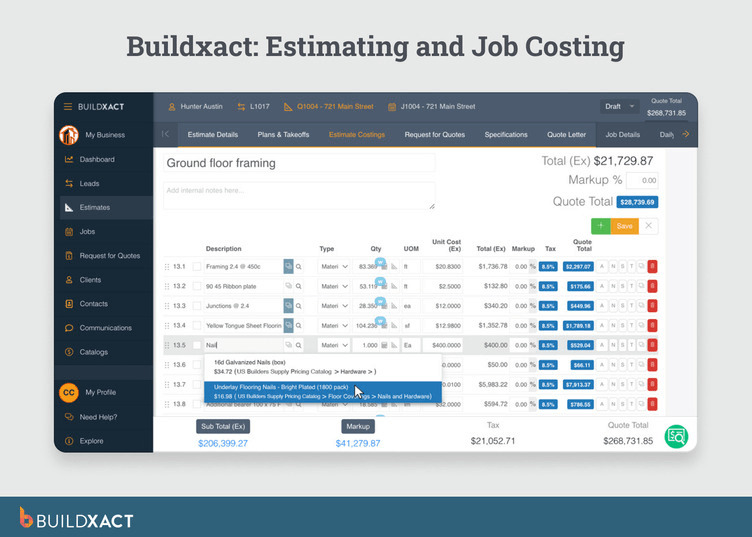
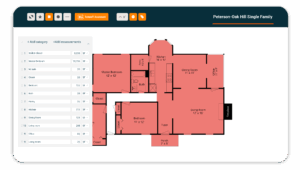
Buildxact’s structured estimates give you a defined scope to check every bid against. This makes it easier to identify omissions, validate pricing, and ensure each contractor is quoting on the same requirements.
Comparing bids manually leaves too much room for gaps, delays, and second-guessing. With intelligent construction management software like Buildxact, you can align subcontractor pricing to your scope, reduce back-and-forth, and make faster, more confident decisions before the job begins.
Bid Leveling FAQs
What is bid leveling in residential construction?
Bid leveling is the process of aligning subcontractor bids so they all reflect the same scope of work, often using a bid leveling sheet or template. For residential builders, bid leveling ensures you’re comparing accurate, complete pricing, not bids with missing items or different assumptions that can lead to cost overruns later.
Do I need to level bids for every project?
Not every construction project requires detailed bid leveling, but it becomes essential when multiple subcontractors are pricing the same work. The more complex the job or the higher the risk of scope gaps, the more important it is to level bids to protect margins.
Does bid leveling have to be performed manually?
Bid leveling doesn’t have to be manual. While many builders still rely on spreadsheets and email, software can streamline the process by organizing bids, standardizing scope, and enabling faster, more accurate comparisons as your workload grows.
Speed Up Bidding and Win More Work, With Buildxact
Bid leveling is a great tool for comparing like-for-like bids. But it only works when your inputs are consistent and easy to compare.
Relying on spreadsheets and scattered documents makes it harder to spot gaps, slows down decisions, and increases the risk of missed scope – all of which can impact your job win rate.
Buildxact’s construction management platform equips you with a clear structure to compare bids, with estimates, templates, and cost data all in one place. With less back-and-forth and fewer surprises, you can lock in the best pricing sooner and win more of the right work.
If you’re ready to grow your business with Buildxact, get started for free today or book an interactive demo.