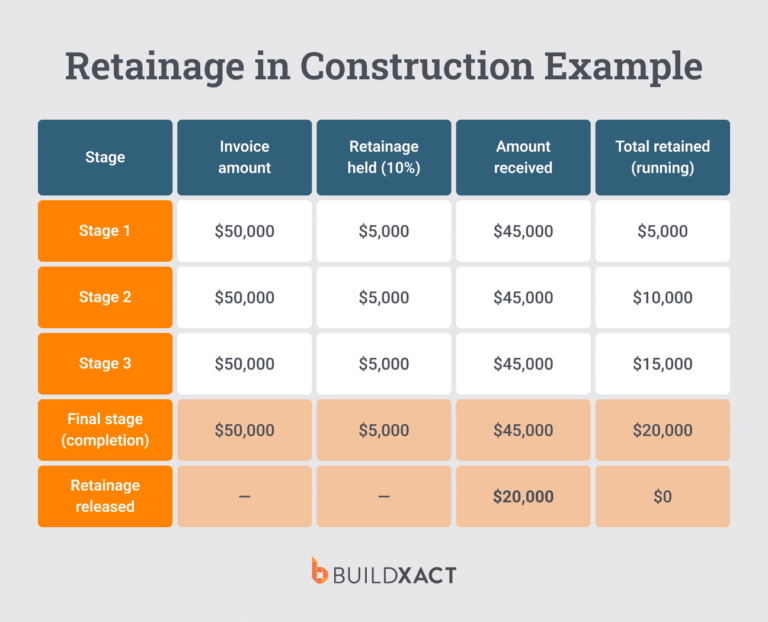


Construction administration isn’t something you “do.” It’s what follows you home. The estimate you trusted needs to be rechecked before it becomes a bid. A change approved on-site must be reconciled before it is included on the invoice.
Even when you’re careful about documenting scope, pricing, and approvals, work keeps spilling into nights and weekends. None of it involves the job you were hired to do, but it’s still part of the show, so you need it to keep running.
That “work” is construction administration, and, rather than a single role or phase, it’s the work behind the work: the handoffs between estimating, scheduling, job tracking, and invoicing.
And you need a better way to handle it all.
This guide explains what construction administration includes, where formal framing breaks down on residential jobs, and why staying organized alone doesn’t reduce the workload. It also shows what needs to change to stop administrative work from compounding, and when connecting systems becomes important.
What Is Construction Administration?
Construction administration is the work that keeps a project aligned with what was agreed, approved, and documented as construction moves forward. It exists to carry scope, pricing, and decisions from estimating into day-to-day execution without having to be re-explained or rebuilt.
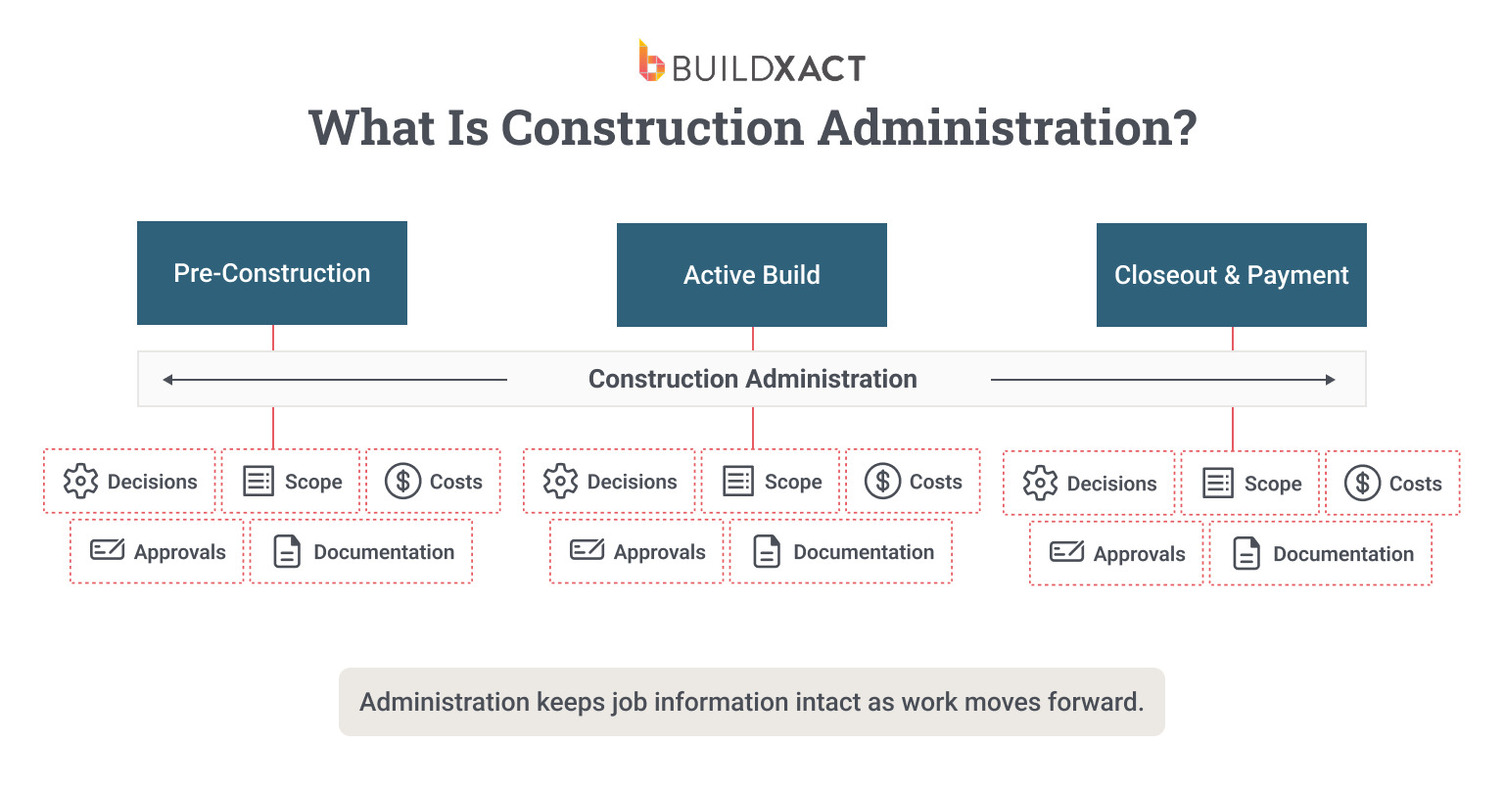
At a practical level, construction administration covers documentation, coordination, oversight, and recordkeeping. Its job is to ensure that updates, approvals, and clarifications stay connected as work progresses, so the job reflects the latest agreed-upon information rather than assumptions or memory.
Construction administration begins after planning and estimating and continues through active construction to closeout. It sits between intent and execution, translating what was priced and approved into schedules, site decisions, purchasing, and invoicing as the job unfolds.
For small residential builders, this function determines whether decisions remain traceable, whether costs can be supported, and whether invoices can be issued without reconstructing what happened after the fact.
In practice, construction administration isn’t a set of isolated tasks. It’s a system that only works when information moves consistently from stage to stage. Without a shared platform to carry scope, pricing, and approvals forward, that system breaks down — and the administrative work shifts back onto the builder.
Why Construction Administration Work Compounds Across a Residential Build
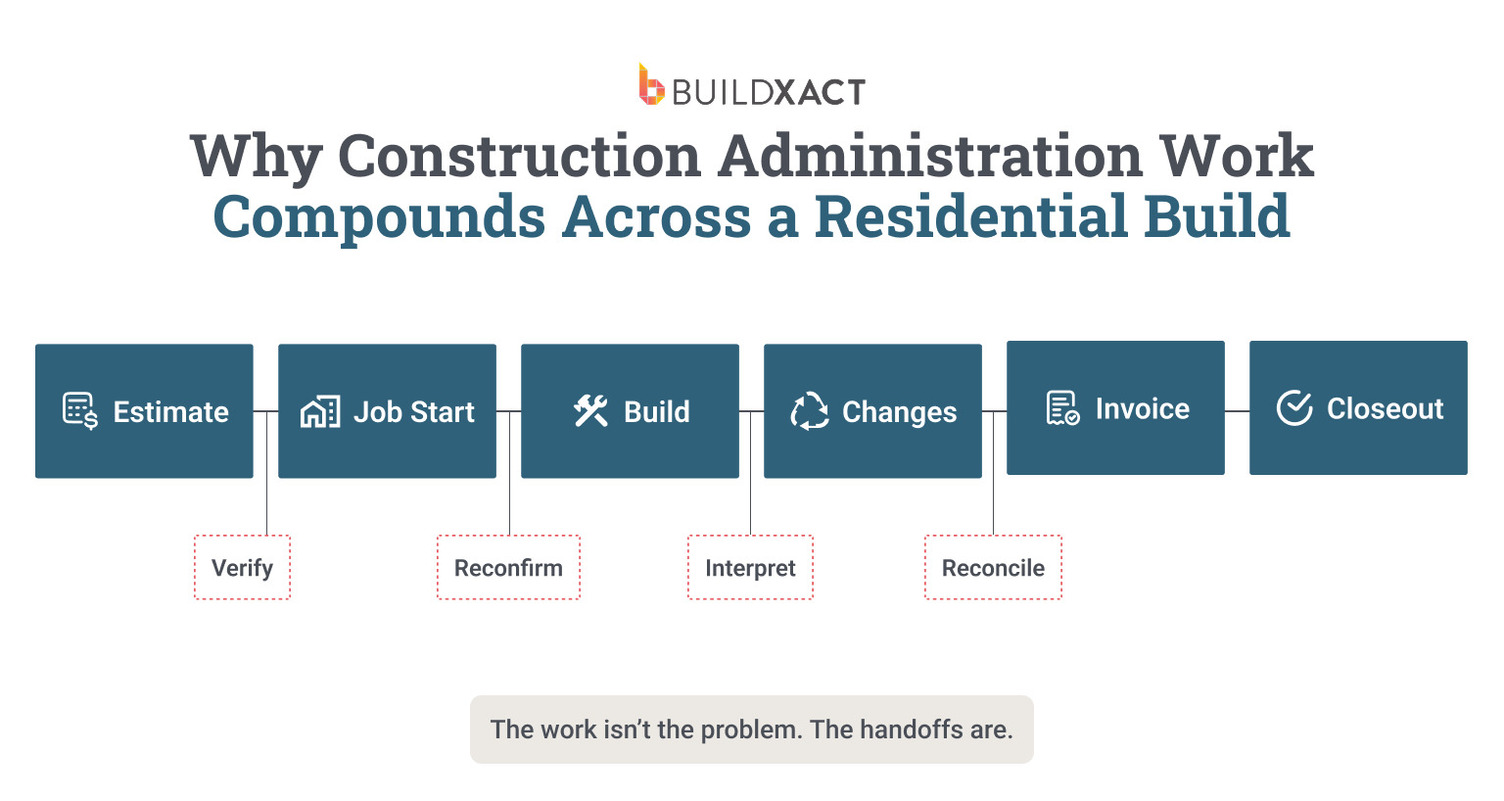
Construction administration work adds up because decisions don’t move forward on their own.
When a job changes hands, context gets lost, and someone has to step in to recheck numbers, explain scope, or reconnect what was already approved before work can continue.
That reconstruction is why the administration concentrates on the builder; small costs slip through during transitions, and the workload keeps growing even when projects appear to run smoothly.
The builder operating as the “connector” between stages
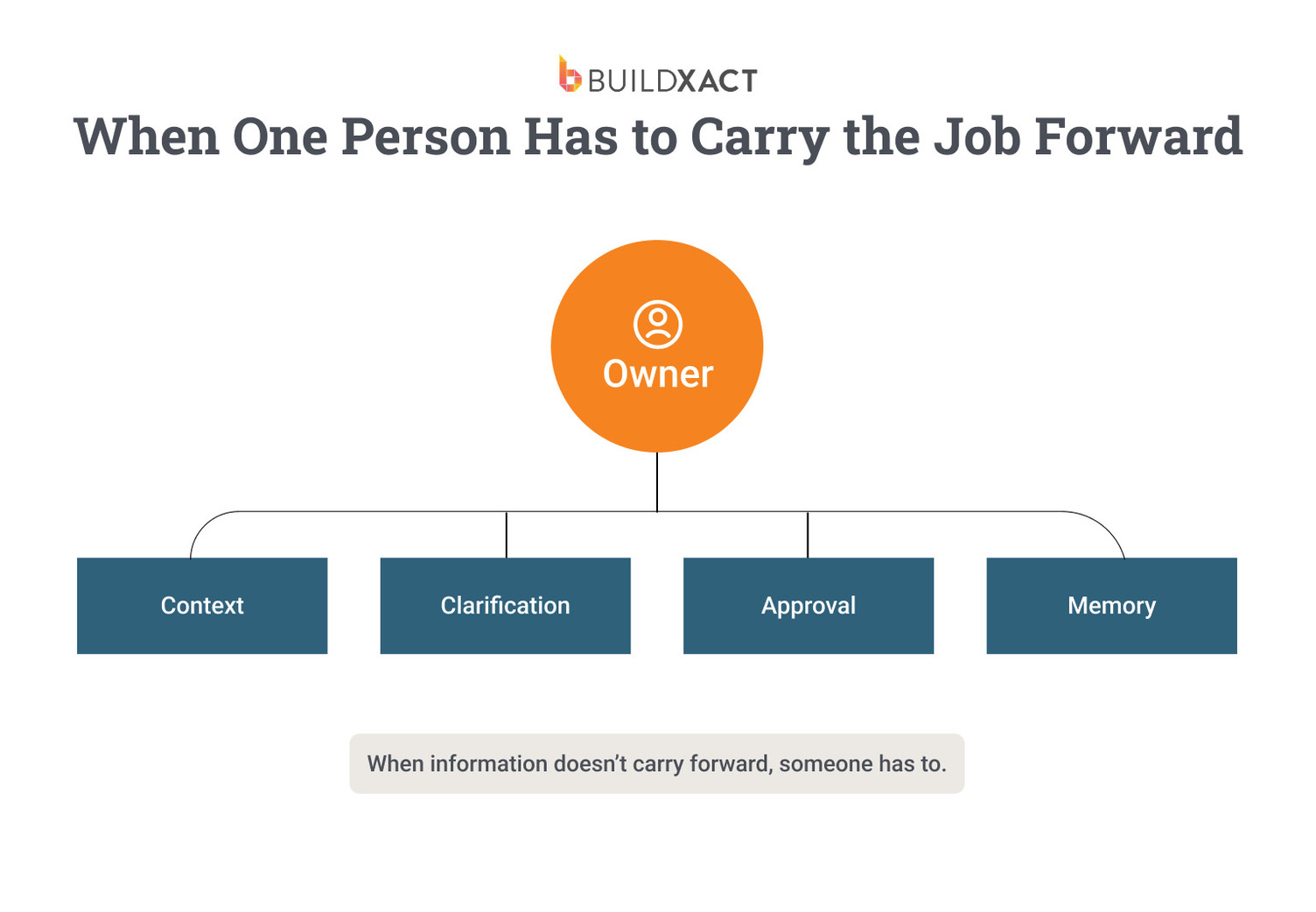
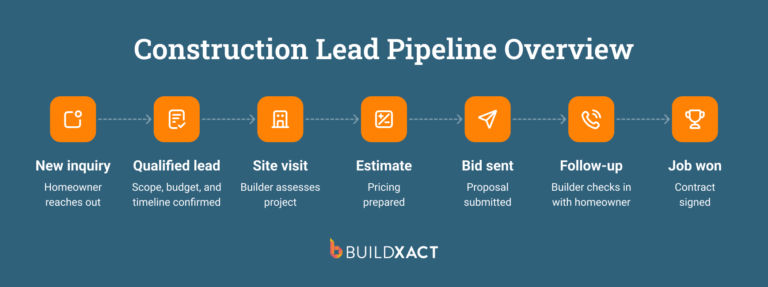
Early in a project, you’re the point where everything connects. Estimates inform bids, bids inform contracts, and site decisions feed back into pricing and schedules. When those links aren’t explicit, continuity depends on one person carrying context forward.
That continuity lives in memory:
- Remembering a scope clarification during a site walk.
- Recalling a pricing adjustment when preparing the bid.
- Interpreting a plan revision on the fly because the drawing set doesn’t reflect the latest change.
Each step relies on personal oversight because decisions don’t carry forward on their own. As estimating moves into bidding, that reliance shows up fast.
You recheck prices, revisit quantities, and work late clarifications back into an estimate that already went out. Each adjustment forces a small rebuild: you reopen the estimate, confirm assumptions, and make sure nothing else shifted. None of this work shows up as a task. It fills the margins of the day.
This work resists delegation because decision context sits across emails, texts, drawings, and conversations. The person present explains the reasoning behind the numbers. Others see the outcome, not why it changed. Review slows, handoff feels risky, and oversight stays concentrated instead of spreading.
That same lack of carried-forward context extends past physical completion. When decisions lack a traceable home, administrative work pushes into closeout.
Invoices wait while you re-verify details, follow-ups multiply as you retrace approvals, and jobs linger on paper long after the last tool leaves the site.
The margin leak
Disconnected handoffs cost money because costs stop being tracked while the job is still underway.
During bidding, you make assumptions about quantities, labor, and materials that shape your estimate. But as the job progresses, those assumptions change. When actual costs aren’t tracked against the estimate by category, the differences stay invisible until the job is already finished.
That’s where margins start to erode.
Invoicing should translate completed work into money collected. Instead, when costs aren’t captured accurately as they occur, invoicing turns into a reconstruction exercise. You pull receipts, scan emails, and try to remember why a material cost more or why labor ran longer than expected.
By that point, it’s too late to act. Small overruns can feel hard to justify after the work is done, so you often absorb them rather than reopen the conversation or issue late changes.
This doesn’t just affect the current job. When estimated versus actual costs aren’t tracked in detail during the project, future estimates don’t improve. The same assumptions get reused, the same gaps repeat, and pricing accuracy stalls.
Consistent cost tracking during a project changes that dynamic. It allows builders to clearly explain change orders, support invoices with real data, and identify where estimates need adjustment before the next job is priced. That visibility protects margins, builds client trust, and enables growth without longer hours.
Disconnection, not disorganization
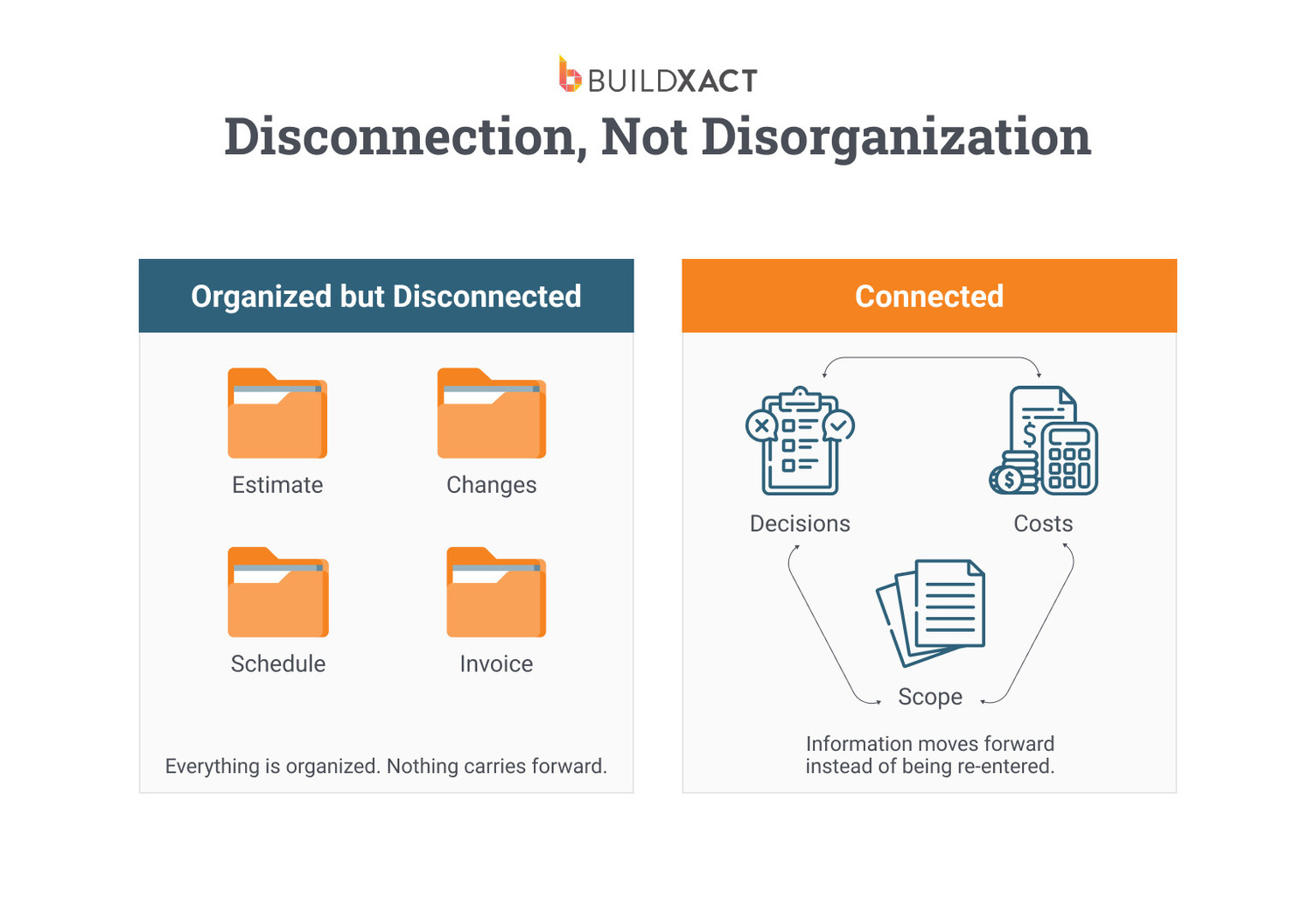
As administrative work grows, the instinctive response is organization. More folders and spreadsheets and tighter discipline around naming and storage. These changes feel productive because they add structure.
However, maintaining those systems becomes work itself. You need to update files, reconcile versions, and cross-check notes.
Instead of reducing administration work, it creates another layer of information you need to manage when the underlying information remains disconnected.
Failing to recognize manual administration limits
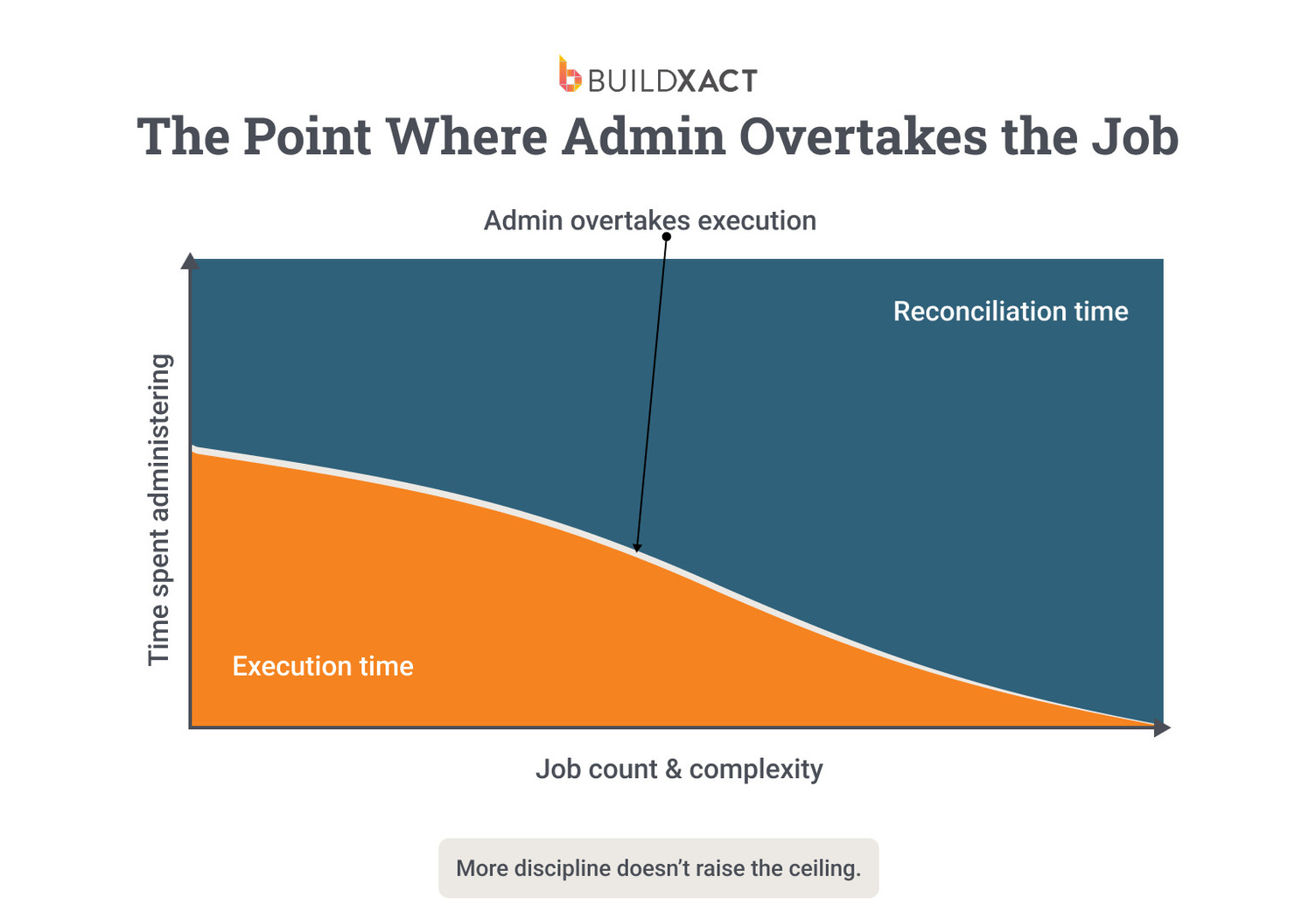
Manual administration starts to strain when the pace of decisions outruns the ability to record them. To keep work moving, approvals speed up. Decisions shift to quick conversations. Documentation slips because execution takes priority.
Over time, that deferred work catches up. Instead of tracking decisions as they happen, builders reconstruct them during invoicing and closeout. The job may be finished, but the administrative work expands as teams piece together what already occurred.
This is a structural ceiling where small handoffs compound into downstream labor. Rechecking, reconciling, and reconstructing replace execution. Once this pattern takes hold, the work stays unscheduled, reactive, and unavoidable.
How to Simplify and Systemize Construction Administration
Construction administration only becomes manageable when information stops resetting between stages. The work needs continuity.
To reduce administrative load and protect margins while work is underway, the following shifts change how decisions, costs, and approvals move through a job, with Buildxact providing the shared platform that enables that continuity.
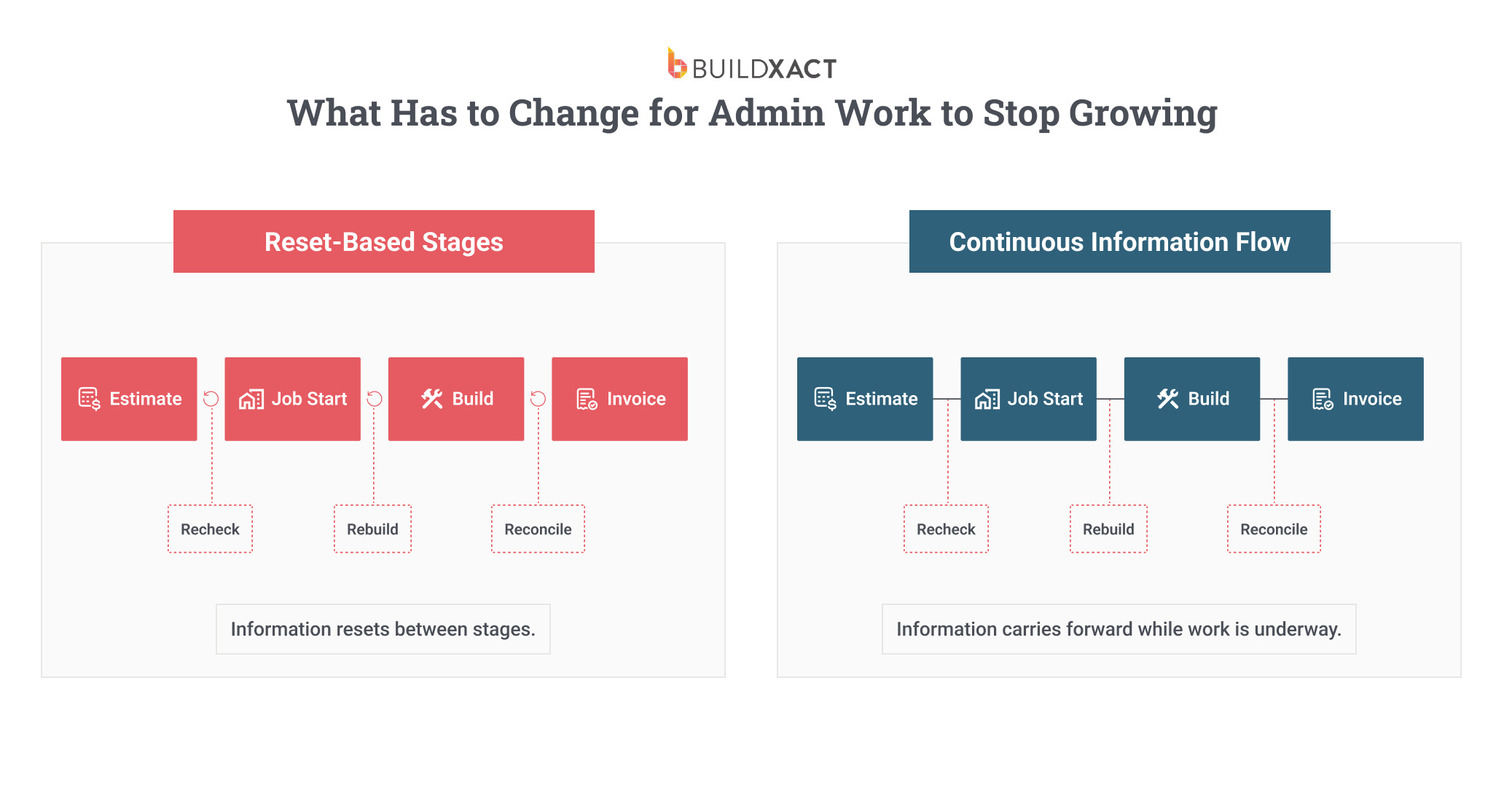
Stop treating each stage as a restart
Before a job even starts, admin work shows up in small rebuilds. A bid needs clarification, so you reopen the estimate. A dealer asks for quantities, so you pull numbers from memory or marked-up plans. Each step feels minor, but every handoff resets the work instead of carrying it forward.
That reset showed up early at Waterloo City Construction. Jeremy De Paz managed projects but didn’t have time to sit down and redo takeoffs whenever pricing came up, so estimates were rebuilt “on the fly.” He relied on the crew for numbers, then reworked the scope again as dealer questions came back. He described the result as information getting “lost in translation” between people and stages.
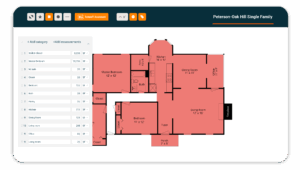
The rebuilds stopped once the team used a single shared takeoff in Buildxact, rather than recreating numbers at each handoff.
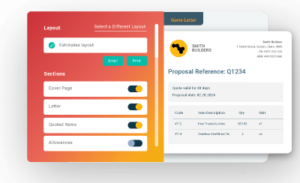
Pricing conversations referenced the same quantities, dealer quotes came back faster, and estimating no longer restarted every time the job moved forward. The estimate flowed through quoting and into the job on a single platform, rather than being re-entered or reinterpreted.
Make cost visibility continuous, not retrospective
Cost problems rarely surface while work is underway. They surface later, when you finally pull invoices together and realize the numbers don’t line up. Small material overruns, labor adjustments, and dealer changes existed during the job, but they never stayed visible long enough to price, approve, or pass through cleanly.
That’s when invoicing turns into reconstruction. You dig through receipts, emails, and spreadsheets to piece together what changed. Recovering those costs means reopening conversations late in the process, so most builders absorb them to keep jobs moving. The margin loss comes from cost information appearing too late to act on.
That was the pattern at Xpres Kitchen and Bath. Before switching tools, Jaime Hommerding managed jobs across multiple systems, which made tracking actual costs against the estimated time-intensive and fragmented. Small overruns felt “not a big deal” in the moment and got written off.
Once the team worked from a single estimate and tracked costs against it in Buildxact as the job progressed, those small items stopped slipping through. Jaime said Buildxact gave them the ability to identify costs they had previously absorbed and manage profit more intentionally because the numbers stayed visible while the work was still underway.
Shift ownership from manual to automated
Administration keeps spilling into nights and weekends when continuity depends on you. As long as decisions live in your head, you become the connective tissue between estimating, site work, and closeout. Questions come to you because context doesn’t travel on its own. When you step away, work slows because they can’t see what you already decided.
That was the pattern at Norse Ironworks. Before switching systems, Jordan Copeland handled estimating and project details through spreadsheets, handwritten notes, and custom Excel workarounds. The information existed, but only if you knew where to look or who to ask.
His team depended on him to interpret scope, pricing, and changes, which concentrated administrative work around the owner and stretched the workday well past normal hours.
The shift came when decisions stopped living in memory and started living with the job. Once Norse Ironworks moved estimating directly into an active project record, the same information flowed from bid to execution without being re-entered or reinterpreted. Team members no longer had to call Jordan to confirm details; they could open the job and see the context themselves.
Jordan described the result simply: fewer interruptions, cleaner handoffs, and the ability to actually shut work off at the end of the day. Buildxact supported that shift by turning estimates into shared, accessible project records, replacing owner memory with a common source the whole team could rely on.
Treat administration as a system, not a personal effort
Organization was never the fix. Better folders, tighter spreadsheets, and more discipline end up just adding more work by layering a structure on top of disconnected information. Every new system required upkeep, reconciliation, and cross-checking without changing how decisions moved from estimating into the job.
That was the problem John Beiler ran into at Northwoods Construction. He had tried multiple construction software tools, sometimes running several at once. Each promised more capability, but each introduced its own learning curve and its own version of the job. Estimating improved in pieces, but the information still had to be carried forward manually.
The shift came when the administration stopped relying on personal organization and began relying on the continuity that Buildxact provided. This is what that continuity looks like in practice when estimating, job tracking, and invoicing all live on the same platform instead of being reconstructed at the end.
At Northwoods, estimates no longer lived as standalone files. Using Buildxact, templates, quantities, and labor assumptions are carried forward from takeoff into job, purchasing, and invoicing, rather than recreated at each step.
That change reduced administrative effort over time because the system no longer reset.
Buildxact provided a single platform where estimating and project execution shared the same underlying information, allowing administration to shrink job-to-job rather than expand with each new build.
When Estimating Stages Connect inside Buildxact, Construction Admin Becomes Easier
Construction administration becomes difficult when continuity depends on a single person keeping everything straight. When decisions don’t carry forward, admin work grows around the edges of every job.
Buildxact changes that by keeping estimating, pricing, and approvals connected on a single platform. Instead of rebuilding context at each stage, your team works from the same information from bid through invoicing.
If your jobs slow down whenever questions or approvals route back to you, start a free trial or book a demo to see how Buildxact keeps decisions moving forward without reconstruction.