
Finding work as a builder can feel unpredictable.
You can go from turning jobs away to chasing inquiries in a matter of weeks. When things slow down, the pressure builds fast. You start taking every lead seriously, bidding for everything that comes in, and hoping something sticks.
But leads go cold, and suddenly you’ve spent hours bidding for jobs you were never going to win.
Without a clear way to qualify, track, and follow construction leads, everything feels reactive. You’re busy, but not always getting the jobs your business needs.
That’s where having a solid pipeline makes all the difference. You need a system that turns the right inquiries into real work.
This guide shows you how.
Why Most Builders Struggle to Get Consistent Leads
Most builders think the problem is not getting enough leads. In reality, the bigger problem is usually getting too many of the wrong ones.
A few inquiries come through, so you start chasing all of them. You spend evenings replying to messages, visiting sites, putting together bids, and following up with homeowners who sounded serious at first. Then half of them disappear. One says they’re “putting the project on hold.” Another tells you they went with a lower price. A third was never ready to start in the first place.
Meanwhile, the jobs you really want can get buried in the noise.
That’s why construction leads aren’t just about volume. They’re about quality, timing, and a process for tracking what’s moving forward.
Many builders lack visibility into their pipeline. They don’t know:
- How many inquiries turn into qualified leads
- How many qualified leads turn into bids
- How many bids become jobs
So everything starts to feel reactive rather than predictable.
One month, you’re slammed with work and struggling to keep up. Next, the phone goes quiet, and you start panicking about where the next job is coming from.
The builders who stay consistently busy usually have a clearer handle on their pipeline. They know which inquiries are worth pursuing, which jobs are awaiting bids, and which projects are nearing a signed contract.
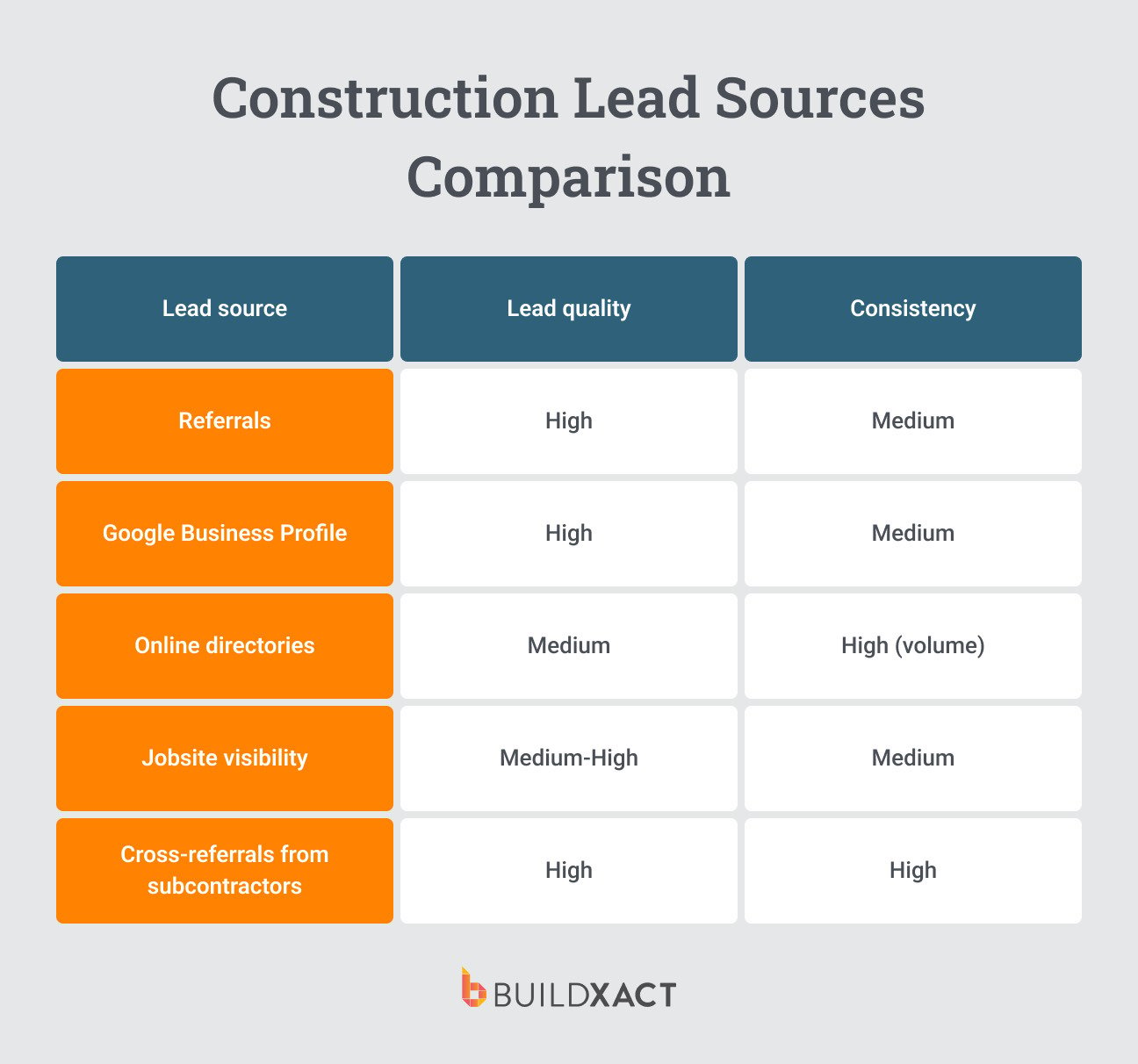
The Best Construction Lead Sources (And Which Actually Work)
Having more construction leads doesn’t automatically mean more work.
Some turn into profitable, repeat clients, while others drain your time, blow out your carefully planned construction schedule, and never move forward. The key is understanding which lead sources bring the right type of work for your business.
Referrals
According to research, 92% of consumers trust recommendations from friends and family over all other forms of advertising. This rings true in the world of residential construction, where referral work remains one of the strongest lead sources.
A past client recommending you to a friend, an architect passing your name along, or a dealer mentioning your construction business to a homeowner usually leads to higher-quality conversations from the start. There’s a level of trust before you even pick up the phone.
Referral work becomes far more consistent when you actively ask for it. During the final walkthrough, when the homeowner is excited about the finished result, ask them if they know anyone who is considering renovating or building. Give them an easy way to show off the project to friends and neighbors, like a finished project gallery or a before-and-after video walkthrough.
Google Business Profile
Google Business Profile puts you in front of homeowners who are already actively searching for a contractor. People searching things like “custom home builder near me,” or “kitchen remodeler in [city]” are usually already planning a real project, not just browsing ideas. Instead of waiting for someone to recommend you, you’re showing up when homeowners are already actively looking for a builder.
Nearly 46% of all Google searches have local intent, which is a huge opportunity for residential builders working within specific suburbs. When someone searches for a builder nearby, Google’s map pack is often the first thing they see before they even reach websites. Included in that map listing are reviews, which heavily influence who homeowners decide to contact, especially considering 88% of people check online reviews before reaching out to a business.
Online directories
Online directories like Houzz, Bark, Angi, Yelp, Thumbtack, and Nextdoor give homeowners a quick way to compare builders, reviews, and past projects before reaching out. These sites can be a solid lead source, especially when you’re still building up referrals and local reputation.
Strong project photos, detailed descriptions, and recent reviews make a huge difference, so it’s worth taking the time to properly set up your profiles.
The main challenge with online directories is the intense competition. Homeowners are usually contacting multiple builders at once, so fast replies and professional communication matter.
You also need to qualify these construction leads quickly. Find out early whether the homeowner has plans drawn up, a realistic budget, and a construction timeline in mind. That alone filters out many time-wasting inquiries.
Jobsite visibility
A busy residential jobsite tends to attract attention, especially in suburban neighborhoods. Neighbors walk past, ask questions, and potentially start thinking about projects in their own homes.
Simple things like clean jobsites, proper signage, and branded vehicles could generate local interest without actively marketing your construction business at all. Even a yard sign outside a custom build could turn into calls from nearby homeowners planning similar work.
Cross-referrals from subcontractors
Plumbers, electricians, roofers, HVAC installers, and painters are constantly inside homes where bigger renovation conversations are happening. They often hear about projects before a builder is called.
If a plumber is already working in a bathroom and the homeowner mentions redoing the kitchen next, you want your name to come up naturally in that conversation.
The best subcontractor referral networks are usually informal. You send good work their way, they send good work yours. Over time, those relationships can generate a very steady flow of high-quality local projects.
How to Qualify Construction Leads Before You Bid
Every site visit, redraw, revision, and estimate costs time. You don’t want to spend hours bidding on projects that were never likely to move forward in the first place. A simple qualification process helps you decide quickly whether a lead is worth pursuing further.
Find out what stage the project is in
A homeowner with plans, financing, and a rough start date is very different from someone casually collecting inspiration photos. Ask these questions before you book a site visit.
- Are you still exploring ideas or ready to move forward?
- Do you already have plans or drawings?
- Have you spoken to an architect or designer yet?
- Are permits or approvals underway?
If they’re still early in the process, keep the conversation light rather than spending time on a detailed estimate.
Ask about the budget early
Budget conversations are among the fastest ways to determine whether a project is realistic. If the construction budget doesn’t align with the project scope, it’s better to find that out before investing hours into bidding.
Instead of asking, “What’s your budget?” straight away, frame the conversation around helping the homeowner understand what’s realistic in terms of budget. You want it to feel like more of a collaboration, not an interrogation.
For example:
- “Projects similar to this usually land somewhere between X and Y, depending on finishes and structural work. Is that roughly in line with what you were expecting?”
- “What are the ‘must-haves’ and ‘nice-to-haves’ for the project? If we needed to adjust the scope of work slightly, where would you be most flexible?”
At this stage, you’re not trying to get an exact number immediately. You’re checking whether expectations are realistic and whether the homeowner is financially prepared for the type of build they’re describing.
Score the lead before committing to a full bid
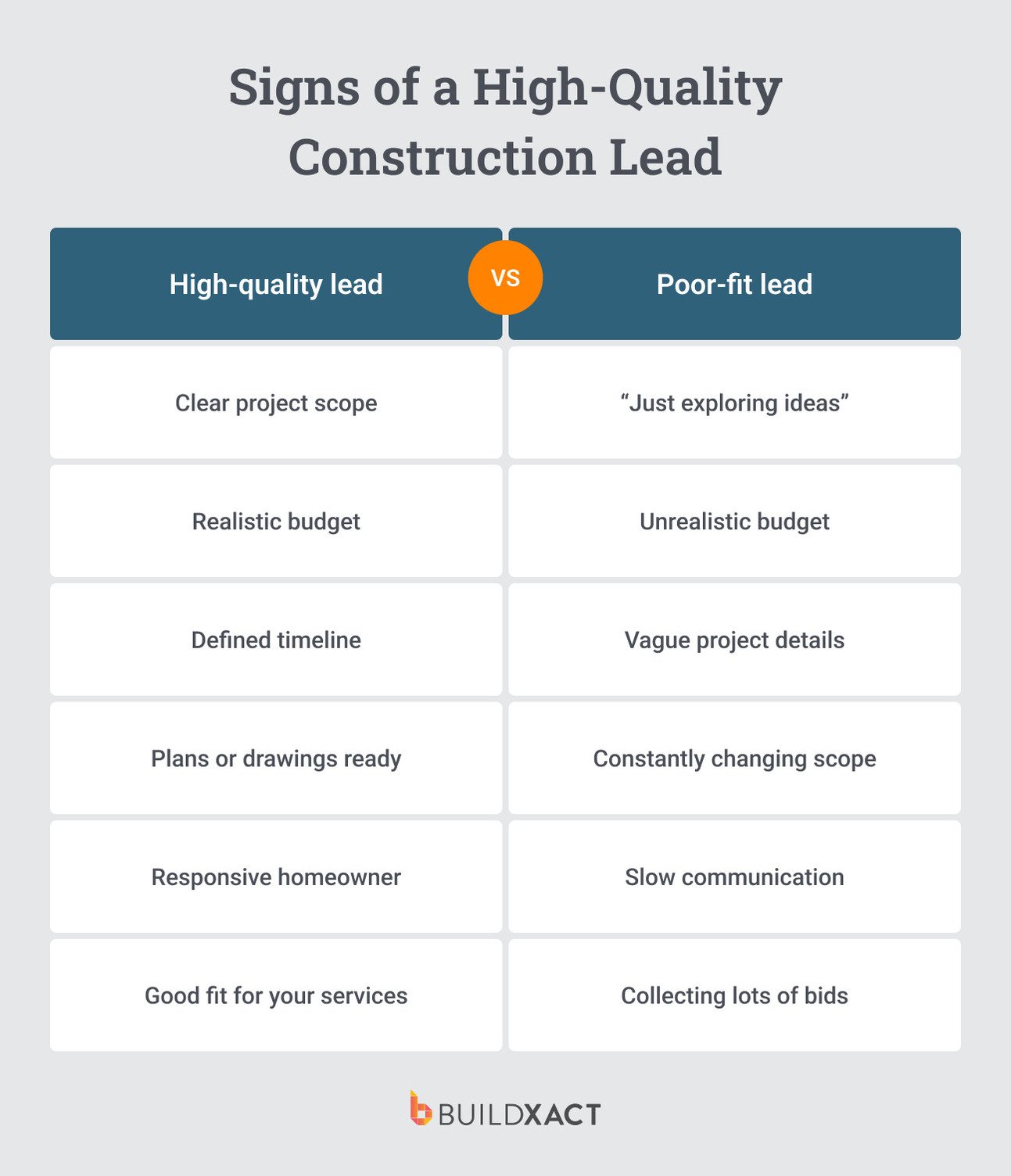
A quick scoring system makes it easier to separate serious projects from time-wasting inquiries. The goal is to score both how well the project fits your business and how likely the homeowner is to move forward.
Give one point for each of the following:
- Clear project scope
- Realistic budget range
- Plans, drawings, or inspiration are ready
- Realistic start timeline
- Good fit for your project type
- The project falls within your service area
You can also add extra points for strong buying signals, like:
- The homeowner was referred by a past client or subcontractor partner
- Financing is already approved
- They’ve already spoken to an architect or designer
- They’re responsive and easy to communicate with
And subtract points for warning signs like:
- No clear scope or constantly changing ideas
- Unrealistic budget expectations
- Vague timelines
- Slow communication
- “We’re collecting lots of bids first.”
If the lead scores 5–7, proceed with a detailed bid or a site visit.
If it scores 3–4, keep nurturing the lead but avoid spending too much time estimating upfront.
If it scores below that, it’s often better to step back early than spend hours pricing a project that may never happen.
Many experienced builders already do this instinctively. The difference is that a scoring system turns gut feel into a repeatable process you can apply consistently across every inquiry.
Check the timeline against your actual capacity
A lead might be genuine, but that doesn’t automatically make it the right fit for your business right now. If you’re already booked out for 6 months and the homeowner wants to start immediately, trying to force the project into your schedule can compromise the client experience. Long-term reputation matters more than squeezing in one extra project.
How Many Leads Do You Need for Good Conversions?
Industry benchmarks show many builders convert roughly 20% of leads into appointments, with appointment-to-sale conversions often sitting closer to 20–25%. That means builders usually need a much larger volume of inquiries entering the top of the funnel than they initially expect.
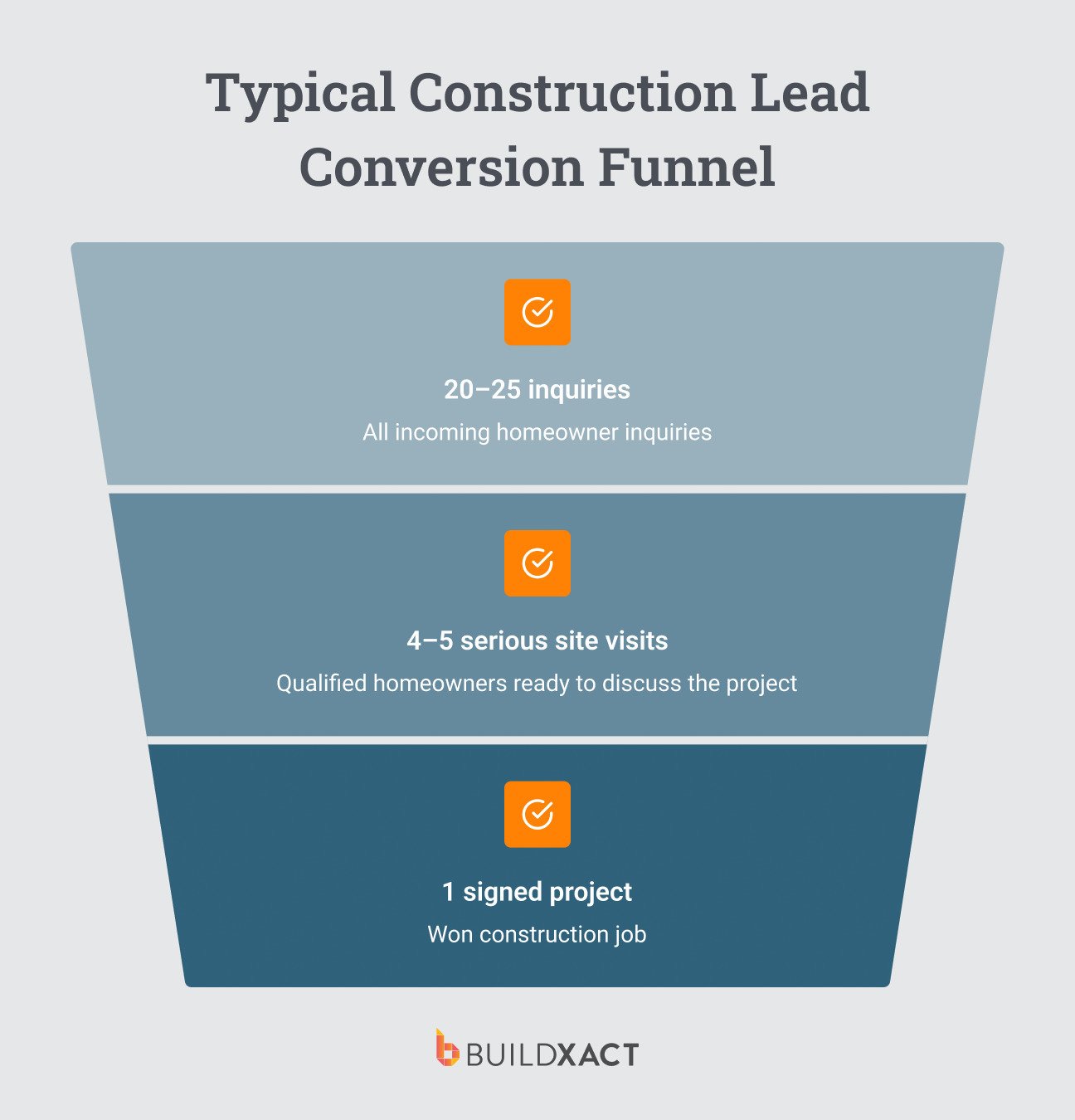
The pipeline for residential builders often looks something like this:
- 20–25 inquiries come in
- 4–5 become serious appointments or site visits
- 1 turns into a signed project
Word-of-mouth referrals are still among the highest-converting construction leads because homeowners already trust the builder before the first conversation. Paid ads and directory leads tend to require more volume because homeowners are often comparing multiple builders at once.
Once you understand your conversion rates, it becomes much easier to plan your pipeline realistically.
For example, if you want to consistently win 2 projects per month, you may need 40–50 solid inquiries to enter the pipeline. If inquiries are coming in but very few jobs are closing, the issue is probably conversion. And if hardly any inquiries are coming in at all, the issue is construction lead generation.
Those are completely different problems, but many builders treat them the same. And this is why tracking your numbers matters so much. It helps you identify where work is being lost.
Maybe your follow-up is too slow, or your bids are too expensive for the type of construction leads you’re attracting. Maybe too many inquiries are unqualified before you even start pricing the project.
Builders who understand their pipeline usually spot these problems early, rather than only reacting once work starts drying up.
How to Manage Your Sales Pipeline From Lead to Job
The bigger your pipeline gets, the harder it becomes to manage construction projects through memory, inboxes, and scattered notes.
A lead comes in while you’re on-site. You still need to organize a site visit, pull pricing together, send the estimate, follow up, and keep communication moving while juggling active projects.
That’s where things can quickly become reactive instead of organized. Opportunities for more work go cold because your bids take too long to go out, and follow-up conversations stall. But with a structured pipeline, you stay in control and on top of every opportunity.
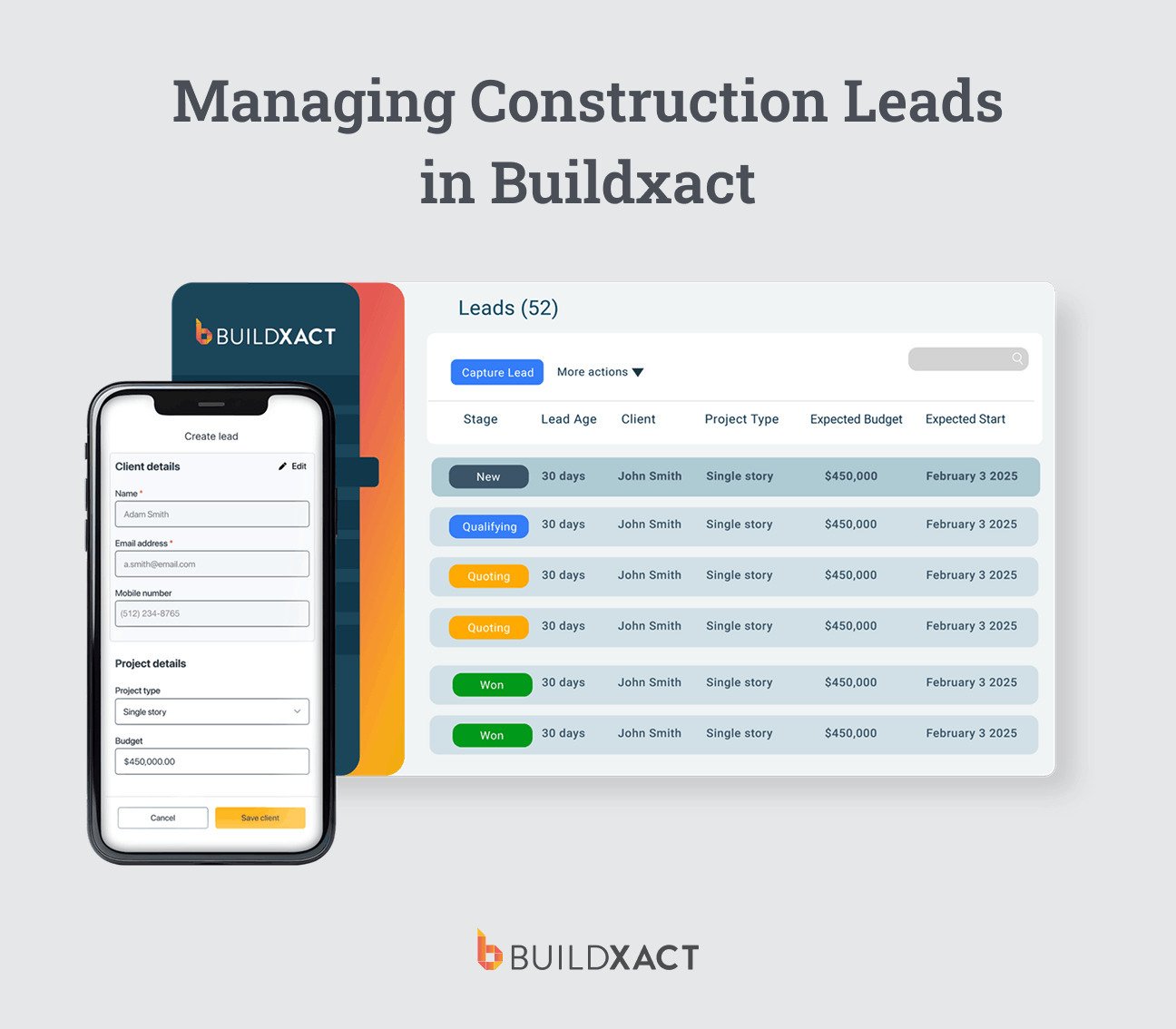
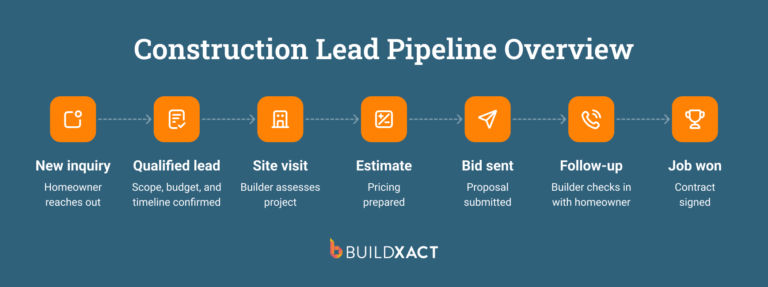
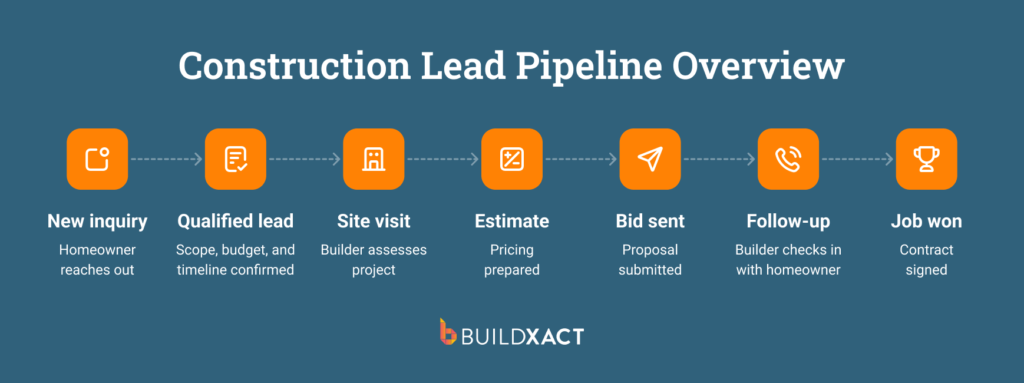
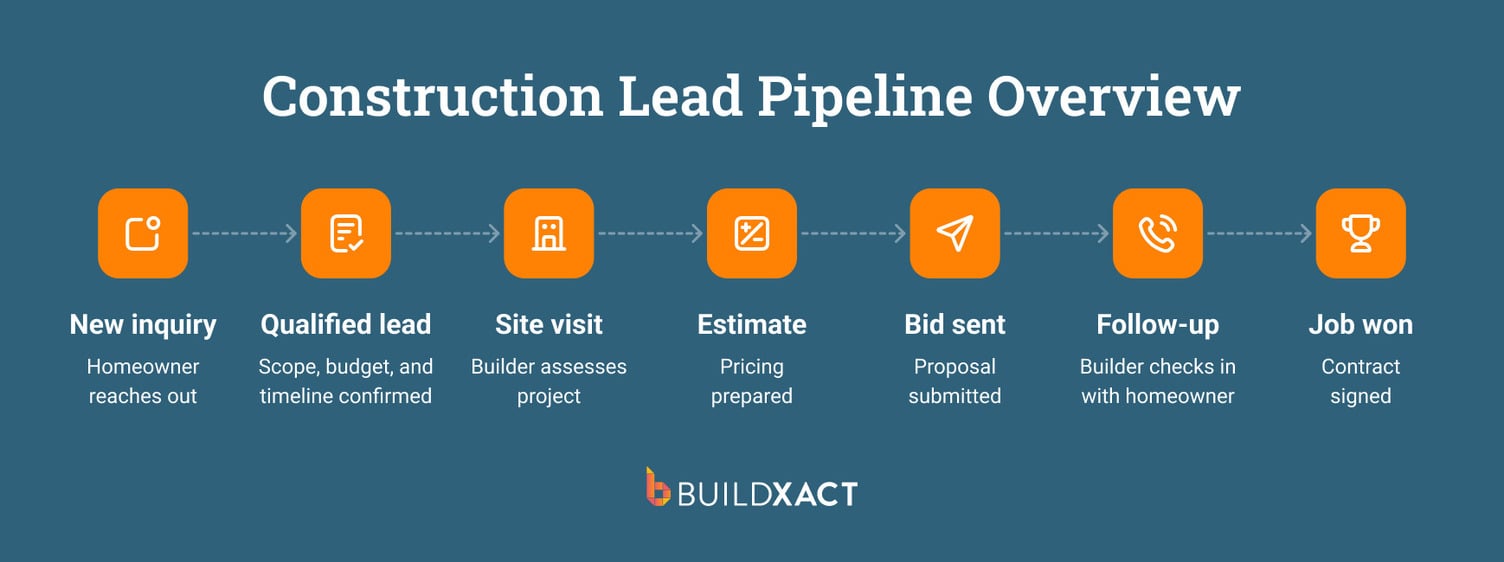
Instead of treating every job differently, you move leads through the same stages:
- New inquiry
- Qualified lead
- Site visit
- Estimate
- Bid sent
- Follow-up
- Bid is won or lost
That structure gives you visibility into where every opportunity stands and where projects are getting stuck. If bids are going out but nothing is closing, you can investigate why. If follow-ups are slow, you can spot the bottleneck before work starts drying up.
The challenge for many builders is that the pipeline often lives across too many places at once. Construction leads sit in text messages, pricing lives in spreadsheets, plans are buried in emails, and follow-ups rely on memory.
Buildxact brings order to what is usually a very fragmented process.
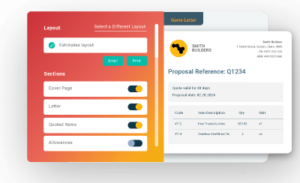
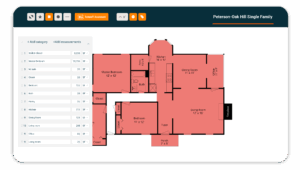
Our easy-to-use project and construction management software helps simplify pipeline management by keeping estimating, bidding, follow-ups, client communication, and job information connected in one place. From a centralized platform, you can see exactly where every opportunity stands from first inquiry through to signed contract.
It also helps reduce the admin load behind bidding. Faster estimating, connected takeoffs, digital approvals, and centralized client communication all make it easier to keep momentum moving while the homeowner is still engaged and ready to make a decision.
If you’re ready to turn your construction leads into booked jobs with an organized lead pipeline, start your free trial or book a demo.